
In this article
The most helpful thing to send someone recovering from surgery or an illness is something that makes resting easier without giving them a job to do. Think warmth they can pull over their lap, a drink they can reach without getting up, something gentle to look at, and a few honest words. Before you choose, ask about their recovery, their sensitivity to scents, and where they will be when it arrives.
It is hard to know what to do when someone you care about is laid up. Flowers feel expected, food may not suit what they can eat, and a long phone call might be more than they have energy for. You want to send something that says “I’m thinking about you” and that they will actually use while they heal.
This guide walks through what recovery at home tends to look like, what to check before you send anything, and how to put together a package—or choose a ready-made one—that fits the person rather than a generic idea of “get well.”
What does someone recovering at home actually need?
Recovery is often slower and more boring than people expect. After the first few days, the person may spend long stretches on the couch or in bed, moving carefully, napping at odd hours, and depending on others for small things they normally do without thinking. The most welcome gifts tend to support that reality.
- Rest: something soft to wrap up in, something to block daytime light, something that makes a nap easier.
- Things within reach: a drink with a lid, a place for the phone and charger, a notebook for questions to ask the doctor.
- Low effort: nothing to assemble, water, cook from scratch, or return.
- Connection: a reminder that people are thinking about them, without pressure to reply.
Is a gift even the right way to help?
Sometimes the best support is practical rather than wrapped. A dropped-off meal that suits their diet, a ride to a follow-up appointment, walking the dog, picking up prescriptions, or doing a load of laundry can matter more than anything in a box. If you live nearby, offer one specific task (“Can I bring dinner Thursday?”) rather than a general “Let me know if you need anything,” which leaves the person to come up with the request.
A care package makes the most sense when you cannot be there in person, when the recovery is long, or when you want to mark the moment alongside other help. In those cases, a thoughtful box can carry some of the comfort you would bring if you could visit.
Ask a few questions before you send anything
A few details change what is useful. If you can, ask the person or someone close to them—a partner, roommate, or adult child who is helping with their care.
What kind of recovery is it?
Someone recovering from knee surgery may be on the couch with limited mobility for weeks. Someone going through chemotherapy may have good days and hard days, plus changes in taste and smell. A person who just had a short outpatient procedure might be up and about within days. Comfort items suit most of these situations, but scented products, food, and anything that requires a bath depend heavily on the details.
Will they be in the hospital or at home?
Hospitals set their own rules, and some units restrict what patients can receive. One large New York hospital system, for example, does not allow fresh-cut, artificial, or dried flower arrangements in intensive care, recovery rooms, and oncology and transplant units, and another hospital system explains that flowers are not allowed on some units for infection-control reasons. Candles are rarely practical in a hospital room either. If the person is still admitted, call the unit or check the hospital’s visitor page first, or simply send the package to their home so it is waiting when they get back.
Are they sensitive to scents, or allergic to anything?
Many ready-made comfort boxes include a candle, soap, a bath bomb, or bath salts, and those can be the part that goes wrong. Ask whether strong smells bother them right now. The section on candles and bath products explains why this matters for some people more than others.
What if you can’t ask directly?
Choose the most neutral options: unscented or lightly scented items, a soft throw, a lidded cup, a notebook, and a handwritten card. You can also send the package with a short note saying what is safe to set aside—“If the candle isn’t right for now, no worries at all”—so they do not feel obliged to use everything.
Comfort they can use from the couch or bed
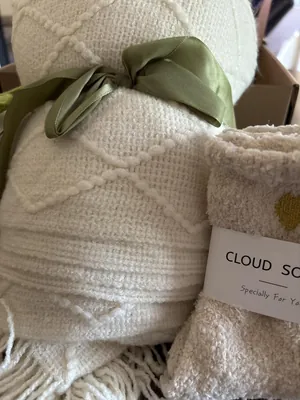
Most care packages are built around a throw blanket and a pair of soft socks, and for good reason. When someone is resting for long stretches, a lap blanket gets used constantly, and warm feet feel like a small luxury. The details still matter.
What makes a throw blanket useful during recovery?
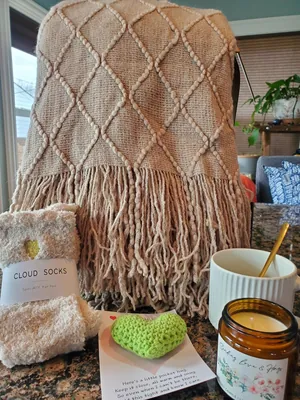
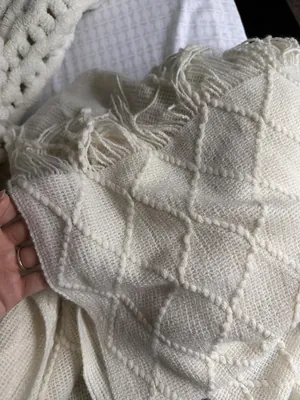
Look for something light enough to shift around easily when moving is uncomfortable, and large enough to cover the lap and legs. The throws in these boxes range from plush flannel to loose, open-knit styles with fringe. Several buyers described the knit versions as thin—cozy for “a slight chill” rather than a winter bed blanket—and one noted that a throw lost some of its flat shape after washing. Another measured a knit throw at about 50 by 62 inches without the fringe and found no care label. If the person will be washing it often, a sturdy, easy-care fabric is the safer choice.
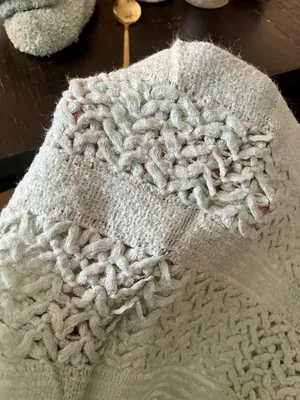
Are fuzzy socks a good idea after surgery?
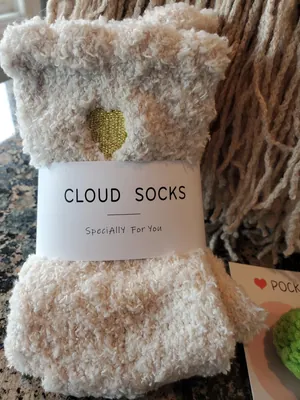
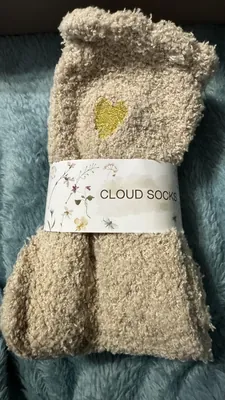
They are lovely for resting, but they are not walking shoes. Falls are a real concern while someone is recovering, especially after hip or knee surgery. The U.S. National Institute of Arthritis and Musculoskeletal and Skin Diseases advises people recovering from hip replacement to wear supportive shoes with thin nonslip soles and avoid walking in socks or slippers. If your gift includes plush socks, a simple line in your card such as “for couch time only” is a kind reminder. For someone who will be up and moving, socks with grip soles or a pair of supportive slip-on shoes may be more useful.
Why include an eye mask?
People recovering at home often nap during the day in rooms that are hard to darken. A soft eye mask is a small, inexpensive addition that can make those naps easier. It also helps in a hospital, where lights and monitors can make rest difficult.
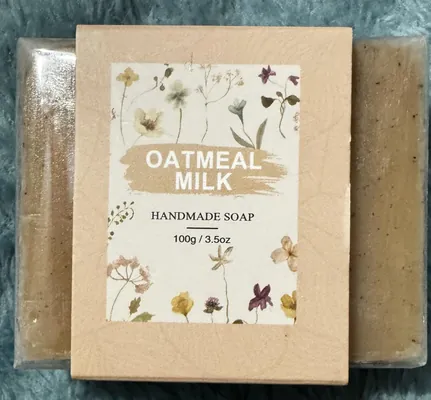
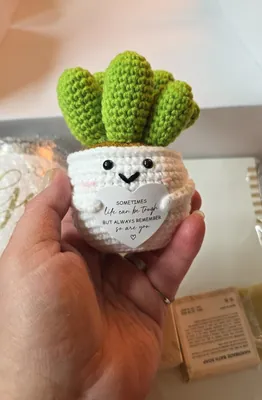
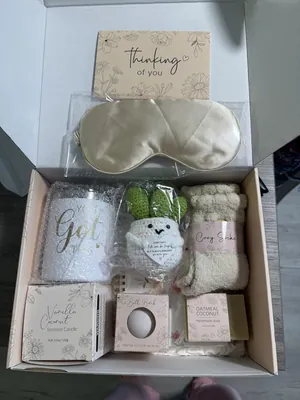
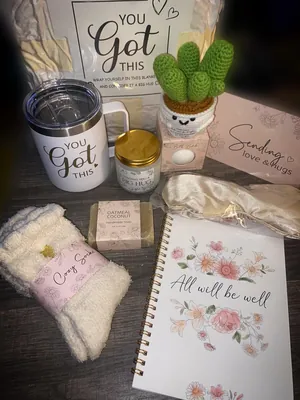
If you would rather send everything at once than shop piece by piece, an eleven-piece comfort set built around a plush 39-by-59-inch throw is one option for this stage of recovery. Its listing describes a flannel throw, a silky eye mask, fuzzy socks, a 12-ounce insulated tumbler with a handle, a candle, a bath bomb, oatmeal soap, a lined notebook, and a small crocheted cactus. One buyer sent it to a teenage granddaughter coming home after a tonsillectomy and wrote that the blanket and eye mask were her favorites. Keep in mind that it also contains scented items and a bath bomb, which may need to wait.
Make it easier to keep a drink nearby
When getting up hurts, even refilling a glass becomes a chore. A cup that can sit beside the bed or couch without spilling is one of the most practical things you can send. A lid matters more than looks: a closed tumbler with a straw or a mug with a handle and sliding lid is easier to manage while reclining than an open cup.
Mug, glass, or insulated tumbler?
Buyers’ comments point to a few patterns worth knowing before you choose:
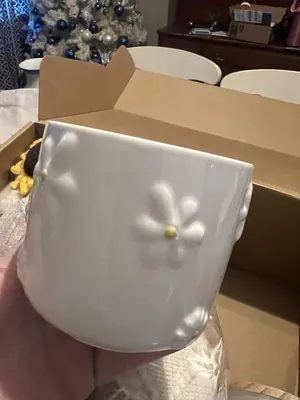
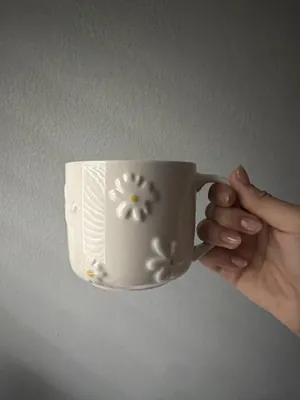
- Ceramic mugs in these boxes often run small. Several buyers described them as tea-size or close to espresso-size, which is fine for an evening cup of tea but less useful for someone who wants a large drink nearby. One mug listed at 10 ounces; another buyer measured a larger daisy-embossed mug at about 16 ounces.
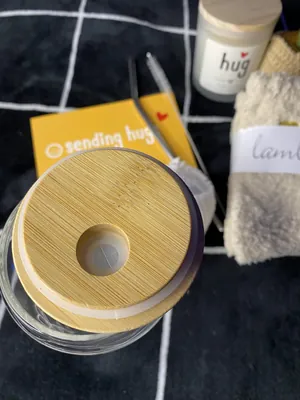
- Glass tumblers with bamboo lids look pretty but can be fussy. A few buyers reported a lid that would not stay on, a cracked or leaking glass, or a bamboo lid that needed several washes before it stopped affecting the taste of water. That is a problem for someone who cannot easily get up to clean a spill.
- Insulated stainless steel tumblers are the most forgiving. They are hard to break, keep drinks at temperature longer, and usually have a lid.
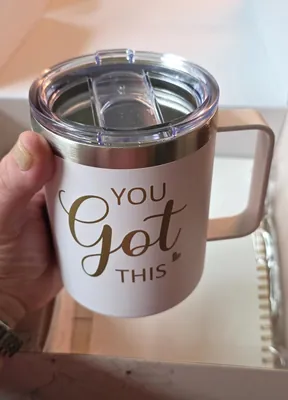
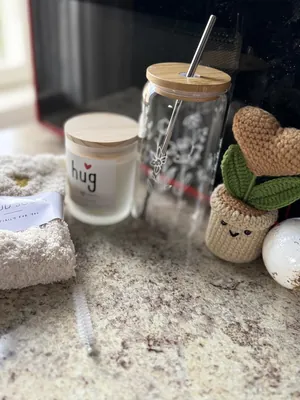
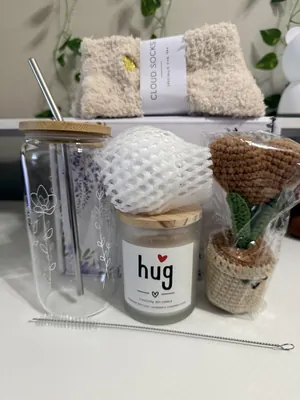
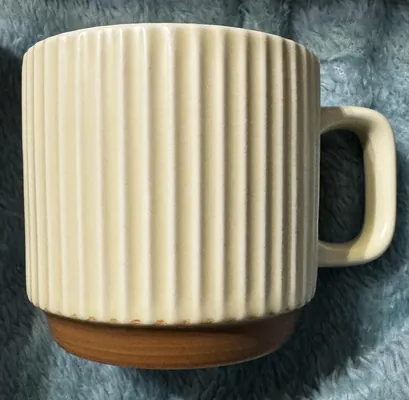
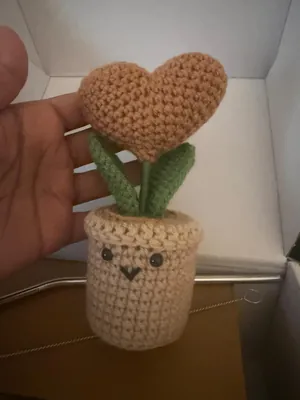
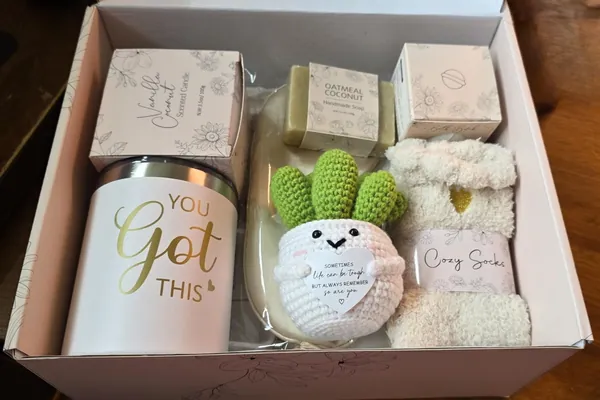
If you would like a box that leans into easy hydration and rest, an eleven-piece set built around a 12-ounce insulated tumbler with a handle is one example. The listing says the double-wall stainless steel tumbler keeps drinks cold up to 9 hours and hot up to 3, and the set also includes a 39-by-59-inch throw, a silky eye mask, cotton socks, a notebook, a crocheted heart plant, a vanilla-coconut candle, a bath bomb, and soap. Buyers mentioned sending it to a mother-in-law, a sister, and a daughter after surgery; one buyer whose sister has had several surgeries noted that the box was cute enough to send directly, or to unpack into a basket for an in-person visit.
Candles, soap, and bath products: ask first
Scented items are the easiest part of a care package to get wrong, because recovery can change how a person reacts to smells and what they are allowed to do.
Why can scents be a problem during treatment?
People going through cancer treatment often notice that smells seem stronger, different, or unpleasant. A guide for employers from a Canadian cancer and work organization notes that nausea can cause sensitivity to the scent of food, perfumes, and other strong smells. A candle that smells lovely to you may be the last thing someone wants in a small room while they feel queasy.
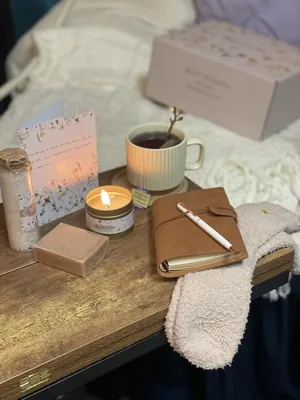
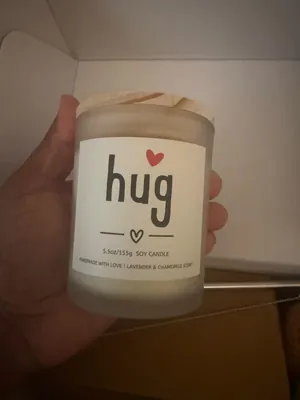
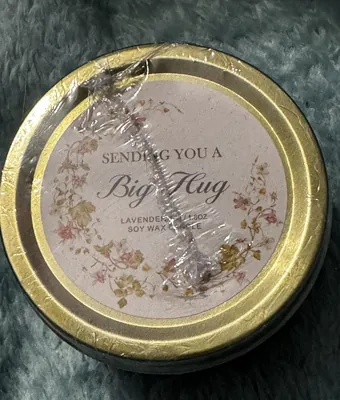
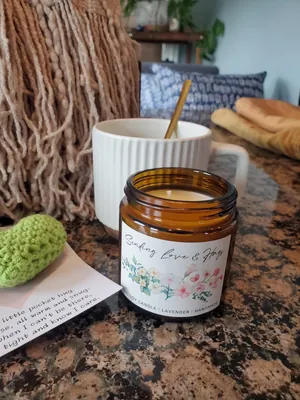
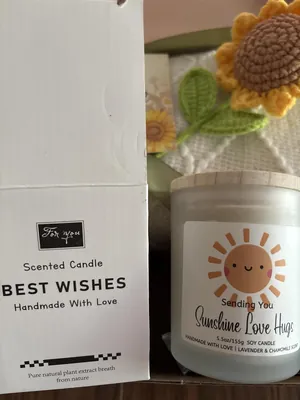
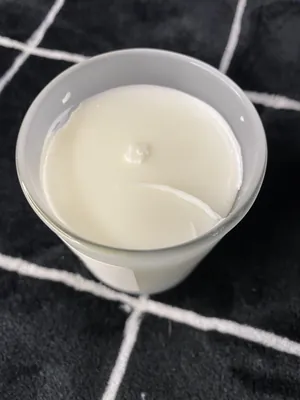
Buyers of these boxes described the fragrances very differently. One found the soap and candle in a set fairly strongly scented and suggested caution for anyone sensitive to fragrance; another buyer of the same set described its candle as smelling like “a pretty basic soap,” mild enough to please most people. One noticed that a bath bomb made everything else in the box smell. If you do not know the person’s current tolerance, lighter scents—or no scent—are the safer route.
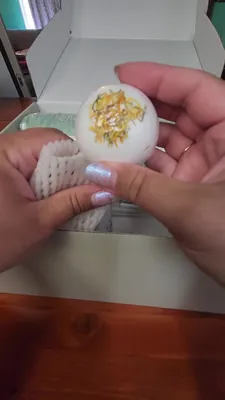
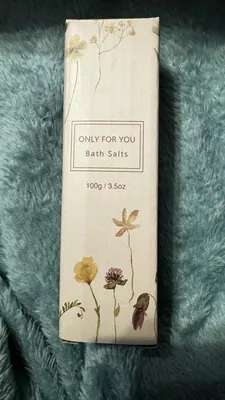
Can someone take a bath after surgery?
Often not right away. Surgical discharge instructions commonly tell people to avoid tub baths, hot tubs, and swimming until the incision has healed, which can mean a couple of weeks or longer depending on the procedure. A pediatric hospital’s incision care guide, for instance, asks families to avoid tub baths for at least 30 days after neurosurgery or until the sutures are no longer visible. Bath bombs and bath salts can still be a nice “for later” treat, but they should not be the centerpiece of a gift for someone fresh out of surgery. Their surgeon’s instructions always come first.
Are candles safe to send?
Think about the situation. Someone who is drowsy from pain medication, unsteady on their feet, or using home oxygen should not be managing an open flame. The National Fire Protection Association’s candle safety tip sheet says never to use a candle if oxygen is used in the home, recommends avoiding candles in areas where people may fall asleep, and suggests flameless candles instead. For many people, a candle is perfectly fine to enjoy later; just do not assume it is the right thing for the first days home.
What can you send instead?
Unscented lip balm, a gentle unscented lotion, dry shampoo, a soft headband, or a small pack of herbal tea can deliver the same “pampering” feeling without the risk. If you already bought a box with scented items, mention in your card that they are there for whenever the person feels like it.
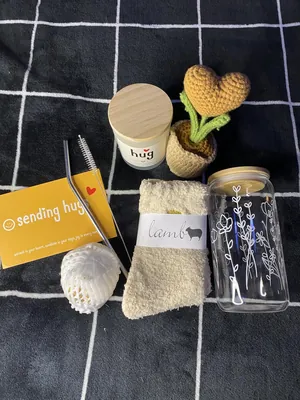
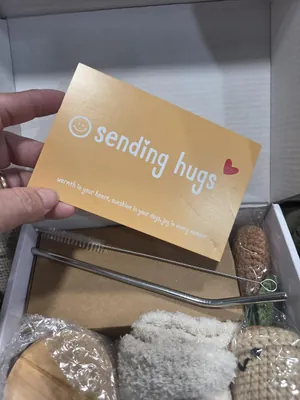
For someone who loves lavender and is not sensitive to scent, a smaller lavender-themed box is one compact option. Its listing describes a 16-ounce wildflower cup, a lavender soy candle, a bar of soap, soft socks, a crocheted heart-shaped plant, and a “Sending Hugs” card. Buyers describe the glass as coming with a bamboo lid, a metal straw, and a cleaning brush, and many buyers praised the candle scent and socks. A few reported a glass that arrived broken or leaked, or a lid that would not stay put, so it is a better fit for someone who can easily handle a glass cup than for someone confined to bed. Buyers also describe more than one box version, so check the current contents before ordering.
Small keepsakes and the words that go with them
When someone is recovering, the card often matters as much as anything else in the box. It is the part that says why you sent it.
What should you write in a get-well card?
Keep it warm, specific, and free of pressure. You do not need to mention the diagnosis or offer advice. A few lines that work:
- “No need to reply—I just wanted you to have something cozy while you rest.”
- “I’m thinking about you and can’t wait to see you when you’re up for visitors.”
- “Take all the time you need. I’ll check in next week, and I’m happy to bring dinner whenever it helps.”
- “This made me think of you. Use whatever is helpful and ignore the rest.”
Avoid promises about how quickly they will feel better, and skip comparisons to someone else’s recovery. If you are in a group—coworkers or a book club—a card signed by several people can mean a lot. One buyer described a box sent to a coworker newly diagnosed with cancer, with a card everyone in the office signed.
Check the card before you count on it
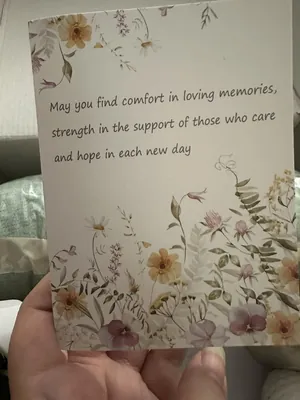
Buyers pointed out that the cards in ready-made boxes vary. One buyer found that the included card in a set was not the kind you can write in; another noticed that a card folded the opposite way from what she expected, so they wrote the recipient’s name on what had been the inside. If the message matters, tuck in your own handwritten note or use the gift-message option when ordering.
Why do crocheted flowers and plants show up in so many boxes?
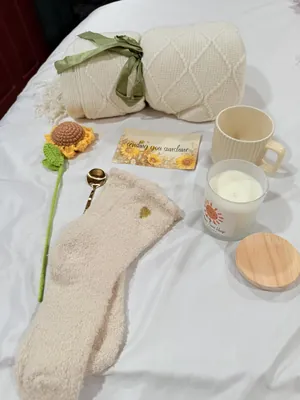
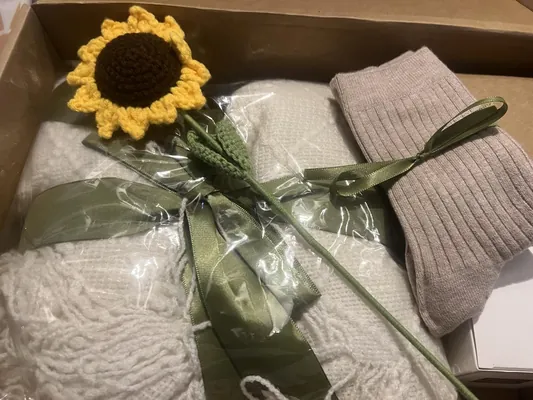
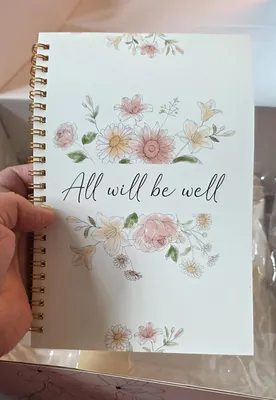
A crocheted sunflower, cactus, or heart in a tiny pot gives the person something cheerful to look at that needs no water, will not wilt, and will not trigger pollen allergies. One buyer mentioned that the recipient kept the little plant on her nightstand afterward. That said, policies on some hospital units cover artificial arrangements too, so keep it for home if the person is still admitted. A notebook or journal is another quiet keepsake; it can also be practical for tracking medications or questions for the next appointment.
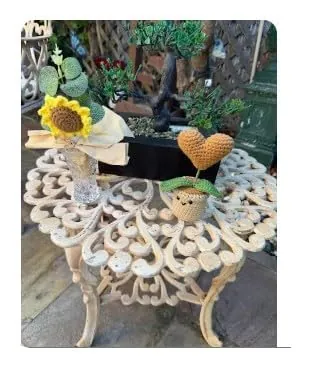
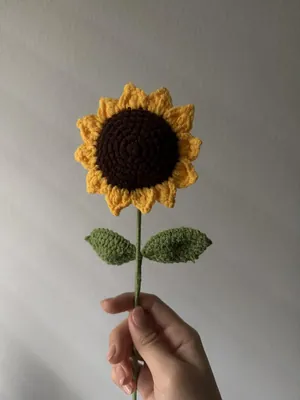

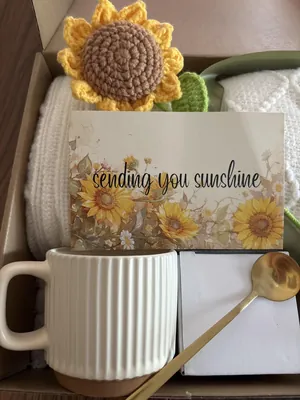
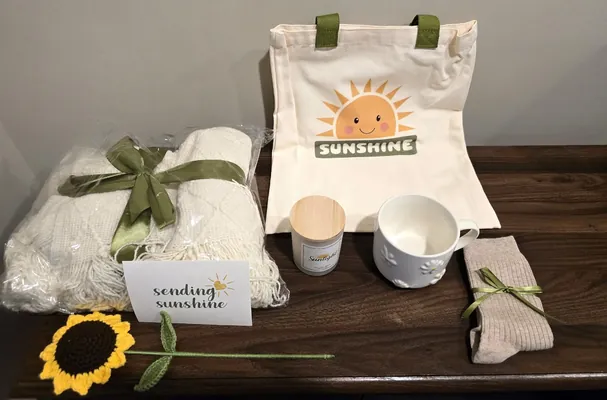
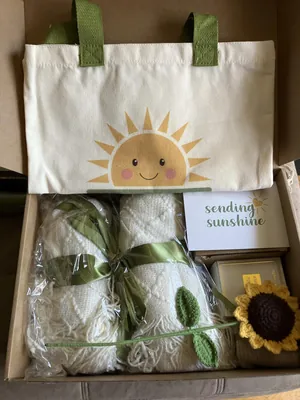
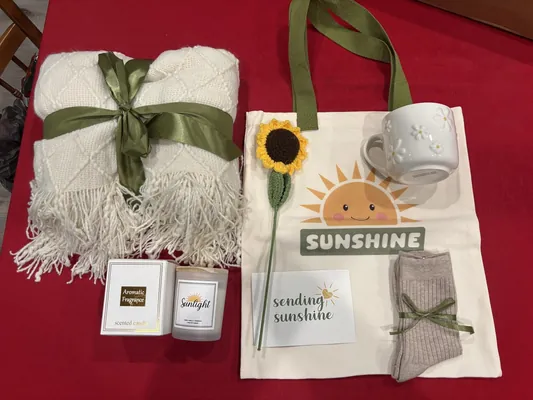
For someone who will be up and moving between rooms or heading back and forth to appointments, a sunflower-themed box adds something many comfort sets lack: a canvas tote bag. The listing describes eight pieces, including a fringed knit throw, a tumbler, the tote, a crocheted sunflower, socks, a vanilla-scented candle, a “Sending Sunshine” card, and the gift box. Some buyers received an embossed ceramic daisy mug instead of a tumbler, so check which drinkware comes with the version you choose. One buyer who gave it to someone going through a medical procedure wrote that the tote came in handy for carrying her things from room to room, and another suggested it would work well for hospital visits.
Should you send a ready-made box or build your own?
Both can be thoughtful. The right choice depends mostly on whether you will hand it over in person and how well you know what the person can use.
| Approach | Works well when | Watch for |
|---|---|---|
| Ready-made box shipped directly | You live far away, want it to arrive quickly, and the person has no strong scent or diet restrictions | Shipping damage, contents that differ from photos, scented items they cannot use yet |
| Ready-made box, repacked by you | You are visiting in person and want a polished presentation | Extra time to unwrap plastic, rearrange, and add your own note |
| Your own package | You know exactly what they need, such as a favorite snack they can eat, a specific book, or grip socks | Time to shop and pack; making sure each item is genuinely useful |
How can you make a ready-made box feel more personal?
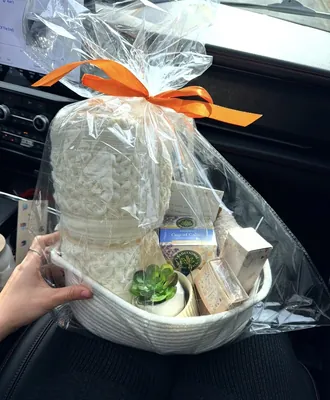
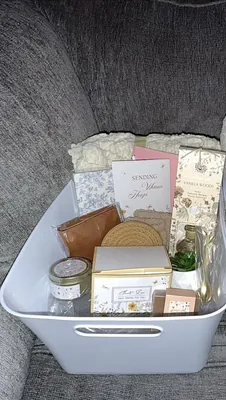
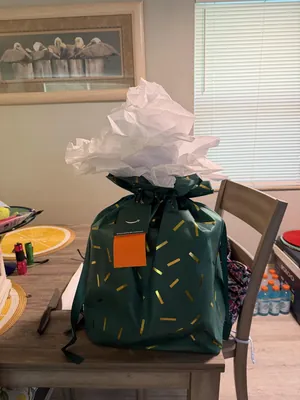
Buyers who were giving these boxes in person often took a few extra minutes before handing them over. One buyer put on gloves, unwrapped each item from its plastic, and rearranged everything neatly for a friend recovering from cancer surgery. Others moved the contents into a basket with cellophane, slipped a box into a gift bag with tissue, added an assortment of teas to the mug, or tucked in a book with the crocheted flower as a bookmark. Small additions that reflect the person—a favorite magazine, a puzzle book, a photo—turn a general set into something that feels chosen for them.
What about a set with more “something to do” items?
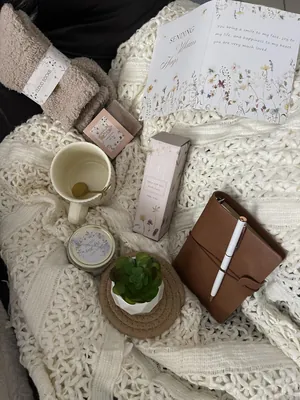
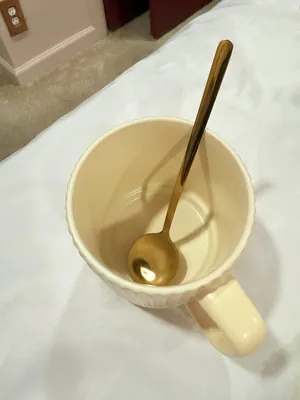
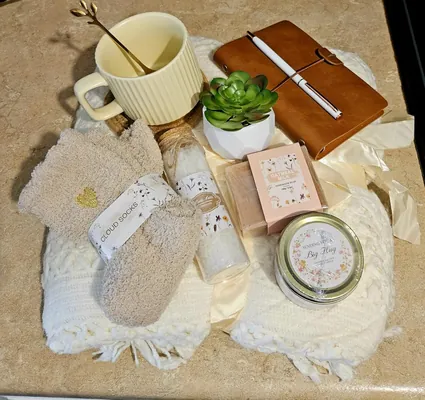
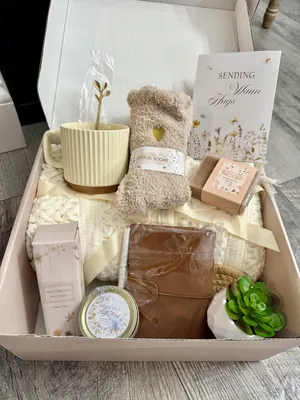
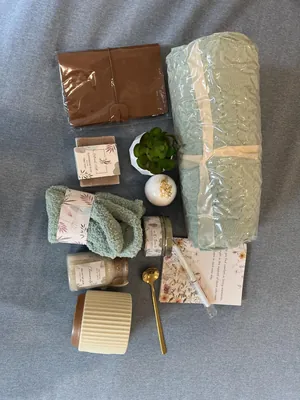
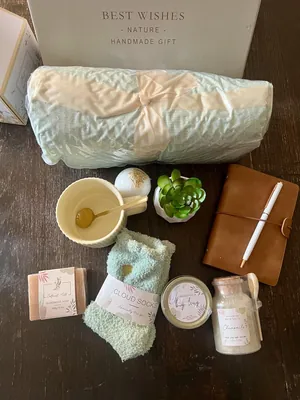
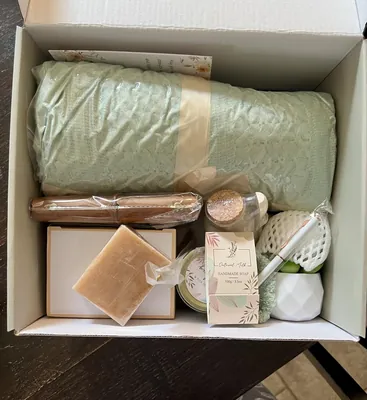
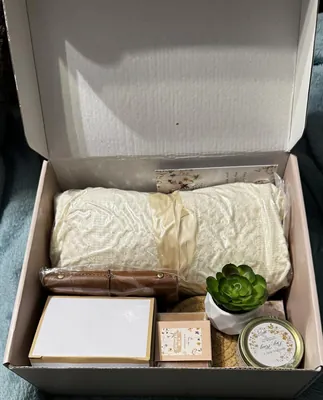
Recovery can mean long, quiet days. A notebook and pen, a book, or a simple hobby can help pass the time. If you want a ready-made set that includes a journal, one eleven-piece box combines a knitted tassel throw (listed at 50 by 66 inches), a 10-ounce ceramic mug with a spoon, a lavender soy candle, chamomile bath salt, oatmeal soap, fuzzy socks, a faux succulent, a bath bomb, a refillable notebook with a pen, and a greeting card. Buyers described sending it to a friend with a broken leg and to a friend after a family loss, and one tea drinker wrote that the small mug was the right size for tea but would disappoint someone who prefers big lattes. Others mentioned that the throw is delicate, that everything comes wrapped in plastic, and that a few boxes arrived crushed—so it works best when you have a chance to check it before it is opened.
Make sure it arrives looking like a gift
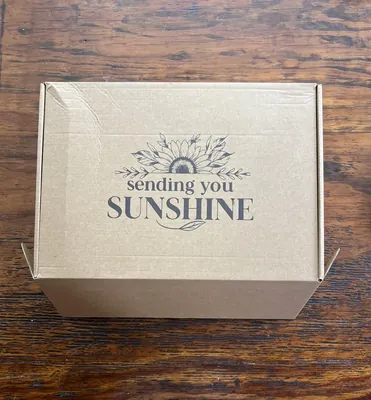
Presentation is part of a get-well gift, and it is the most common disappointment buyers mention. Buyers mention crushed corners on printed gift boxes, plain brown cardboard where a decorative box was expected, wrinkled ribbons, and items that shifted in transit. A few buyers received a broken glass. None of this changes how kind the gesture is, but it can be awkward when the box goes straight to someone who is already having a hard week.
How can you avoid a disappointing delivery?
- Ship it to yourself first if you can. You can check every item, replace anything broken, and rewrap it before delivering or reshipping.
- Open and check contents if you are the one presenting it. Buyers found missing lids and straws, cracked glass, and items packed upside down—easy to fix before the recipient sees them.
- Give the recipient a heads-up. A quick text such as “Something is coming your way—don’t worry if the outside box looks rough” takes the pressure off.
- Add a personal message. A gift note or a separate card in the mail ensures your words arrive even if the included card is generic.
When the outer box survives the trip, many of these sets do look gift-ready, with printed lids and contents arranged so they are visible when the box opens.
When to send it, and how to keep showing up
There is no single right moment. A box that arrives the day someone comes home can be comforting, but that is also when the house may be busiest with helpers, medication schedules, and fatigue. A package that arrives a week or two later, when the visits slow down and the boredom sets in, can mean even more.
How do you check in without being a burden?
Send short messages that do not require a reply: “Thinking of you today,” or “No need to answer—hope you got some sleep.” Offer specific help on a specific day. If the recovery is long, consider spacing out smaller gestures—a book one week, a meal another—rather than sending everything at once.
What if they don’t say thank you?
Do not expect a thank-you note from someone who is recovering. Many people mean to write one and simply do not have the energy. If you want to know the package arrived, check tracking or ask a family member.
A simple way to put it together
If you are still unsure, follow the person’s situation rather than a list of popular items:
- Ask, or ask someone close to them, about mobility, scents, diet, and where they will be.
- Start with comfort they can use while resting, such as a soft throw and a lidded drink.
- Add one personal touch: a handwritten note, a favorite book, or a small keepsake.
- Leave out or flag anything they may not be able to use yet, like bath products or candles.
- Decide whether to ship it directly or check and repack it yourself.
- Follow up with a message or a specific offer of help a week or two later.
The best get-well gift is not the biggest box. It is the one that fits the way they are actually spending their days right now—and the reminder that someone noticed.