In this article
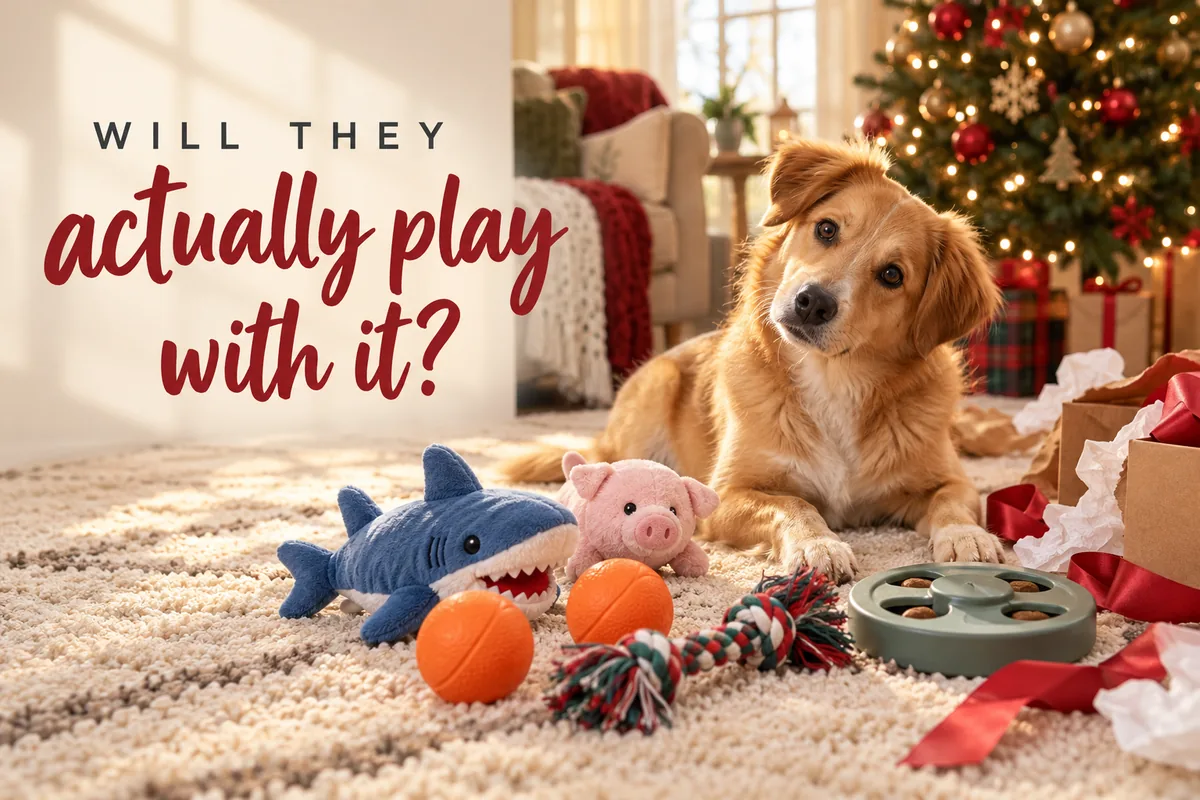
The best Christmas gift for a dog is one that matches how they already like to play. A dog that chases gets more balls, a chewer gets something built to be worked at, a food-motivated dog gets a puzzle, and a gentle carrier gets something soft to cuddle. Size the toy for the dog's mouth, supervise the first few play sessions, and the gift is far more likely to last past New Year's.
Most dogs will sniff anything wrapped in paper on Christmas morning. The harder part is choosing something they still care about on December 27. A toy that matches how a dog already likes to play gets used for weeks; a toy chosen because it looked cute in the store often ends up under the couch—or in pieces by lunch.
This guide starts with the dog rather than the toy aisle: how they play, how hard they chew, how big their mouth is, and what the household can realistically supervise. From there, it is much easier to pick a gift that is fun, safe enough for that particular dog, and worth the money.
What kind of toy will a dog actually play with?
Watch the dog for a few days before you shop, or ask the owner a couple of simple questions. Most dogs lean toward one or two styles of play, and the best gift feeds that habit instead of trying to change it.
- Chasers live for the throw. They drop a ball at your feet over and over and would fetch until dark if you let them.
- Chewers and shredders want to take things apart. Stuffed toys rarely survive the afternoon, and the squeaker is the first target.
- Sniffers and food-motivated dogs stay busiest when there is a reward to work for. They tend to love puzzles and slow feeders.
- Carriers and cuddlers tote a favorite toy from room to room, sleep with it, and play gently. Soft toys often last surprisingly long with them.
- Puppies and young dogs are often all of the above in the same hour, with sharp teeth and short attention spans.
If you are not sure, ask the owner what the dog destroyed most recently and what it still carries around. Those two answers usually tell you which aisle to skip and which to browse.
Should the gift match the dog's size?
Yes, and this matters more than color or theme. A toy that is too small for a big dog can be swallowed or lodge in the throat; a toy that is too big for a small dog just gets ignored. As a rule of thumb, a ball should be large enough that the dog cannot fit the whole thing in its mouth, and many balls are labeled with a weight range. Remember that a puppy will outgrow a toy that fits today.
How do you keep a new toy safe?
No toy is truly indestructible, whatever the packaging says. The American Kennel Club suggests inspecting toys before you buy and skipping flimsy ones that could easily be torn apart and swallowed. Humane World for Animals recommends choosing toys sized for your dog and supervising play with squeaky toys, since many dogs will try to dig out the squeaker.
- Give a new toy the first time while you can watch, and see how the dog actually uses it.
- Check toys every few days for loose seams, cracks, missing pieces, or worn-through spots.
- Throw away a toy once it starts coming apart—especially stuffing, squeakers, and plastic bits.
- Keep ribbons, string, and gift tags away from the dog after unwrapping; they are easy to swallow.
- Puzzle toys and soft toys are for supervised play, not for leaving in the crate while you are out.
What do you get a dog who destroys every toy?
Start by setting honest expectations. For a dog that shreds plush in minutes, a toy that lasts a few days of daily play is a win. Look for designs without stuffing, reinforced fabric, and a sturdy core so the dog still has something left to play with after the outer layer gives way.
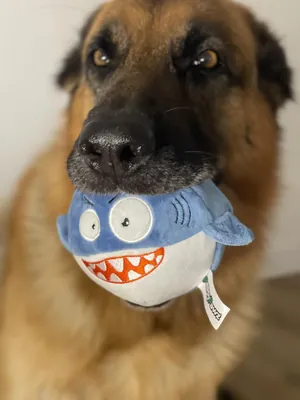
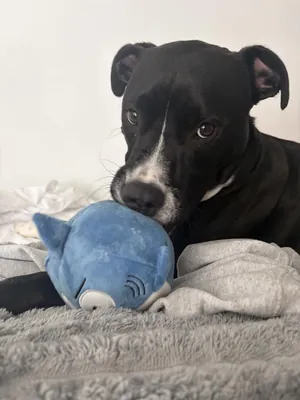
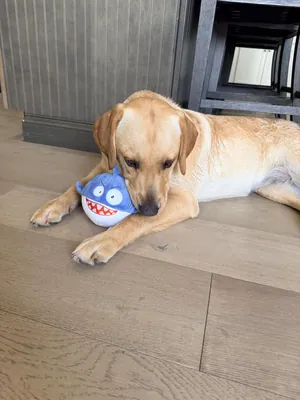
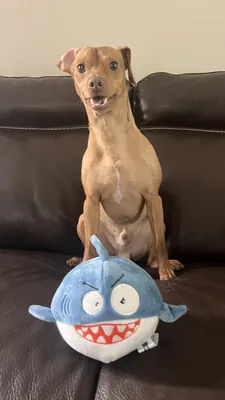
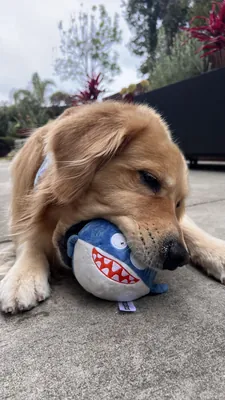
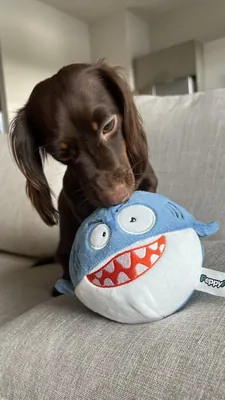
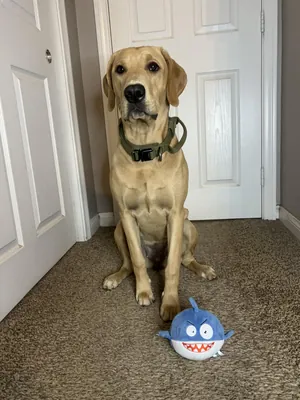
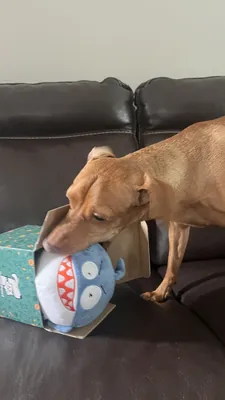
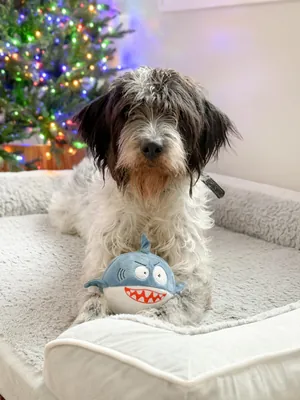
Layered "rip and reveal" toys are built around that idea: the dog tears through an outer cover to find another toy, and eventually a ball, inside. For a chewer, the unwrapping is the fun. Owner reports vary widely—some dogs were still on the first layer after a week or more, while some powerful chewers reached the inner ball within an hour. Several owners mentioned that their dogs also carried the toy around and slept with it.
Is a tougher toy always better?
Not necessarily. Very hard toys can be rough on teeth, and a toy that is too tough to make progress on may simply bore a dog that enjoys shredding. A good chewer gift gives them something to work at while keeping the pieces large and the mess small.
What is a good gift for a dog that loves to fetch?
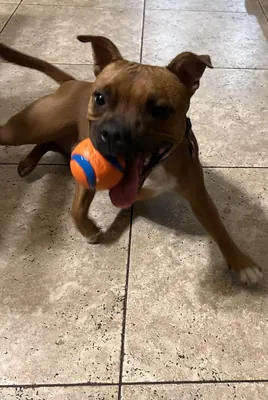
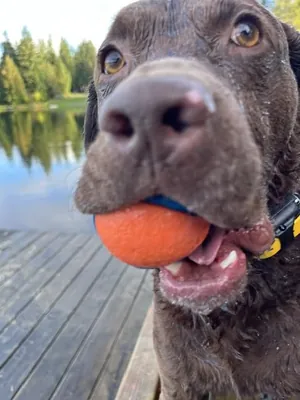
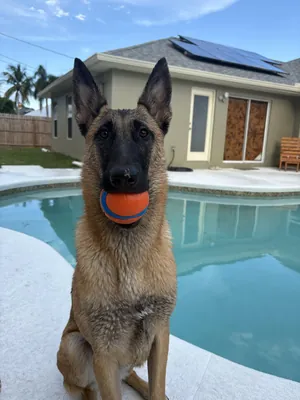
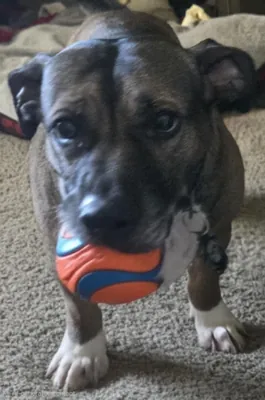
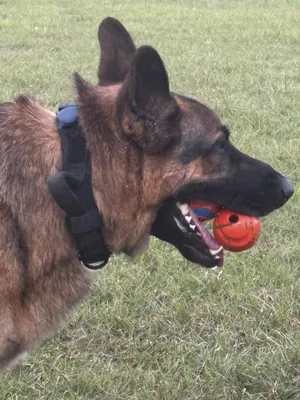
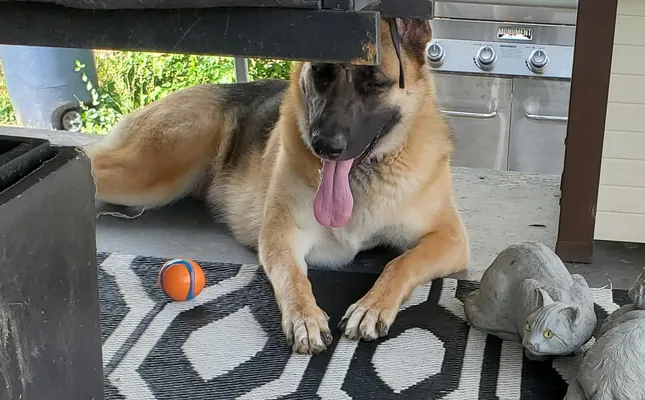
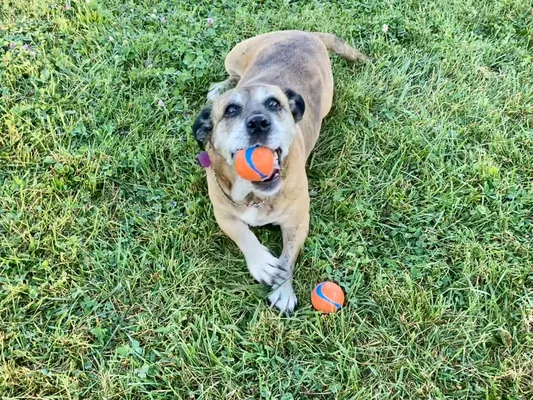
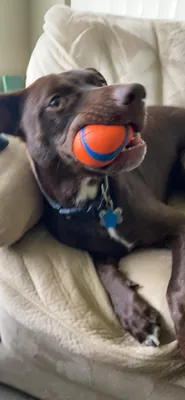
For a chaser, more balls is rarely a bad gift. Balls get lost in tall grass, carried off by neighbor dogs, buried, or left at the park. Many owners also look for an alternative to tennis balls, which some dogs pop and shred quickly and whose fuzzy felt gets soggy and dirty.
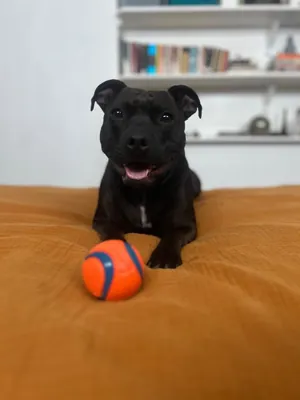
Solid rubber fetch balls are a common answer. Owners of the eight-ball set below repeatedly described dogs who had shredded tennis balls but had not destroyed these after weeks or months, though one owner said a set lasted only about two months with a determined chewer. Several said the balls float, which matters for dogs that fetch in a pool or lake. The 2.5-inch size is listed for dogs roughly 20 to 60 pounds; a few owners of small dogs found it a bit large, and big, powerful dogs may need a larger ball.
Is a ball a safe gift for any dog?
Fetch is great exercise, but a ball that is too small for the dog is a real choking risk. Match the ball size to the dog, retire balls that crack or split, and throw a ball away from the dog rather than straight at its face. Some dogs also like to lie down and chew a fetch ball like gum; if that turns into gnawing pieces off, put it away.
What helps a bored, food-motivated dog?
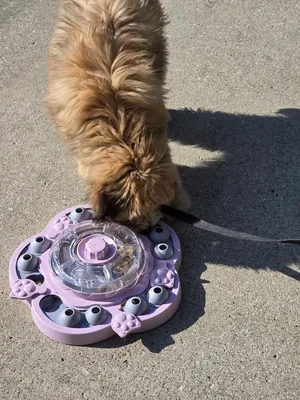
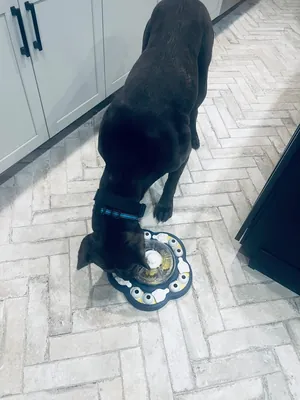
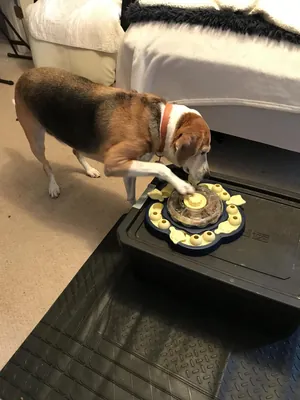
Dogs that inhale their dinner or get into mischief on rainy days often do best with a job. Puzzle feeders and treat puzzles turn a meal or a handful of kibble into something to sniff, paw, and figure out. Owners described dogs staying busy for 15 to 30 minutes, fast eaters slowing down, and older dogs who ignored ordinary toys getting interested once food was involved.
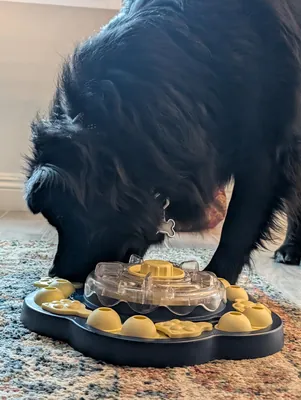
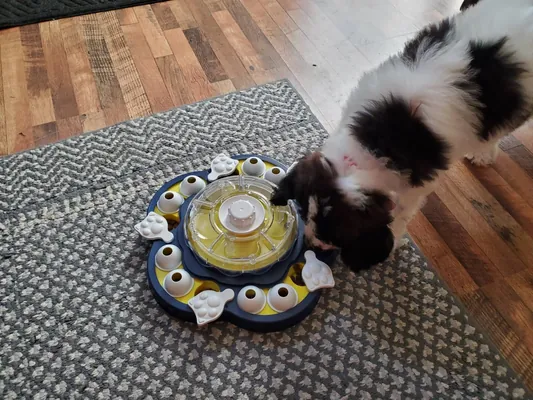
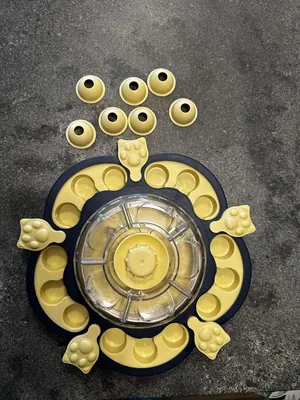
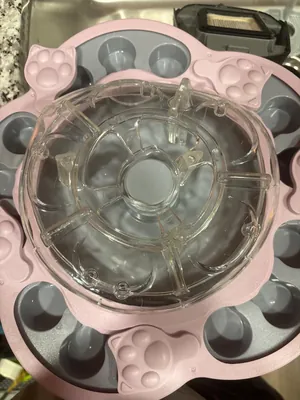
Look for a puzzle with adjustable difficulty, so the dog can win quickly at first and you can make it harder later. The spinning puzzle below has three levels and holds about two cups of dry food, according to its listing. Owners mentioned some real limitations worth knowing before you give it:
- It is designed for supervised play, not chewing. A few owners reported small covers or caps popping off, and some determined chewers damaged the plastic.
- The clear top can warp in a hot dishwasher; several owners recommended hand-washing it.
- Dogs with very long snouts or flat faces may find the compartments awkward.
- Some clever dogs solved it within days, while others took a couple of weeks to learn to spin it.
What about dogs who carry and cuddle their toys?
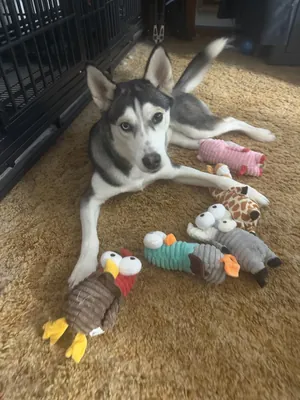
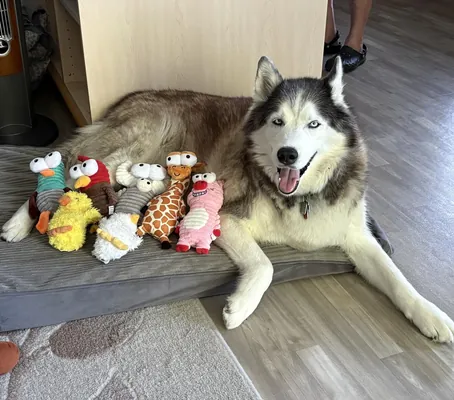
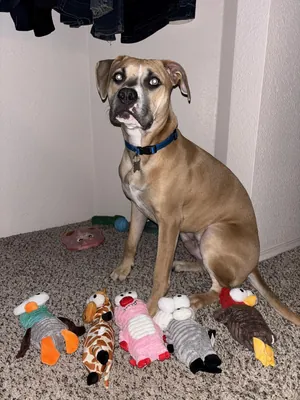
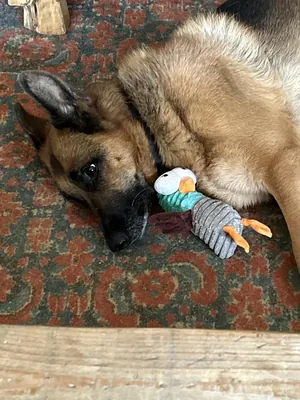
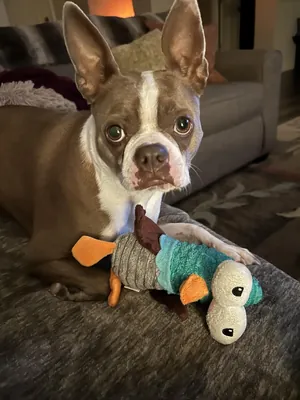
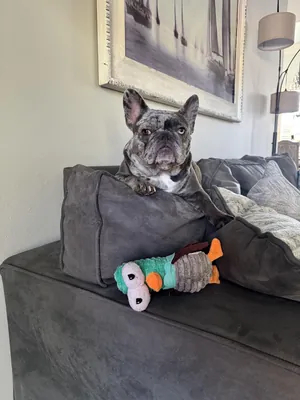
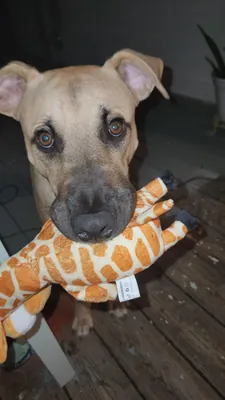
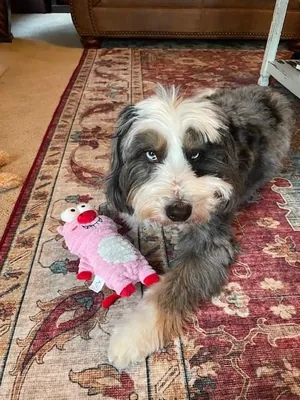
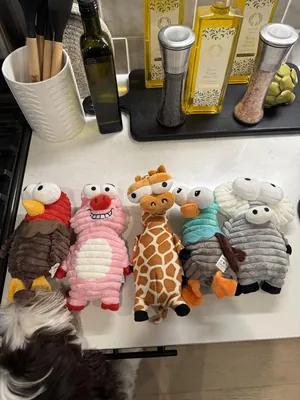
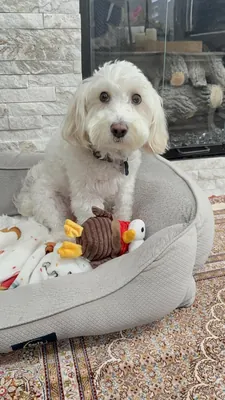
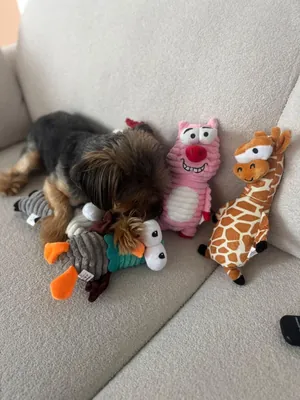
Soft, squeaky plush is often the most fun for dogs that play gently: they carry the toy around, toss it, shake it, and fall asleep next to it. A multi-pack also gives you variety without spending much on any single toy, and different squeaks keep things interesting.
Be realistic about chewers, though. Owners of the five-piece critter set below split almost exactly along that line. Owners of gentler dogs—including several with huskies who mostly mouth and carry—said the toys held up for weeks. Owners of strong chewers, and even a couple of small dogs who fought over the same toy, said eyes, feet, or seams came off within minutes or hours. A few also mentioned an occasional squeaker that did not work.
What if there are several dogs in the house?
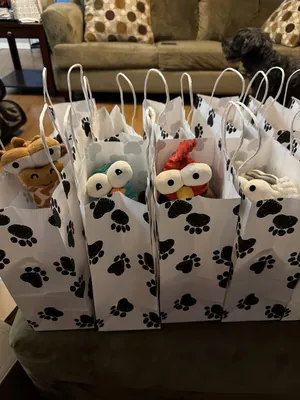
Give each dog its own toy, and hand them out in separate spots if the dogs tend to guard things. One owner bought a multi-pack so each foster dog visiting a relative's home would have a toy of its own; another split one into party favors. Duplicates of a favorite toy can also prevent a holiday tug-of-war.
How can you make the holiday itself more fun for a dog?
Dogs do not care about the date, but people enjoy including them. A few simple ideas:
- Let them unwrap. Wrap a toy loosely in plain paper without tape or ribbon and let the dog tear it open while you watch. Pick up the paper afterward.
- Spread it out. Rather than handing over everything at once, give one new toy now and save the others for later in the week.
- Count down together. A dog advent calendar gives kids a daily ritual with the dog through December.
Advent calendars for dogs are mostly about the routine and the surprise. The 24-day calendar below includes small toys and accessories such as squeaky toys, chew balls, rope tugs, pet socks, a collar, and a folding bowl, according to its listing. One parent bought it for a dog-loving child to open each day, and another family had the dog open its calendar alongside the kids'. Several owners noted that many items suit small dogs or puppies and that it contains few treats; one owner of a 60-pound dog said the items were too small. Quality varies by item, so check each toy before handing it over.
How do you keep new toys interesting after Christmas?
Even a great toy loses its magic if it is on the floor every day. Try rotating toys: keep a few out and put the rest in a closet, then swap them every week or so. The old toys feel new again, and you get a regular chance to check each one for damage.
Keep puzzle toys and food games as a special activity rather than a permanent fixture, and help the dog a little at first so they do not get frustrated and give up.
What should you give a friend's or relative's dog?
When the dog is not yours, ask the owner one or two questions first: How big is the dog, and does it destroy toys? Many households also have rules about food, so check before giving treats or food puzzles. A boxed toy, a set of fetch balls for a dog that already loves to play ball, or an advent calendar for a family with kids are easy gifts that do not require you to know the dog well.
Whatever you choose, the best dog gift is the one that fits the dog in front of you. Match the toy to how they play, size it for their mouth, stay nearby the first few times, and enjoy watching them figure it out.