In this article
The most helpful ways to honor a dog you have lost are small and concrete: save a physical trace while you can, like a paw print or a bit of fur, give the memories a visible place, such as a shelf, a garden corner, or a window, and let the people around you take part. If you are choosing something for a friend, keep it simple, personal, and free of pressure.
Losing a dog changes the shape of an ordinary day. The morning walk, the sound of nails on the floor, the spot by the door where someone always waited: all of it is suddenly quiet. If you are looking for a way to honor a dog you have lost, or for something to give a friend who just lost theirs, the good news is that small, concrete gestures tend to help more than grand ones. This guide covers what to save, where to put it, and how to give a memorial gift without making a hard week harder.
Why does losing a dog hurt so much, and is it okay to mark it?
It is more than okay. The American Veterinary Medical Association's policy on animal loss support says the grief that follows an animal's death can be similar to the grief people feel after losing a family member or close friend. A dog is part of the daily routine in a way few relatives are, so the loss tends to show up in small, repeated moments: filling a water bowl out of habit, hearing a jingle that is not there, walking past the leash hook.
There is no right schedule. Some people want a keepsake in their hands within days, and others cannot look at a photo for weeks. A memorial does not have to be finished or perfect, and it does not have to happen at all if it does not feel right. The ideas below are options, not a to-do list.
Is there anything worth doing right away?
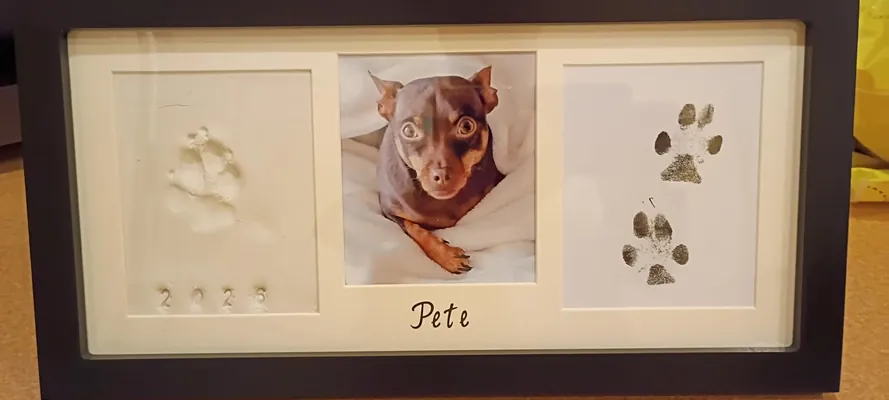
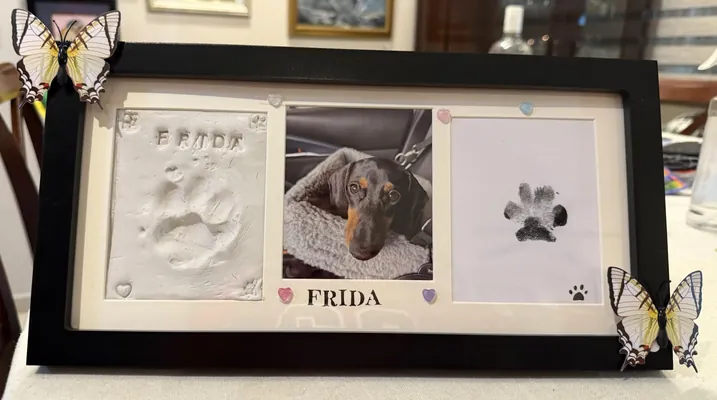
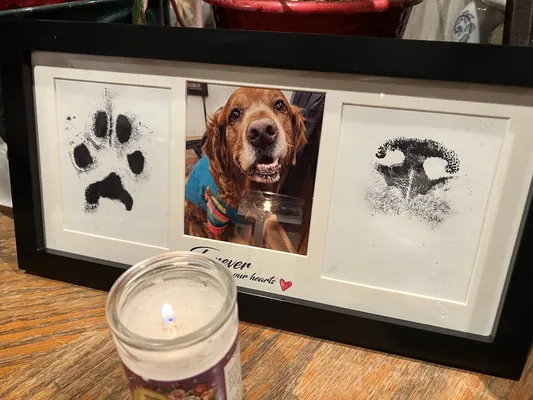
A few things are much easier before or soon after a dog is gone than later. If your dog is old or ill and you know a goodbye is coming, you can ask your veterinarian whether they offer paw print impressions, a fur clipping, or a nose print, and what the options and costs are. One person who made a paw print frame at home wrote that their vet had quoted $65 for each print, which is the kind of number worth knowing before you decide. Other things can simply wait: a collar, tags, a favorite toy, and a folder of photos will all still be there when you are ready to look at them.
If a friend of yours is the one facing this, the same thought applies. Offering to quietly take a few photos, or to hold the leash while they sit with their dog, can mean more than anything you could order online.
What can I save to remember my dog's paws, fur, and face?
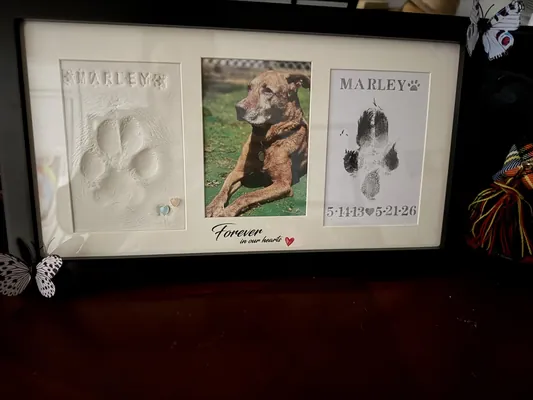
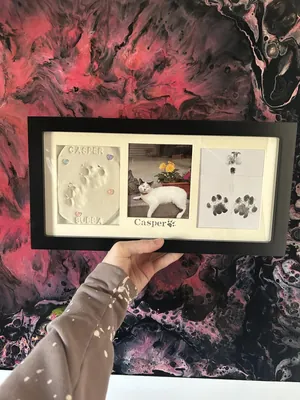
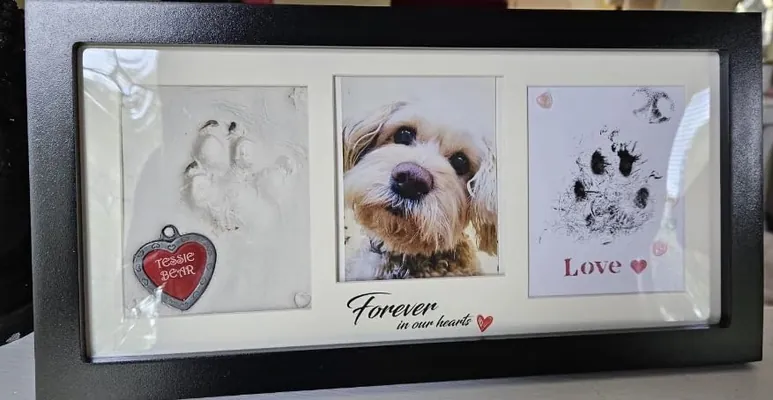
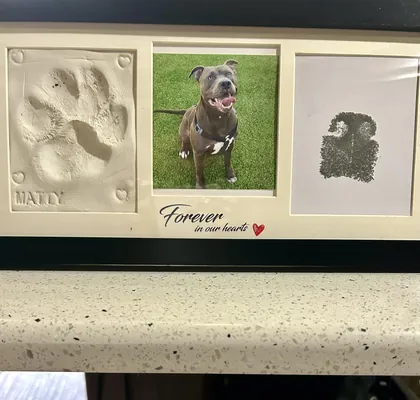
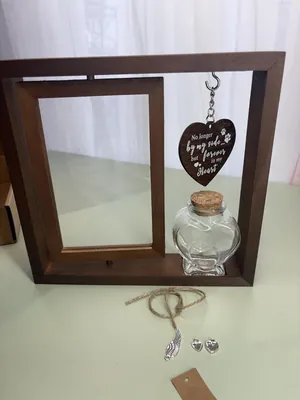
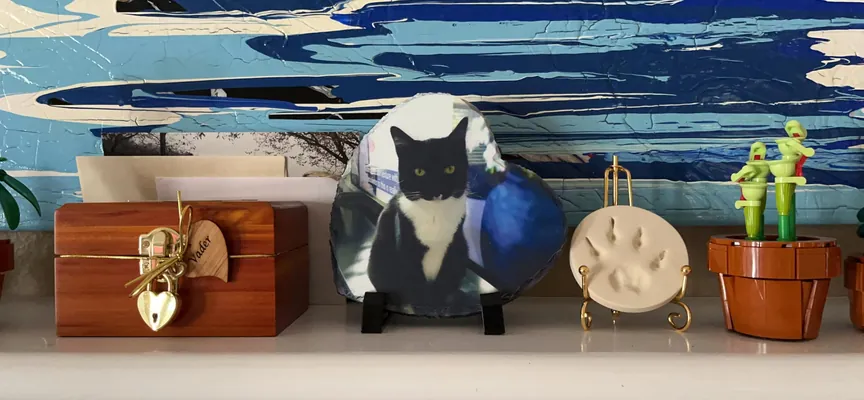
The most personal keepsakes are small physical traces of the dog: a paw print, a few clipped hairs, a collar tag. They are also the ones you cannot recreate later, which is why it helps to think about them early. A frame that holds a print and a favorite photo together turns those traces into something you can put on a shelf instead of a drawer.
Ink or clay for a paw print?
Most home kits offer both, and each has quirks. Ink is quick, but it takes practice. Several people who used a kit with both ink and clay said the clay was easy to press but took a long time to air dry, while the ink pad stayed tacky for days and smudged if touched. A few ended up with hairline cracks in the clay. The advice that comes up again and again is to work slowly, practice on the extra sheets first, and have a spare ink pad on hand.
It also helps to know your dog. A calm dog may let you press a paw into soft clay without fuss. A nervous or tired one may prefer a quick ink print on paper, or no print at all. If your dog is already gone, a nose or paw print is harder to get, and a photo plus a clipping of fur may be the better frame.
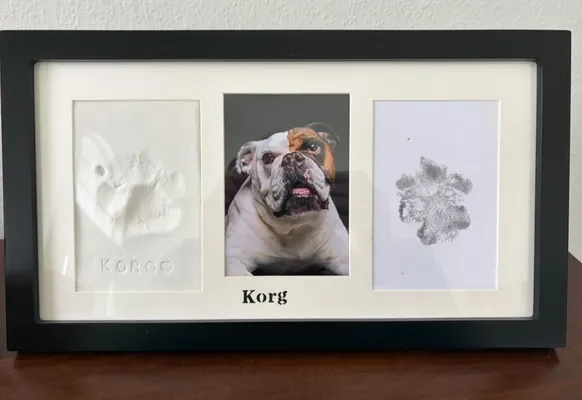
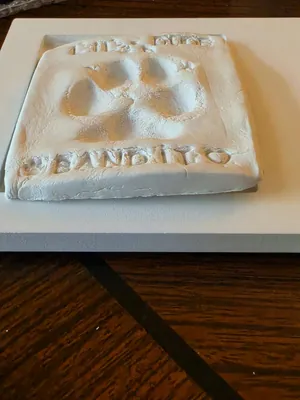
What about keeping some of their fur?
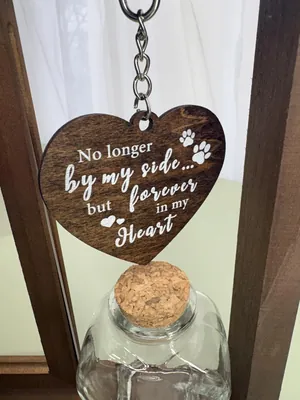
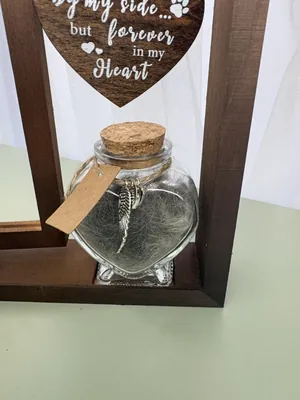
Fur is the one keepsake that feels like the dog itself, and it is easy to save. A few whiskers or a small snip from the chest or ear is enough. Some people keep fur in a small glass jar, and others fold it into a handwritten note. If you are the friend giving a gift, one buyer described secretly clipping a little of a senior dog's fur days before a scheduled goodbye so the jar would be ready; check with the family first if you are not sure how they feel about it.
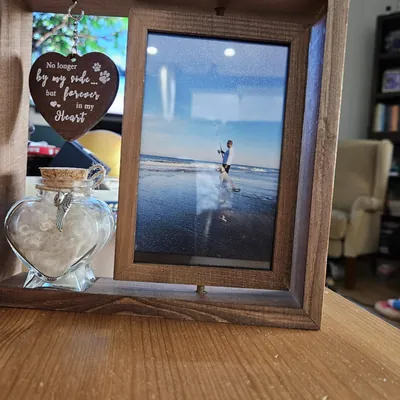
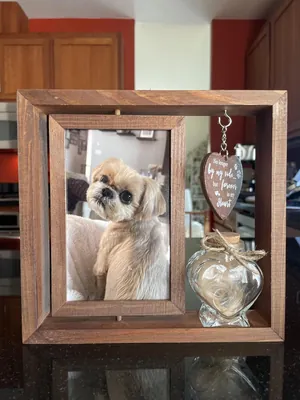
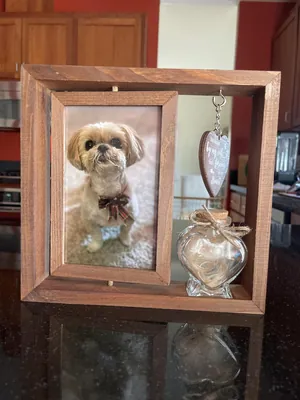
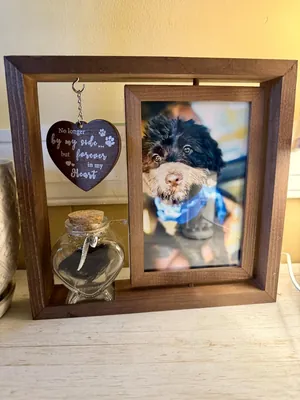
Frames that combine a photo and a fur jar solve a practical problem: the keepsake and the picture live in one place, and you can swap in a new photo later. Check what the jar can hold. One buyer noted it is big enough for a small collar or a name tag, not only fur.
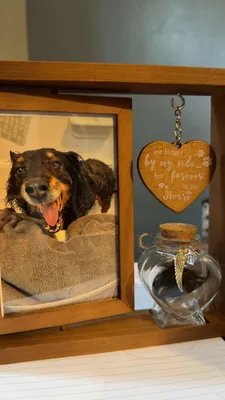
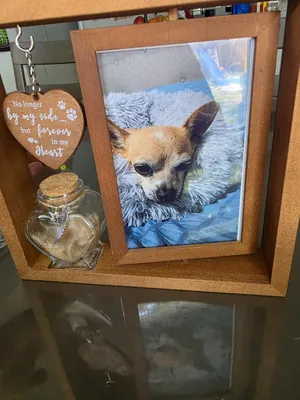
Where in the house should a memorial go?
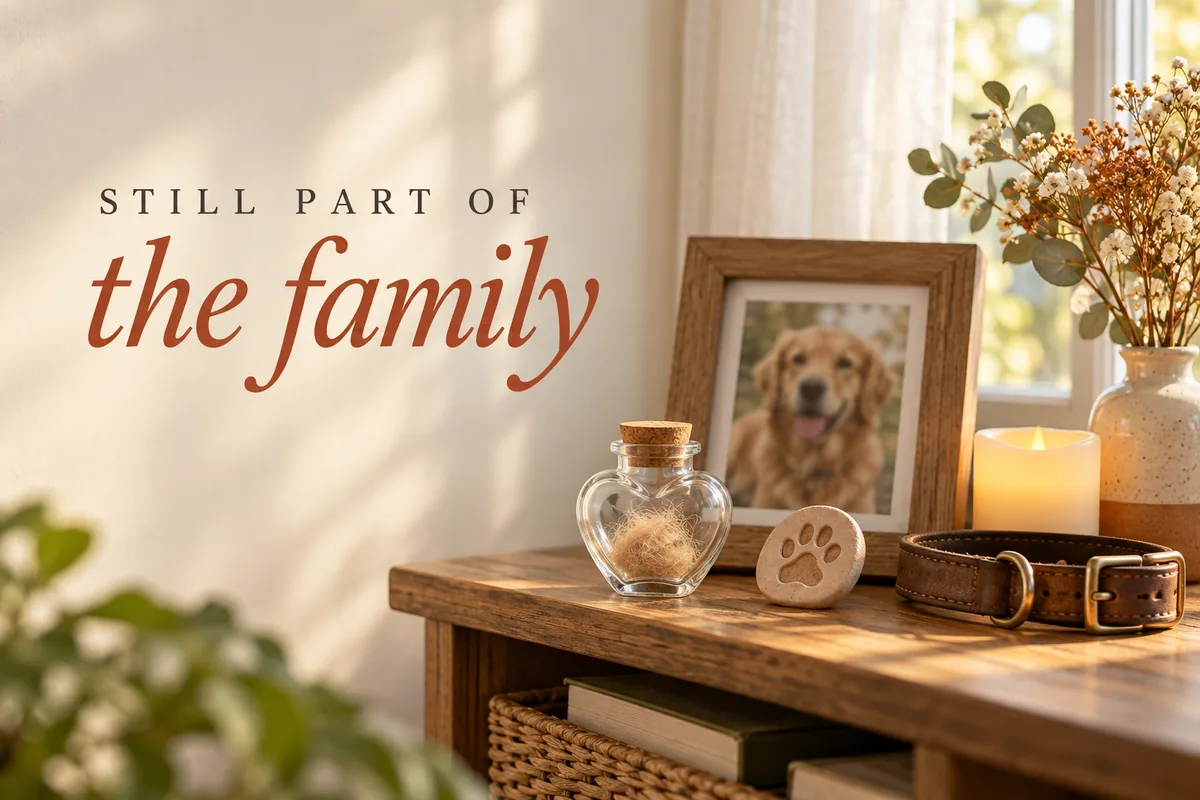
A memorial works best in a spot you pass naturally but do not have to walk through every minute: a bookshelf, a dresser, the end of a mantel, the corner of a desk. Right where you hang your keys can feel like too much on a hard day, while a spare room can feel like hiding it. Many people start with a small shelf and a photo and add to it slowly.
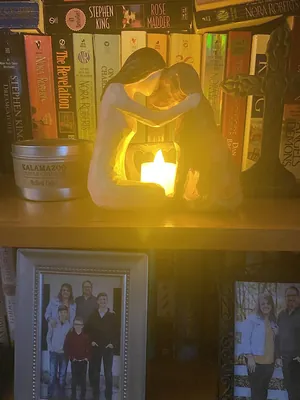
A few small rituals can make the spot feel alive rather than static. Light a flameless candle at the end of the day, place a fresh flower near the photo on the anniversary, or set the dog's collar beside it. Pieces that can sit among other family photos, rather than standing alone in a corner, tend to feel less heavy.
Is a figure or sculpture a good idea?
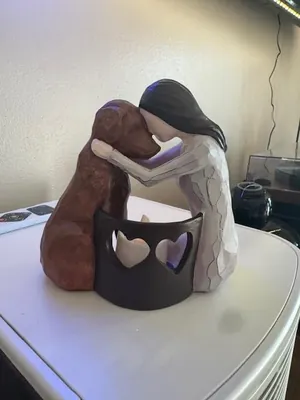
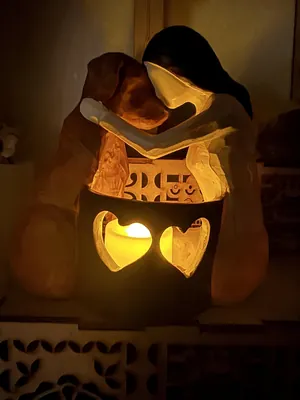
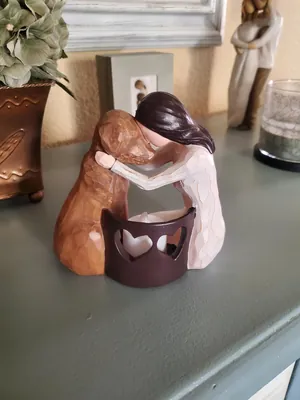
It can be, particularly for people who do not want a full photo in view all the time. A figure of a person embracing a dog, for example, says the relationship without showing a face. Buyers of one such resin statue with an LED tea light often said it was larger and more detailed than expected, and a few repainted the figure's fur to match their own dog's color. One buyer said the face paint looked slightly smeared on their piece, and two reported damage or a broken light on arrival, so give it a look as soon as it comes, particularly if it is a gift.
What if the memorial is for more than one pet?
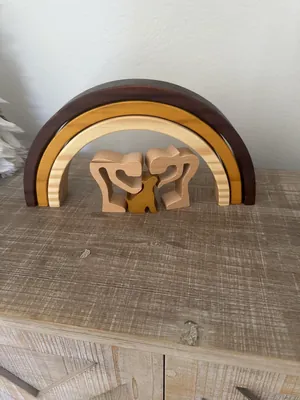
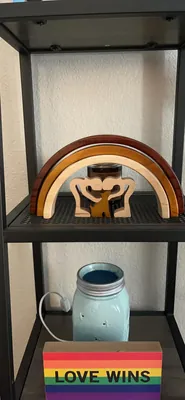
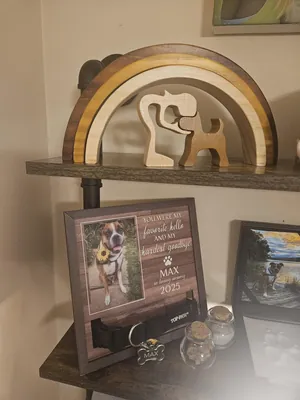
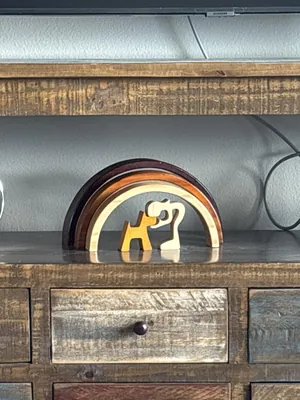
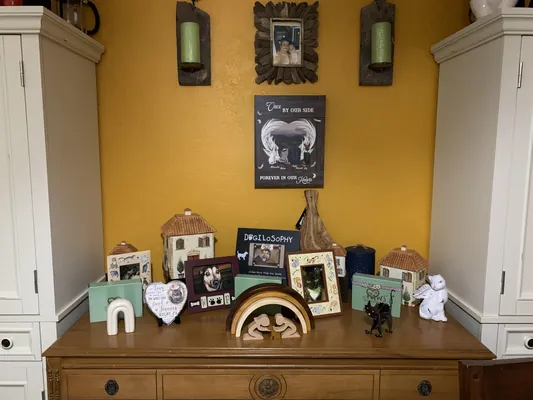
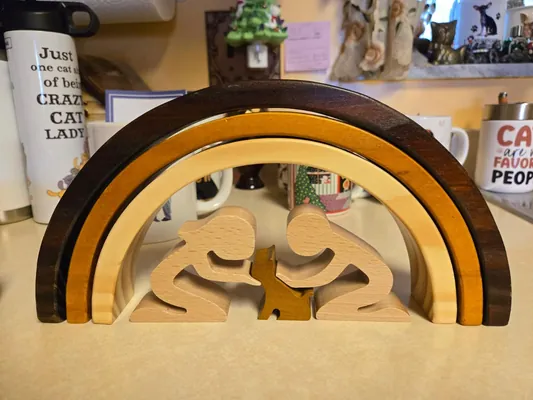
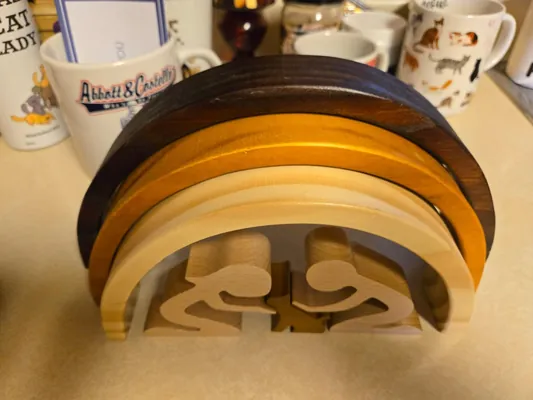
Families who have lost several dogs often want one piece that stands for all of them rather than a shrine of separate frames. The wooden rainbow shape below comes without a name or photo, and one buyer set it beside four others to remember five German shepherds. The listing describes it as a three-tone stained wooden rainbow with a person and a dog figure, packed in a gift box with a poem card, and several buyers mention that each purchase includes a donation to animal rescue.
What if a photo matters more than a figure?
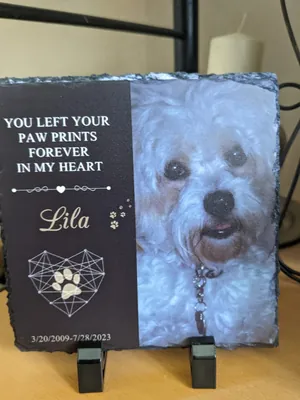
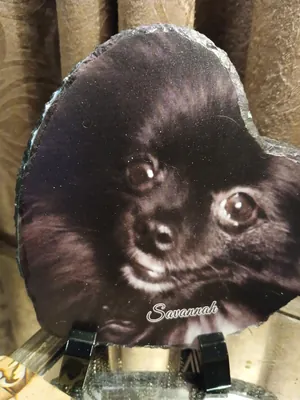
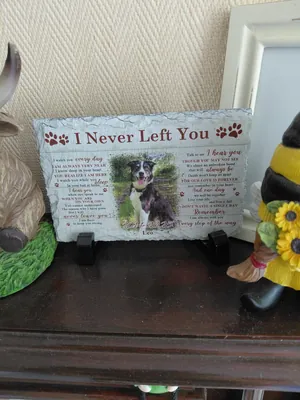
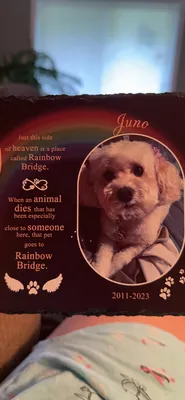
For some people the face is the point. A printed stone or slate tile with a favorite portrait, the dog's name, and the years can sit on a shelf with its own stand, or be set in a garden. The listing for the personalized stone below describes natural slate with irregular edges and printed photo, name, dates, one of ten fixed quotes, and one of seven symbols. Buyers described it as heavy and solid, and one called it fairly small while confirming the stated measurements were accurate, so check the size against where it will sit.
Because it is printed from your own picture, a clear, well-lit photo makes a big difference. Center the face before you upload, and avoid dark photos if you want to read any text on them. One buyer said black ink on a dark photo made the message hard to read.
How can a yard, a garden, or a window hold the memory?
If your dog had a favorite place outdoors, that spot may be the best memorial site you have. It already holds the memory. A flower bed, a corner under a tree, or the patch of sun on the patio can be marked without much more than a small statue, a stone, or something that moves in the wind.
What kind of garden piece actually works outdoors?
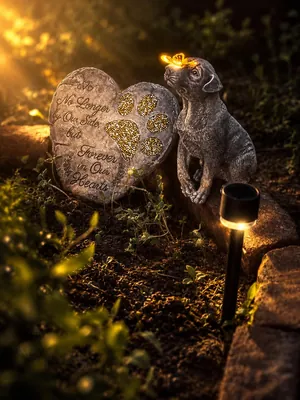
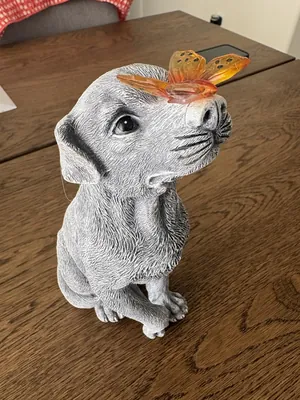
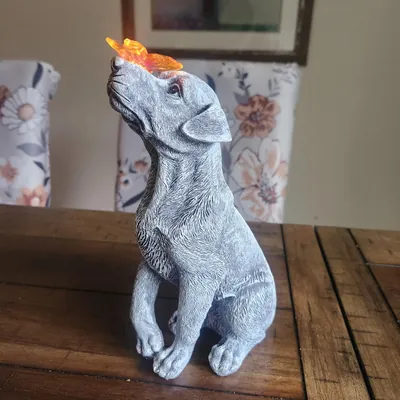
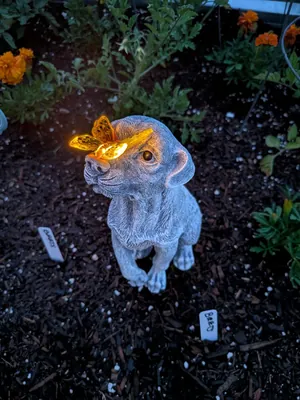
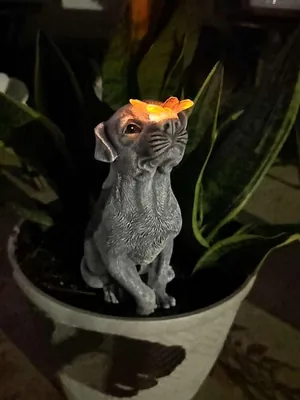
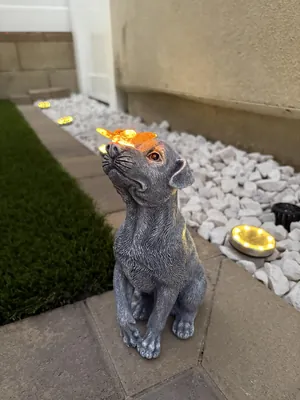
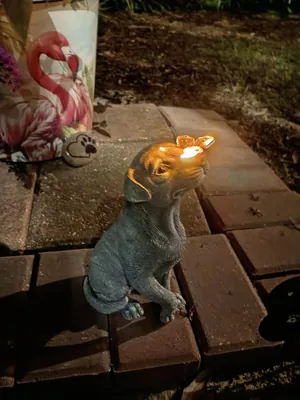
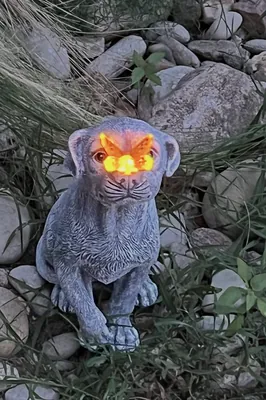
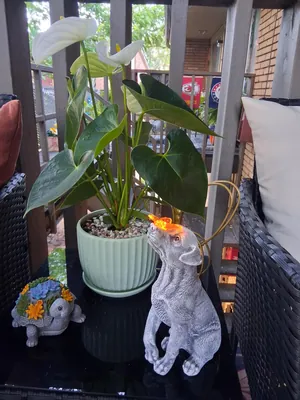
Scale is the thing to check. Small resin garden statues are easy to place but often smaller than the photos suggest, and the buyer comments on a small solar statue are a good example: people called it sweet and well made, but also said it stood only about 6 to 9.5 inches tall, that the solar light is just the butterfly on the nose, and that it can tip over in wind. A few liked that it glowed through the night, and one set it near a pet's grave. Anchoring it to a stepping stone or among plants can help.
What about wind chimes?
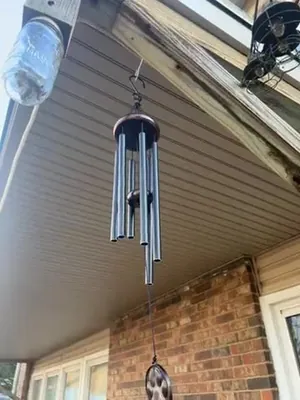
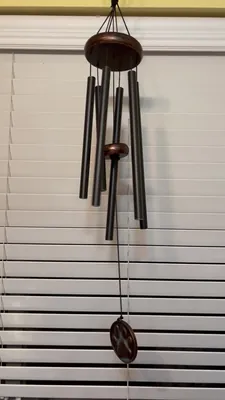
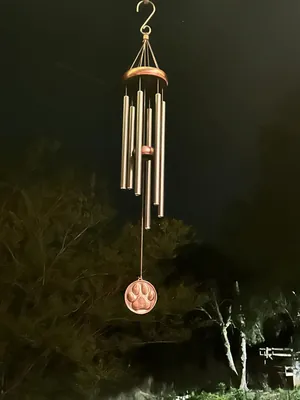
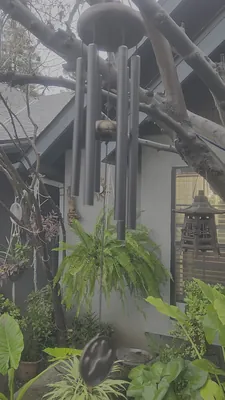
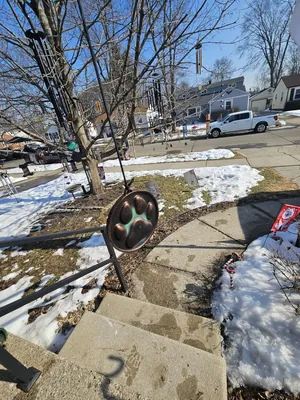
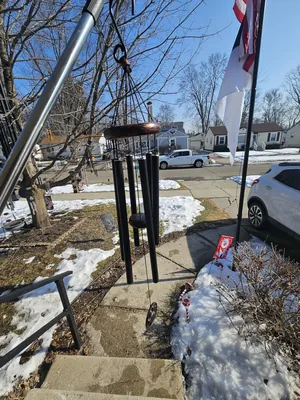
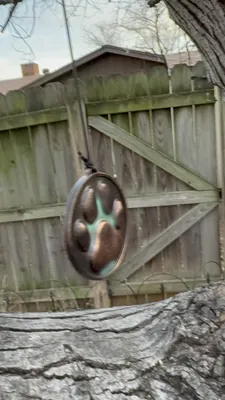
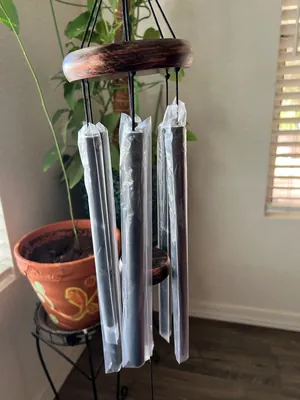
A chime brings sound to the memory, which some people find easier than a photo. The tone depends on the tubes and how thick the metal is. One buyer said the metal felt thicker than other chimes they own, giving a deeper tone, and another noted that the wood piece can be slid to soften the sound if it feels too loud. People also hung theirs by a bench, in a tree near a pet's resting place, or on a porch. One person said they felt the paw pendant looked cheap up close because of the paint, so look at the pendant if it matters to you.
If you are giving a chime as a gift, add your own note. One buyer said they could not add a message at checkout and wished the recipient had known who it came from.
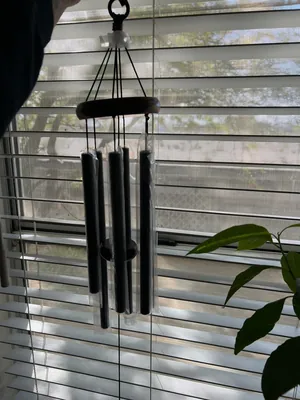
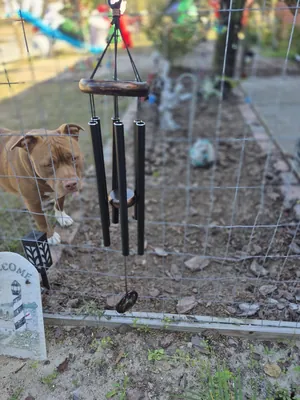
Can light help, even on a gray day?
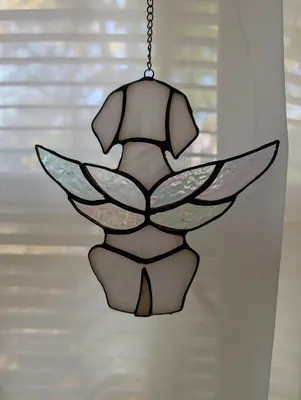
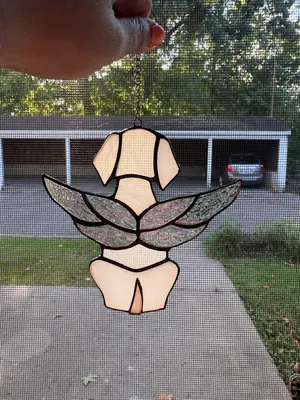
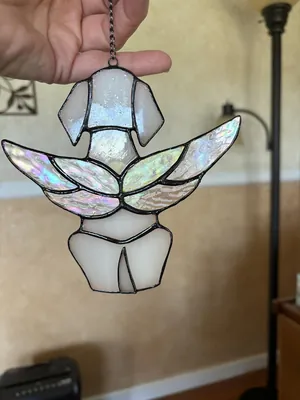
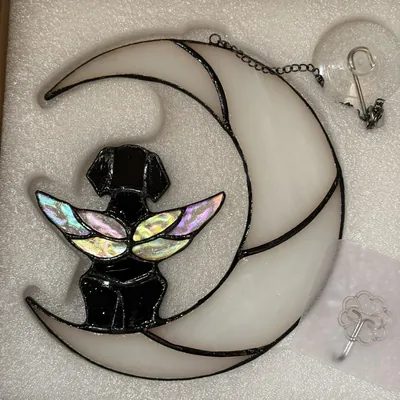
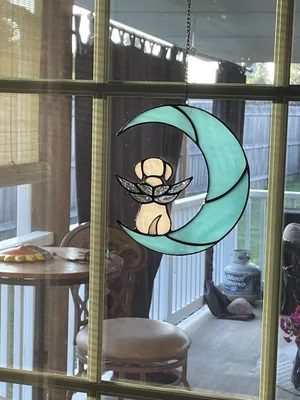
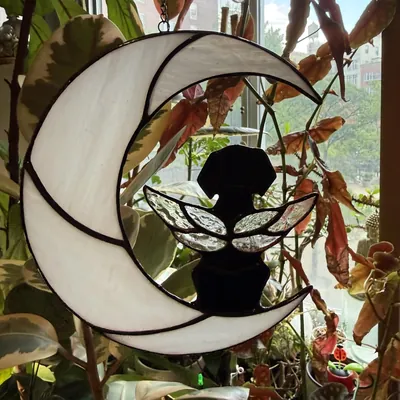
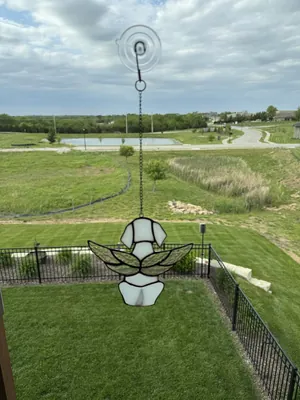
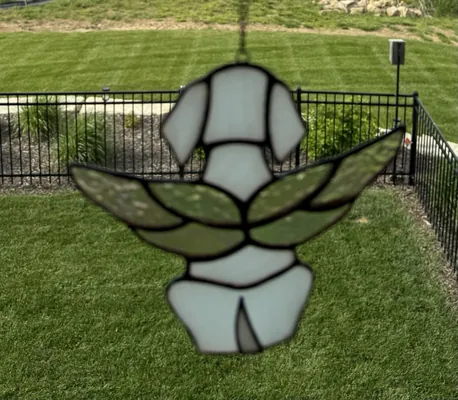
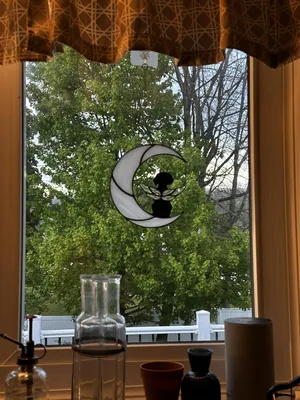
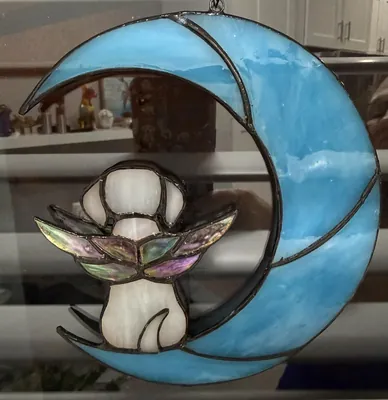
A suncatcher in a window gives you something that changes through the day: a patch of color on a wall in the morning, a glow on a gray afternoon. That makes it a good fit for people who do not want a statue or a shrine. The listing for the stained glass piece below describes handmade copper-foil glass with an angel dog on a moon, and buyers called it thick and well made and about 6 inches tall. It comes with a suction cup and an adhesive hook, and one buyer said they would be careful about trusting either on a heavy piece, so check the weight against where you plan to hang it.
The dog's color matters more than you might expect. One buyer who wanted a piece to match a brown dog said the listing described a white dog while the piece they received was brown, so check the variant and color shown for your order.
What do you give someone who just lost a dog?
Start with the person, not the product. People who have lost a dog usually want two things from the people around them: to hear the dog's name, and to not be hurried. A card that says something specific, such as "I keep thinking about how Max waited at the window for you," often means more than the item that comes with it.
- Keep it to one gift. A single thoughtful piece is easier to receive than a box of things. If you want to send more, send something small that can be used up, like a meal or a note, in the following weeks.
- Skip the silver linings. Phrases such as "at least they had a long life" or "you can get another one" tend to land badly in the first weeks. Say that you are sorry, that you remember the dog, and that you are there.
- Know whether they want a keepsake or a reminder. Some people want a photo right now; others will put anything with the dog's face in a drawer. If you do not know, a nameless piece like a shelf sculpture, a chime, or a suncatcher is easier to receive than something with a face.
- Mind the wording on the card. One buyer said the poem card that came with a rainbow keepsake was more than they could handle, so read any pre-printed message before you give a gift, and add your own handwritten line.
- Check how it arrives. A few buyers wrote about shipping labels on the box, a missing note field, or a damaged candle or glass piece, so order early and look it over before you hand it over.
When is the right time to give it?
Within the first week, a card or a short message is enough. A physical gift tends to land better a few days to a few weeks later, once the first wave has passed and the house is quieter. For personalized items like a photo stone or a paw print frame, you will need a picture or a print, so ask a family member or friend quietly, or offer to help with the project rather than surprising the grieving person.
What if the loss happened a while ago?
A gift on a later date, such as the anniversary of the day or the dog's birthday, can feel especially thoughtful because it tells the person you remembered. It also takes the pressure off the first weeks, when people are being asked to be strong.
What else helps besides things on a shelf?
Objects are one way to carry a memory. A few other ways cost nothing and ask very little of you.
- Write the stories down. The time they stole a sandwich, the way they greeted the mail carrier, the sounds they made when they dreamed. A page of short memories is a keepsake that grows over time.
- Give in their name. A small donation or a bag of supplies to a local shelter turns the loss into something useful, and many families find that comforting.
- Plant something. A shrub, a bulb, or a small tree near a favorite spot can be visited each season.
- Keep a small routine. If the evening walk was the center of the day, a short walk at the same hour can soften the silence, even on your own.
- Talk to someone who gets it. A friend who has lost a pet, a family member, or a support group can be a relief when others do not understand how deep the loss goes.
If the grief feels like it is getting in the way of eating, sleeping, or going to work for a long stretch, it is worth speaking with a doctor or a counselor. The AVMA policy linked earlier makes the same point: empathy from the people around you is encouraged, while formal mental health support should come from trained professionals.
A memorial can be as simple as a framed photo on a shelf or a stone in the garden, and none of it has to be done right away. What tends to matter most is that the dog still has a place in the home, and that the person grieving feels that the loss was noticed.