In this article
Thank a teacher by naming something they did and the difference it made, then letting the student add their own words or drawing. A note can be the whole gift. If you add a present, check current school rules and choose something the teacher has asked for or would clearly enjoy.
A useful teacher thank-you starts with something you noticed: a child who now volunteers to read, a patient explanation after a difficult lesson, or a classroom routine that helped mornings go more smoothly. Put that detail in a note before deciding whether to add a present. The message can stand on its own.
If you do give a gift, keep it easy to accept, carry home, and use. Check the school’s current gift rules, stay within a budget that feels comfortable, and avoid making the teacher’s personal preferences a guessing game. Appreciation does not need to look the same from every family.
What should you write in a teacher thank-you note?
Use three simple parts: what the teacher did, what difference it made, and your thanks. “Thank you for giving Sam a way to practice before reading aloud. Sam now wants to show us the book after school. We appreciate the time you took to make that possible.” Change the details to something that actually happened rather than borrowing a sentiment that could fit anyone.
Let the student add their own words, even if the handwriting is uneven or the sentence is short. A younger child can draw a picture or finish a prompt such as “I liked when we…” An older student might mention a project, a useful comment on an assignment, or a lesson that changed how they thought about a subject. You can write your own brief message beneath theirs.
Keep private details private
A specific thank-you does not need to include a child’s medical history, other students’ names, or a sensitive family story. Put a personal note in an envelope rather than expecting the teacher to read it aloud. If you want to send positive feedback to a school leader, keep that message factual and focused on the teacher’s work.
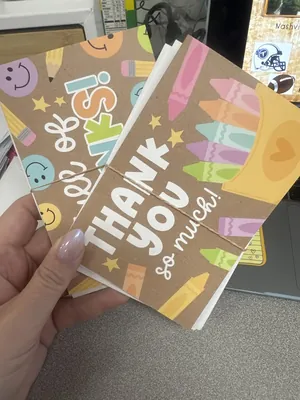
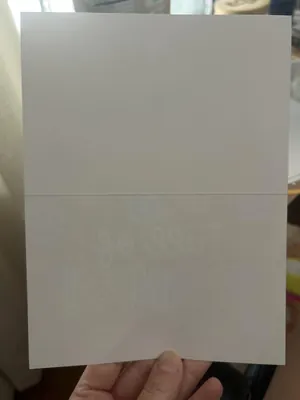
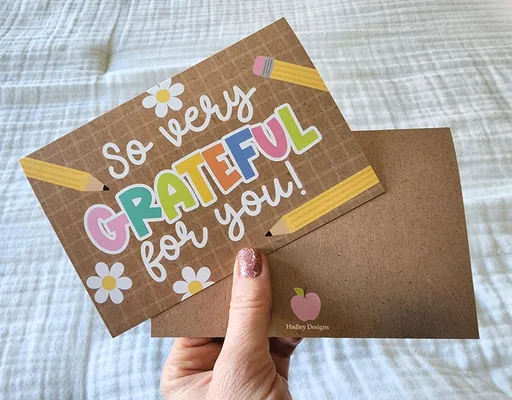
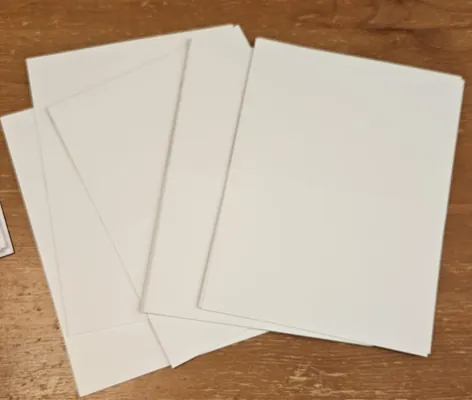
Plain paper works. If you are thanking several educators, a pack of blank-inside cards makes it easier to personalize each message. The set below lists 24 cards in six designs, with envelopes and a folded size of about 6 by 4 inches. Customers say they arrive flat and need folding. Opinions on paper weight differ, and one reported short envelope counts, so check the pack before distributing cards to a group.
Make the gift easy to accept
Check the school or district’s current guidance before buying, including rules for gift cards, group gifts, and items intended for a classroom. Ask the office if the answer is unclear. Do not use a gift to request special treatment, tie it to a grade, or attach an obligation to reply. A sincere note is a complete thank-you when gifts are restricted.
For a class collection, name one organizer, make participation optional, and keep contribution amounts private. Give the same invitation to write a message whether or not a family contributes money. Set a deadline and have the organizer handle the purchase and delivery so the teacher does not inherit the coordination.
Include the people whose work you actually know
Consider assistants, specialists, tutors, coaches, and support staff who have helped your student. You do not need identical presents for everyone or a gift for every adult in the building. A different specific note to each person can be more thoughtful than matching objects with the same message.
If you want a small desk token, first consider whether there is room for it. The crocheted heart-flower pot below is listed at approximately 4 inches tall. Its feedback concerns other messages and occasions, so the current teacher version should be described from the listing only. It is a lightweight decoration, not a paperweight or a guaranteed permanent fixture on the teacher’s desk.
Choose practical gifts from a known need
Notice a request the teacher has actually made, or ask discreetly through a wish list. Do not assume that teaching creates a need for another mug, tote, or classroom decoration. Classroom supplies and a personal thank-you are different gestures; if you are fulfilling a classroom request, label it that way rather than making the teacher guess.
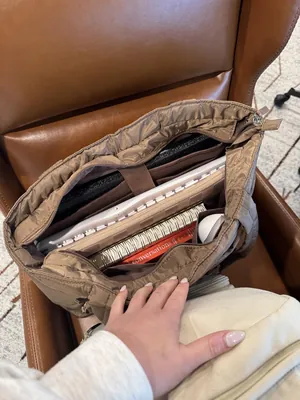
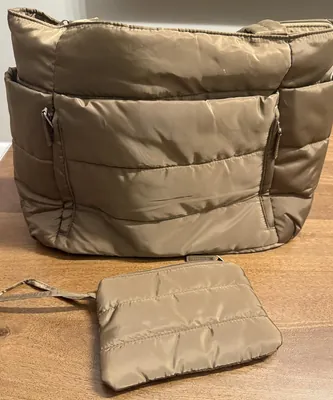
A work tote can be useful when the teacher wants one and you know the required shape. The quilted tote below is listed at 16 by 6 by 13 inches, with a laptop sleeve, inner compartments, bottle pockets, and a matching small pouch. Compare the sleeve dimensions with the actual device rather than relying only on a screen-size label. Customers liked the organization, but some found it large, the straps thin under a heavy load, or a bottle pocket tight. It can tip when unevenly packed.
The listing describes machine washing with air drying; confirm the care label before cleaning. A bottle pocket does not make the bag spillproof, and packing more into it does not make a heavy load comfortable. Include a gift receipt when possible and let the recipient choose whether it replaces their current bag.
Teacher lettering needs a spelling check
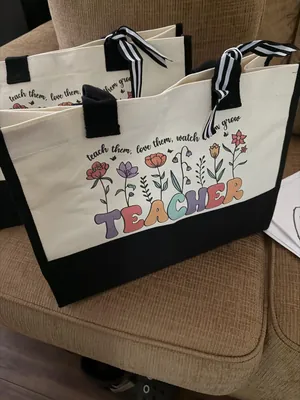
For someone who likes teacher-themed accessories, the floral tote set below is listed with a roughly 15.8-by-6-by-12-inch bag, pouch, 16-ounce glass with lid and straw, candle, bracelets, bookmarks, keychain, and card. The listing gives inconsistent total item counts. Customers also received an incorrectly labeled bag or misspelled bracelet. Check each word and each included piece before giving it; do not assume the teacher design shown on the listing confirms what arrived.
Let the contents determine whether a gift box fits
A coordinated box can save assembly time, but count the pieces the recipient would use. If you do not know their preferences, a personal card may be the safer choice. Scented products, jewelry, and bath items are personal; including more of them does not automatically make a gift more considerate.
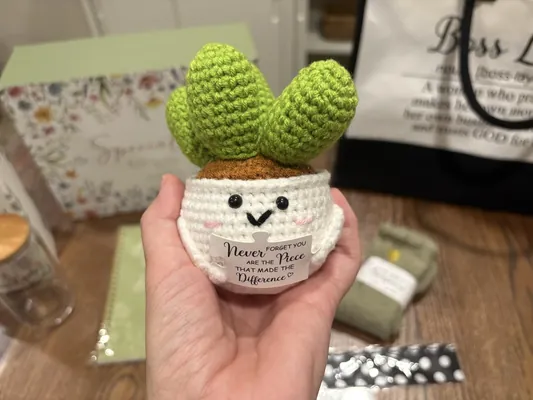
The general thank-you set below lists a large canvas tote, 16-ounce glass with straw, crocheted cactus, notebook, bracelet, socks, candle, ribbon, and card. It uses broader appreciation wording rather than only teacher lettering. Feedback includes other messages and styles, and several customers had shipping labels attached to the presentation box. Inspect the selected wording and outer box if you plan to hand it over without wrapping.
A small symbolic gift should still be easy to care for
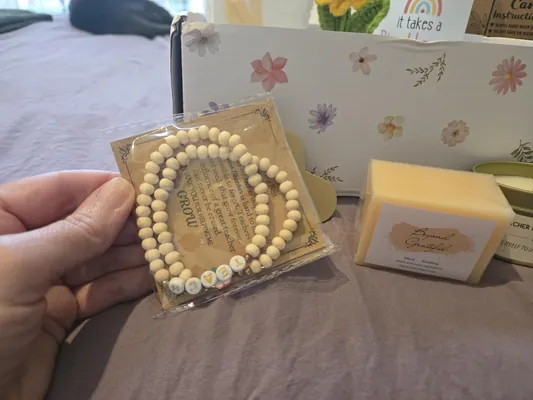
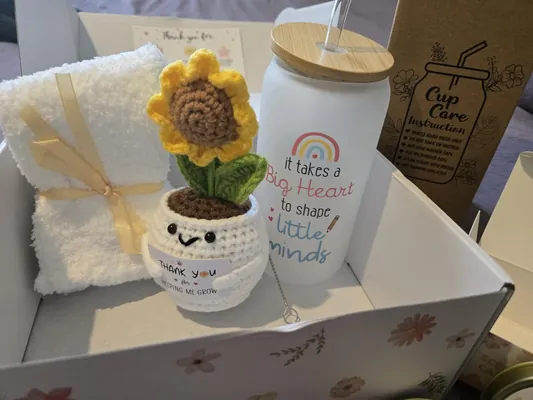
The sunflower set below lists a 16-ounce glass, crocheted flower, wood-bead bracelet, bookmarks, candle, soap, socks, and a card. Customers often liked the flower and soft socks, while one reported strong odor in the box and another received the flower upside down. Glass-care comments mention hand washing and drying the bamboo lid promptly. Check the current care card instead of assuming dishwasher use or treating a straw opening as leakproof.
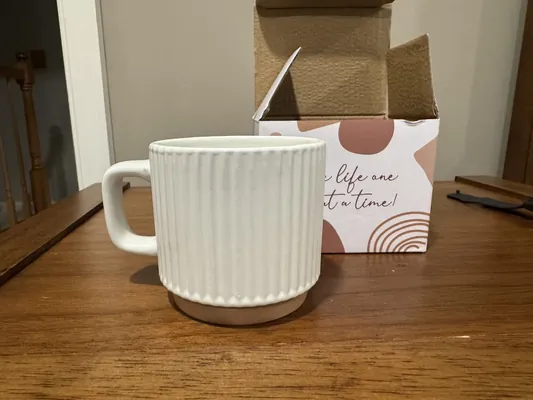
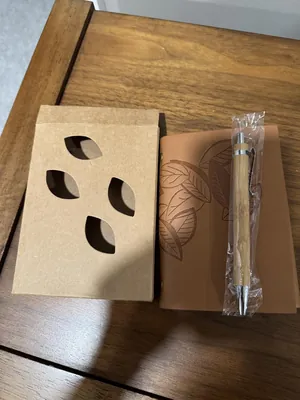
For someone whose taste is less teacher-themed, the neutral mug-and-notebook box below is listed with a small ceramic mug, notebook, pen, eye mask, socks, candle, hand cream, soap, and card. The listing says a spoon or fork may be included at random. Customer photos also show substantially different boxes with steel tumblers and throws; those do not establish the contents of this version. One customer described a tiny mug and roughly 6-inch notebook, so confirm dimensions rather than expecting full-size desk supplies.
Keep personal-care gifts personal
A teacher’s job does not tell you what they want for their skin or home. Avoid a gift that suggests they look tired or need fixing. If a teacher has specifically mentioned enjoying a product, you can choose that item, keep its original ingredients and directions, and include a gift receipt. Otherwise, choose a less personal gesture.
The hand-care set below lists three small products and cotton gloves. The stated sizes are 0.25 ounce for the almond-milk hand cream, 0.30 ounce for the lemon cuticle product, and 0.49 ounce for the shea hand cream. Older customer accounts describe larger containers, so verify the current quantities. Feedback includes strong or disliked scents, small gloves, and repeated reports of open jars or spills. Inspect seals and packaging before giving; do not offer it as treatment for a skin condition.
For someone who already enjoys cosmetic under-eye patches, this separate set is listed with 12 pairs in multiple colors. Much of the feedback also covers other pack sizes and colors. Check the current assortment and ingredients. A small cosmetic gift does not need promises about wrinkles, dark circles, or “instant” results, and a note of appreciation should never comment on how tired the teacher looks.
A home gift needs permission, too
Home fragrance can be welcome when you know the preference and unwanted when you do not. It also adds a device or consumable to someone else’s space. Choose a candle accessory only for someone who has asked for one; do not assume a classroom or staff room permits fragrances or heat-producing devices.
The adjustable candle-warming lamp below is listed with a dimmer and timer. Customers often liked its appearance, but some found the height insufficient for a large jar or the cord shorter than they wanted. Timer descriptions differ across feedback. Check the exact jar clearance, bulb, timer controls, and placement instructions. It heats wax without lighting a wick, but it still produces heat; avoid claims that it is risk-free, pollution-free, or suitable for unattended use.
Deliver it without creating another task
Use the school’s normal delivery process and make the sender clear. Label a group gift with the class or group name and put individual notes together. Avoid interrupting a lesson or expecting the teacher to host a gift-opening moment. For an online teacher or someone you no longer see, a message through an established school contact channel can be enough.
If time is short, send the note now rather than delaying thanks while you assemble a package. You can say, “I wanted you to know how much that helped,” and describe the actual difference. That is useful appreciation on an ordinary school day as well as at the end of the year.