In this article
Kind words, useful help, and memories on their terms.
When someone loses a cat, the empty parts of an ordinary day can be hard to explain: no familiar footsteps at breakfast, no warm weight beside them, no little interruption while they work. You do not need a perfect speech or a memorial gift to acknowledge that loss. A specific offer of help and a willingness to listen are useful places to start.
Let your friend decide whether they want company, a conversation, a keepsake, or some space. The aim is to make the next day a little easier while respecting the relationship they had with their cat.
What do you say to someone whose cat died?
Use the cat’s name, acknowledge the loss, and leave room for whatever response comes. “I’m so sorry about Milo. I remember how he always claimed your desk chair. I’m thinking of you” is enough. If you did not know the cat, say you know how much they mattered. Avoid explanations about why the loss happened or instructions to focus on the good years.
The University of Florida’s guidance on supporting a grieving pet owner emphasizes listening without judgment, respecting time alone, and offering practical help. You can sit quietly without filling every pause. Do not suggest another cat as a replacement or turn the conversation toward your own loss unless your friend welcomes it.
Send a message that does not require a reply. If they want to talk, ask whether they would like to share a favorite memory. If they change the subject, follow their lead. Someone can laugh at a story and still be grieving; neither reaction needs correcting.
Offer one manageable thing you can actually do
Make the offer concrete: drop off dinner at an agreed time, pick up groceries, or take care of an errand. Ask about food preferences and where to leave the delivery. A vague “anything you need” can leave the person with the work of deciding what to delegate.
Do not clean out bowls, beds, toys, or a litter box as a surprise. An empty corner can feel very different when someone else made the decision. Offer to help sort or store belongings only if asked, and let your friend choose what stays. The same applies to photos, collars, and medical paperwork.
If you are far away, a short voice message or a mailed note can still be personal. Offer to print a photo they choose, rather than requesting a long selection process. Keep the original file safe, and ask before sharing the cat’s name, pictures, or news of the death publicly.
Make a small place for a memory, if they want one
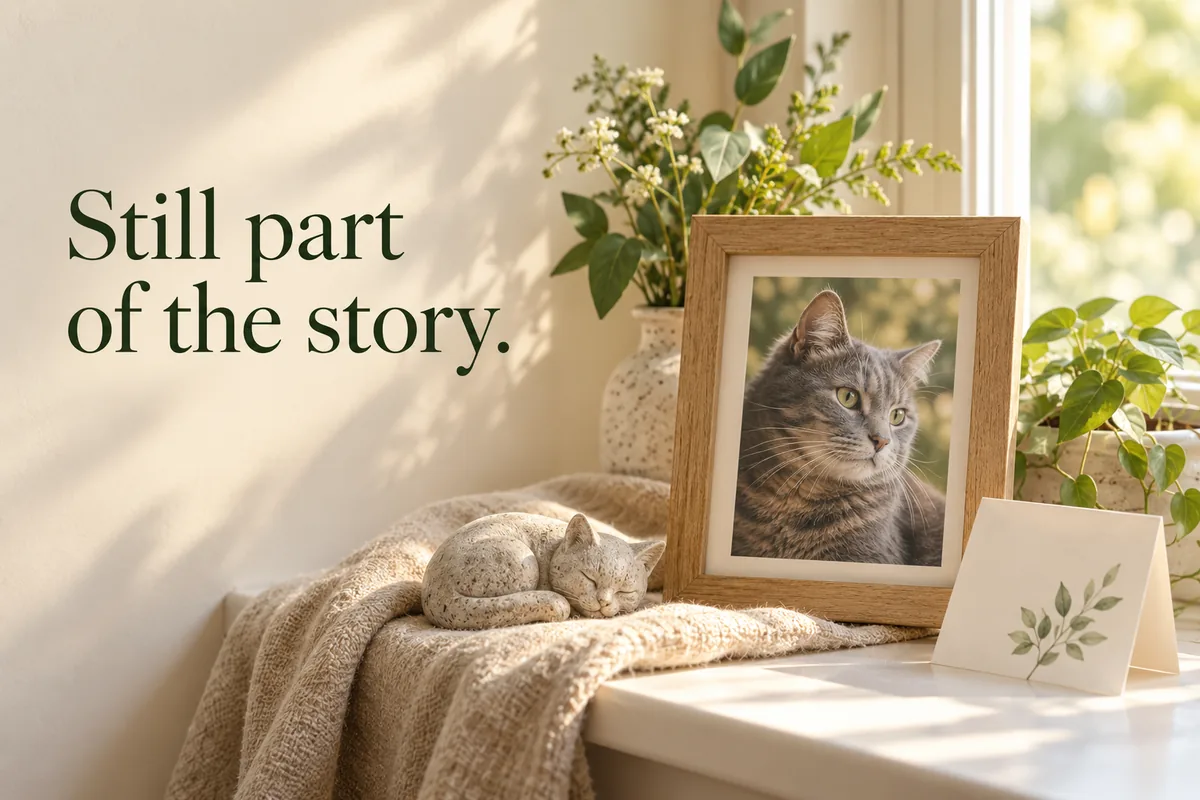
Ask whether a framed picture would feel welcome now or later. Choose a photograph of the cat as they remember them—on a favorite chair, watching birds, or doing something unmistakably their own. Avoid using an image from the final illness unless the owner specifically chooses it.
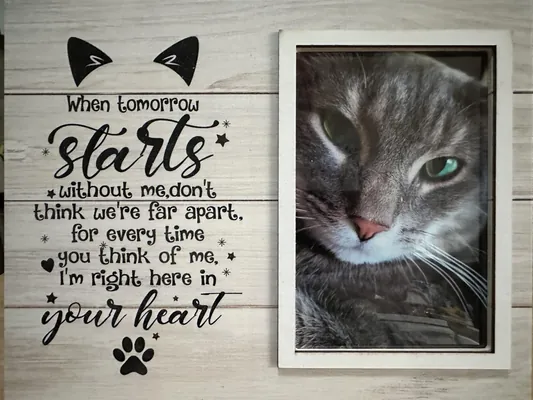
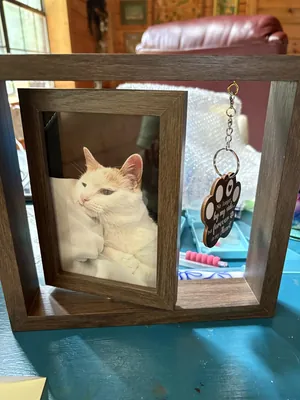
For a single picture, the cat-ear frame below is listed at 10 × 8 inches overall and holds a 4 × 6 photo, with a tabletop stand and hanging hardware. Customers liked the sentiment and display options, while others received chipped or marred corners or found the stand leaned back farther than expected. It is described as printed wood-based material, not a hand-carved solid-wood keepsake. Inspect it before gifting and check the shelf depth with the stand open.
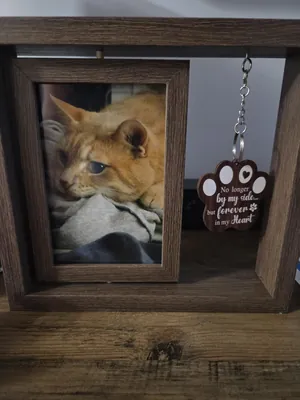
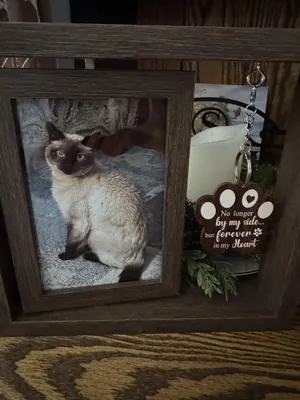
If your friend has two favorite photos, a rotating display can hold a different memory on each side. The wooden-look frame below is listed at about 9 × 8 inches overall with two back-to-back 4 × 6 pictures and a hanging message. Customers liked turning between photos, but accounts differ on the finish, materials, and whether both sides of the message are decorated. The clear covers are described as plastic or acrylic in the feedback. Check the actual cat version, finish, and stability rather than expecting every pictured variant to match.
Keep the gift from becoming an assignment
A fur clipping, paw impression, or collar may already exist, but none is a requirement for remembering a cat. Ask before handling or rearranging those items. A favorite photograph and a note are complete on their own. Do not imply that someone missed a last chance if they do not have a physical keepsake.
The rotating frame-and-jar set below combines two 4 × 6 photos with a small cork-topped jar and hanging heart. Customers appreciated the arrangement, while several reported missing clear panels, loose parts, or a frame that would not stay mounted. That matters for irreplaceable items: verify that the received frame stays securely in place before putting anything precious near it. Return a faulty one rather than asking the recipient to glue or tape it together. The jar is decorative; airtight, archival, and urn suitability are not established by the supplied information.
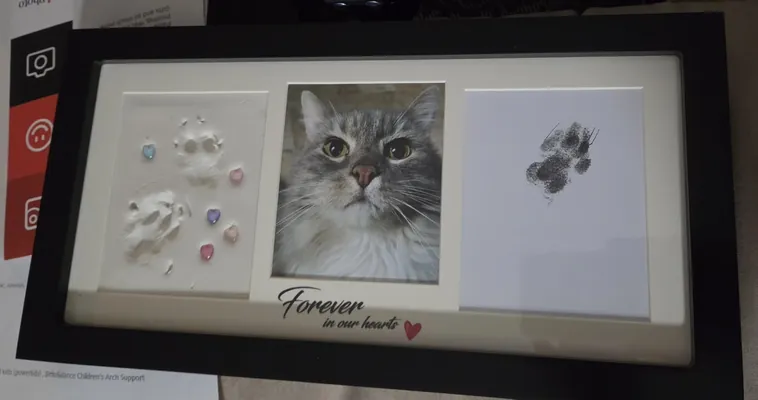
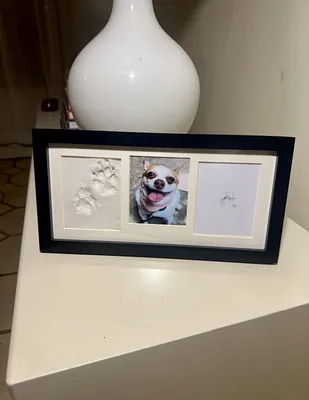
A paw-print kit needs different timing. The frame below includes clay, a clean-touch ink system, and personalization tools. Some customers found the process straightforward; others describe cracked clay, smudging ink, poor fit after drying, or missing and previously used pieces. It cannot recreate a paw print after the opportunity has passed. Before offering it, ask whether your friend already has an impression or whether their veterinary team can advise about an appropriate option. Do not press a sick or distressed cat into a craft project.
Let the recipient choose what the object means
Some people find a small sculpture easier to display than words about death. Others prefer no memorial objects at all. Ask about the imagery before sending angels, rainbows, or an afterlife message. These symbols can be deeply meaningful when shared, but they should not make assumptions about belief.
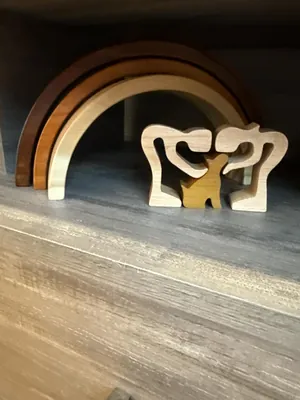
The layered wooden rainbow display below includes a person-and-cat silhouette. Customers often liked its compact shelf presence and warm colors; some supplied examples show dogs, couples, or other figures instead. Match the cat design and person arrangement to the recipient. A few accounts mention rough finishing, and the included poem need not be displayed or read aloud. The sculpture is a symbol, not a promise about how someone will feel.
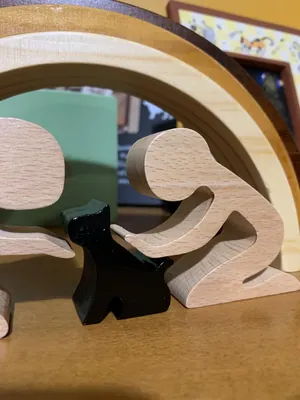
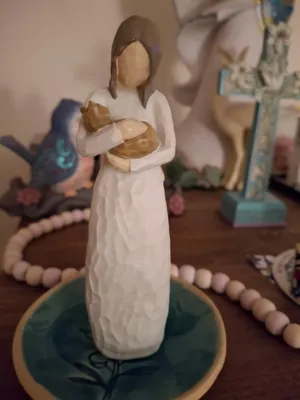
A figure holding a cat can emphasize the relationship without using a written message. The six-inch resin figure below has a carved-wood appearance rather than being a wood carving. Customers liked its weight and small shelf footprint, with occasional comments about uneven paint or smaller-than-expected size. Supplied pictures show several cat colors and nearby unrelated figurines; check the actual selected color and do not assume surrounding pieces are included.
For a person who remembers an orange cat, the figure below is listed at about 5.6 inches tall with an orange cat in its arms. Feedback also covers black and gray versions. Customers liked its compact size and detail, though some expected a larger piece. This is a stylized figure, not a custom portrait or exact reproduction of a particular coat pattern.
Let remembrance blend into the home or garden
A memorial does not need a dedicated room or a formal unveiling. Your friend may want a familiar windowsill, a sheltered garden corner, or a private drawer. Ask before placing anything. Keep small glass pieces, chains, and dangling decorations away from pets and young children.
The floral cat suncatcher below offers an image rather than a bereavement message. The listing describes printed real glass with a stained-glass look; that is different from traditional assembled stained glass. Feedback spans sleeping cats, dogs, and other designs, and size impressions vary. Confirm the black-cat design, dimensions, and suitable mounting hardware. Do not promise projected rainbows or permanent outdoor durability.
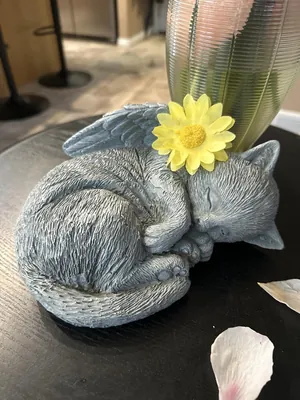
For a garden setting, the sleeping winged cat below is listed at 8 × 6.5 × 4.5 inches in resin with a stone-like finish. Customers liked the detail, but weight and size surprised some, and the gray tone can appear much whiter in person. It is not solid stone. A sheltered, stable spot is a sensible choice; customer accounts do not establish years of weather resistance.
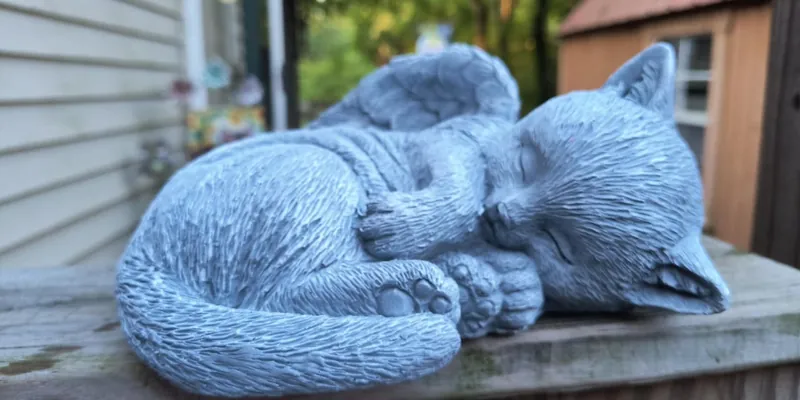
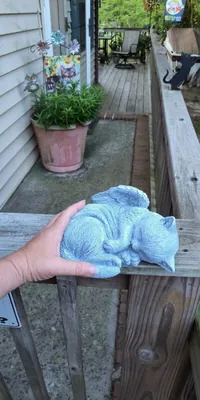
If your friend wants a visible remembrance inscription, the resin cat below is listed at 6.1 × 5.5 × 4.5 inches with a short memorial message. Customers appreciated the detail and manageable size, although some expected something larger. It is a decorative piece, not an urn; do not drill it or modify it to hold remains. Let the owner choose placement and any arrangements involving remains with the appropriate provider.
Keep remembering after the first round of messages
Put a quiet reminder on your own calendar to check in again. Mention a familiar story if it feels welcome, offer another specific errand, or invite your friend for a low-pressure walk. Do not measure recovery by whether they have packed away belongings or adopted another cat.
Cornell’s Feline Health Center explains that grief has no fixed timeline. If sleep, eating, relationships, or daily tasks remain difficult, professional support can help. You can offer to look for a pet-loss support group or counselor with them, without diagnosing their grief. A keepsake may have a place in the process; steady, respectful care has a place too.