In this article
Offer a small choice, clear a place to start, and let kids build, investigate, or move without scheduling every minute.
An open afternoon can feel surprisingly hard to fill. One child wants to move, another wants to make something, and a complicated project can lose everyone before the instructions are finished. You do not need a packed schedule. A small choice, a clear place to start, and enough room to try again can make the afternoon easier to begin.
For kids around eight to twelve, plan around what they want to do: build, investigate, move, or play together. Start with materials you already have and bring out one activity at a time. Some tools below use their own screens, so this is a guide to active, hands-on play rather than a promise of an entirely screen-free day.
How do you start without planning every minute?
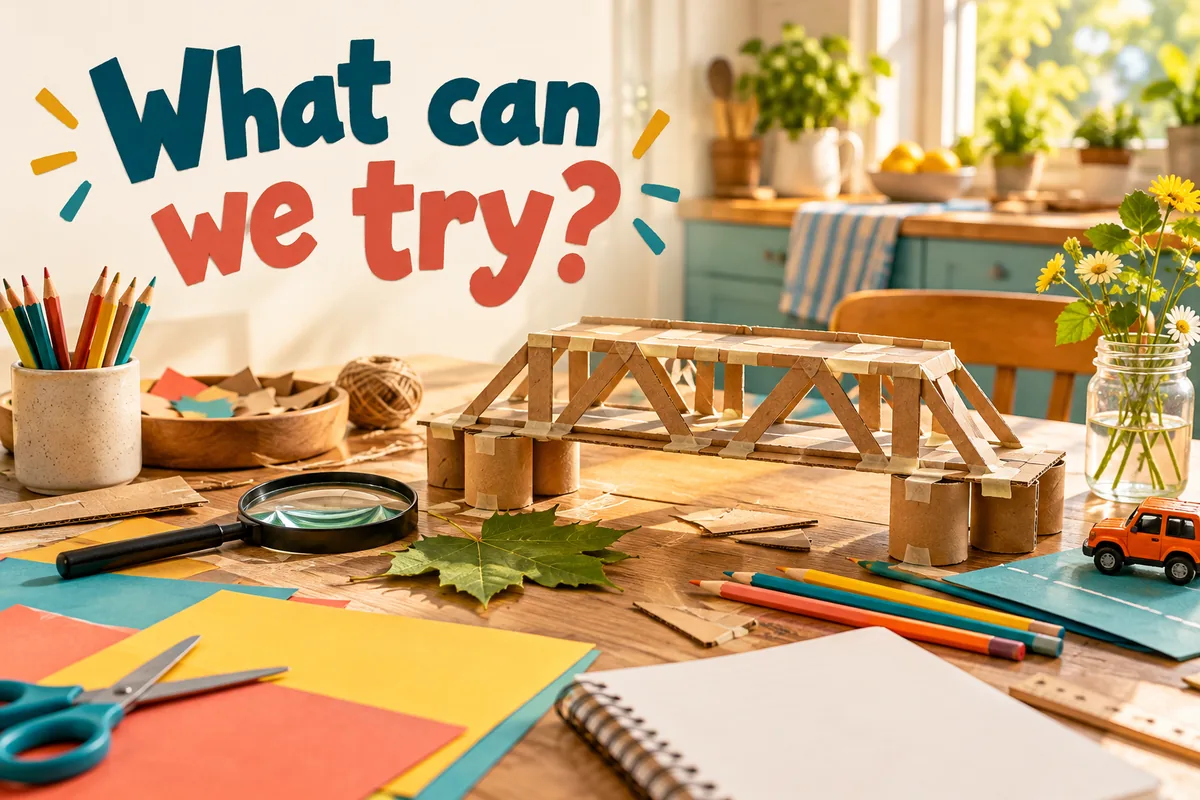
Offer two realistic options: “Would you rather make something at the table or try a game outside?” Too many choices can turn the beginning into another decision. Match the options to the weather, available space, and the amount of adult help you can give. Keep one simple backup, such as drawing a new course for a toy car or building a bridge from scrap cardboard.
Name a small first step instead of a finished masterpiece. Find one interesting texture. Build one working model. Try one short round. Let a child stay with something that catches their attention rather than switching simply because the schedule says so. A snack and cleanup break can provide the transition when interest fades.
Before opening a new toy, read its actual age guidance, warnings, battery needs, and setup instructions. A customer saying a preschooler enjoyed something does not change the age label. Keep small parts away from younger siblings, give charging and setup jobs to an adult, and use damaged equipment as a reason to stop rather than improvise a repair.
Make the first project small enough to finish
Clear a work area large enough for the materials and put small pieces in a tray. If two children share one kit, let one find the next part while the other follows the diagram, then swap. Leave room for an explanation in their own words: what changed, what surprised them, or what they would like to try next. You do not need to turn every result into a lesson.
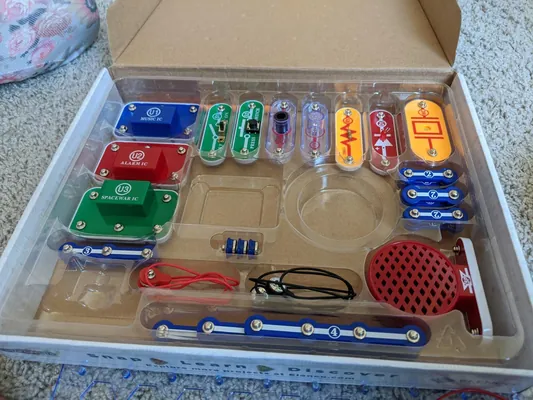
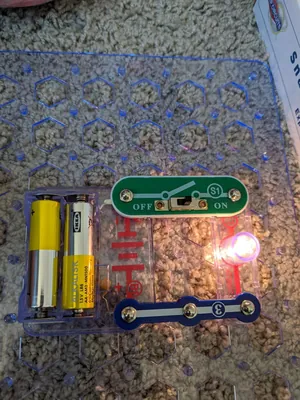
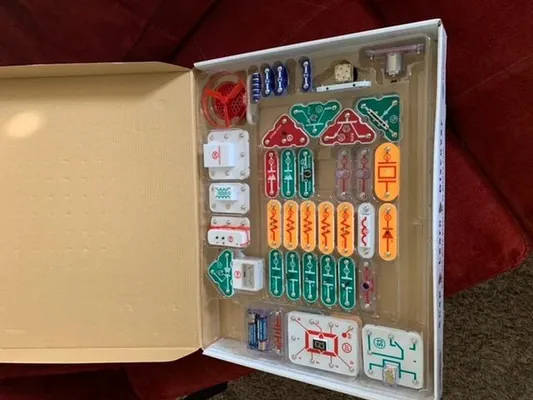
The snap-together electronics kit below is listed for ages eight and up, with 29 parts and more than 100 projects. Customers liked getting lights, sounds, and moving parts to work without soldering. Feedback also includes larger kits, so their radios, extra components, and project counts should not be assumed part of this smaller set. Some accounts describe stiff or missing snaps, broken pieces, and instruction substitutions. Check the included parts and current instructions with an adult, and follow the approved projects rather than copying improvised customer wiring or water experiments.
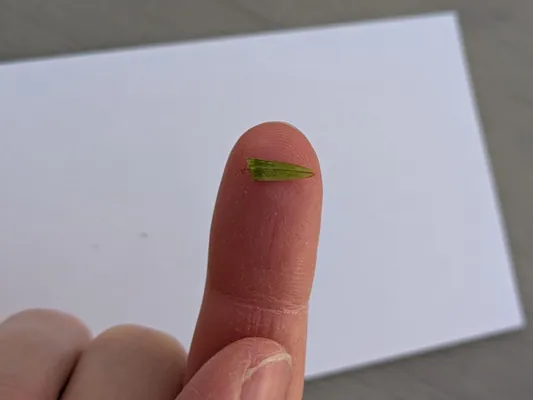
If a child is more interested in noticing things than assembling them, try an investigation tray: a leaf, a scrap of fabric, and a coin. Ask which looks most different close up. A hand lens you already own can be enough; the useful part is choosing a question and looking carefully, not chasing the highest magnification number.
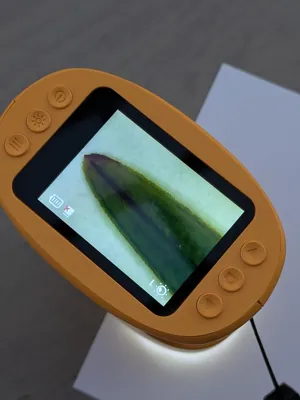
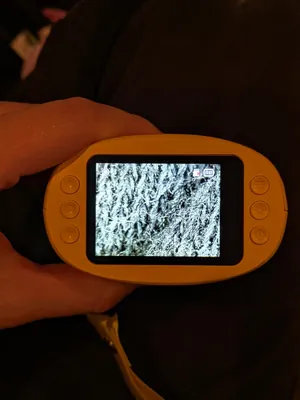
The handheld digital microscope below is described with a two-inch screen, focus control, and image capture. Customers enjoyed examining everyday surfaces, but several disputed the advertised 1,000× magnification, and we have not independently measured it. Treat it as a close-up exploration tool, not a laboratory instrument or a promise that children will see microbes. Accounts also differ on memory-card expectations. Confirm storage requirements and contents, and use ordinary objects rather than eyes, noses, or electrical repairs suggested in some feedback.
Give an outdoor activity a clear boundary
Choose a specific area and agree on what stays untouched. A backyard observation walk can be a search for shapes or textures without collecting anything. If an activity involves digging or powered movement, confirm that the site permits it and that an adult can supervise it. An interesting place is not automatically an appropriate place for every toy.
The starter metal detector below is listed with an adjustable shaft, a 7.4-inch coil, and a trowel. Customers liked the simple controls, while others reported shallow or inconsistent detection, false alerts, a difficult battery compartment, and a shaft that can pull apart. Its stated four-inch detection depth is not a guarantee. Use it only where detection and digging are permitted, with an adult handling unexpected finds; it may locate sharp rubbish rather than treasure. The National Park Service says not to use or bring metal detectors into national parks, so a park outing is not a default destination.
A ride-on activity needs a separate plan from a casual backyard search. The self-balancing board below is listed with 6.5-inch tires, lights, a speaker, and a 176-pound maximum load. Customers enjoyed it, but terrain and runtime accounts vary, and several report charger, battery, or control-board problems. Do not treat “all terrain,” self-balancing, lights, or an optional seat attachment as proof that riding is injury-free or suitable for any child.
The Consumer Product Safety Commission’s hoverboard guidance calls for proof of whole-product compliance with UL 2272, recall checks, the supplied charger, and charging only while someone is present—not overnight. The listing claims compliance, but we have not verified this particular unit’s certification. Choose the activity only when the child meets the manual’s requirements and an adult has arranged suitable protective equipment, space, and supervision. Otherwise pick a simpler movement game for the afternoon.
Set up a game people can join and leave easily
For a high-energy part of the afternoon, keep the play area clear and make the rules simple. Decide where play stops, how turns work, and what happens if someone wants a break. A cooperative challenge—taking turns completing a small course—may work better than keeping a score that nobody trusts.
The inflatable activity bag below is listed with gloves, lights, music, and four game modes. The current listing says it needs three AA batteries and an air pump, neither included. Some older customer accounts received a pump, so confirm the present package. Customers liked the active play, but complaints include slipping target panels, missed scores, leaking valves or seams, and gloves too small for some children. Follow the actual filling directions and inspect stability. Treat it as a play bag, not protective training equipment or permission for children to spar with one another.
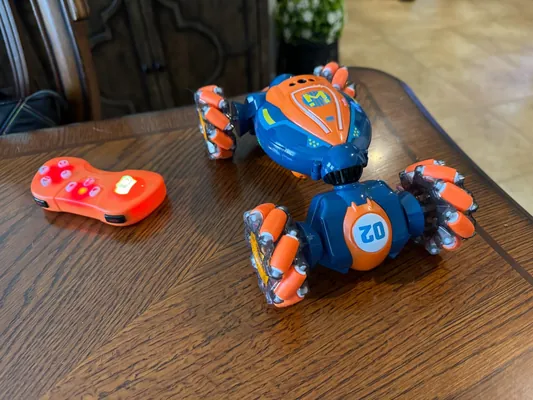
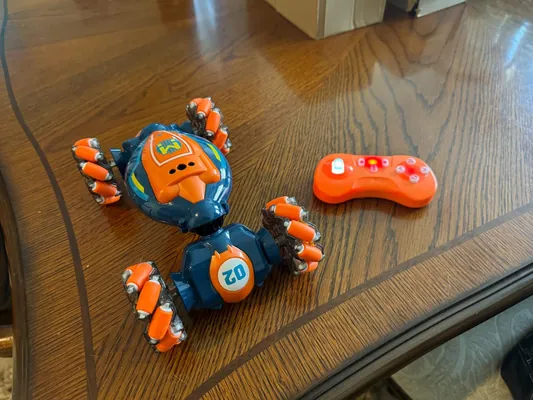
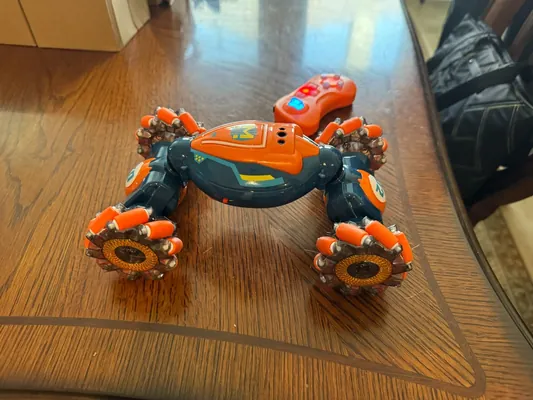
A remote-control car can turn a clear patch of floor into a short obstacle course without anyone riding on it. Use soft, lightweight markers and keep the car away from feet, pets, and stairs. Begin with the ordinary controller; complicated gesture modes can wait until the child wants another challenge.
The stunt car below is listed with conventional and gesture controls, lights, music, and two batteries. Customers enjoyed its movement, but some found the wrist control difficult or unresponsive, and others described fiddly battery connectors, missing or unsuitable charging accessories, and exposed charging wires. An adult should check the actual charging setup and stop using damaged leads. Do not copy makeshift repairs or assume the all-terrain wording guarantees performance on every surface.
For two children who enjoy tag, the infrared game below lists two handheld units and two chest targets with team colors and counters. Feedback includes four-player packs, so do not assume this box equips four people. Customers liked group play, but some reported missed hits, resets, or units failing. Several accounts describe three AAA batteries per unit and per target—potentially twelve for a two-player setup—so check the manual before the first round. Use agreed boundaries and a stop signal; the advertised range is not a reason to spread play into roads, stairs, or other people’s space.
A string-launching novelty can also provide a short turn-taking activity. The wrist-mounted toy below uses a reusable string loop and lists glow strings and a travel box. Customers liked the effect, but tangles, retraction problems, noise, missing strings, and motor failures recur. Follow the age label and instructions, keep the loop away from faces, necks, hair, fans, and pets, and stop if it tangles. It is not a game of lassoing another person, even if a customer describes doing that.
Some interesting gift ideas should wait
A toy can appear in searches for younger children while its actual package says something else. Keep the label and instructions ahead of customer anecdotes. There is no need to force every interesting gadget into this afternoon; an ordinary drawing or building activity is a useful alternative.
The camera drone below has a screen built into the controller and is listed with two batteries; a storage card for recording is not included. Customer photos show packaging marked ages 14 and up. It is therefore not presented here as a gift for an eight-to-twelve-year-old to operate. Feedback also notes wind sensitivity and a screen that falls short of the advertising, despite many positive accounts. For a future activity with an age-appropriate operator, check the actual manual, location, and FAA recreational flying requirements, including TRUST, visual line of sight, and applicable registration. A listing saying registration is unnecessary does not settle all flying requirements.
The heated 3D printing pen below is another item to set apart. Its manufacturer’s current linked manual says adult use only and to keep it out of children’s reach. It also warns about burns and calls for ventilation. Customer enthusiasm about children using it does not override that guidance. In addition, one supplied account describes a plug and outlet melting, and others report excessive heat or failures. Choose a different craft activity for the children; the card identifies the supplied item rather than recommending it for their use or as the afternoon’s demonstration tool.
Make cleanup part of the activity
Give a short heads-up before stopping, then let the child choose what to photograph, draw, or tell someone about. Put small components back in their tray, check battery-operated toys according to their directions, and mark any damaged item so it does not return to the ready-to-play shelf. A half-finished cardboard project can wait on a tray without taking over the room.
If you are giving a gift, include what is genuinely needed to start and ask the caregiver about space, sound, charging, and supervision. The useful gift is the one that fits their household. One activity that gets tried, adjusted, and enjoyed is enough for a good afternoon.