In this article
Mark a child’s baptism by following the family’s lead, writing a personal message, and choosing one gesture that fits their faith and the child’s age. A book to read together, a note to save, or practical help on the day can be enough. Keep adult-stored keepsakes separate from things a baby will use, and ask before choosing religious jewelry or nursery decor.
A baptism invitation can leave you wondering what to bring, what to write, and how religious the gift should be. Start with the family rather than a generic list of baby presents. Their church tradition, the child’s age, and what they already own will tell you more than a pink or blue label on a box.
You do not need a large present to mark the day. A personal note, a photograph shared with permission, or practical help with the gathering can be meaningful. When you choose an object, decide whether it is for an adult to keep, for reading together, or for the child to use when old enough.
What should you ask before choosing a baptism gift?
Ask whether there is anything the family would especially welcome or already has. A grandparent may be providing a keepsake, or a godparent may have arranged a book. It is easier to avoid duplicates before the ceremony than to give the parents several similar objects to store afterward.
Use the family’s name for the occasion. Baptism, christening, and dedication are not interchangeable in every church, even when a product listing puts all three in its title. If you are unsure, mirror the invitation and ask a parent what kind of religious wording or symbols feel right. You do not need to make a theological statement beyond what you understand.
If you are attending as a friend rather than a godparent
A short message of affection and support is enough. You can write, “We’re so glad to share this special day with your family. Wishing your child a life surrounded by love.” If you share the family’s faith, add a prayer or blessing you sincerely mean. Avoid promising a lifelong role that you have not discussed.
Set a budget that fits your relationship and circumstances. There is no need to match another guest’s present. If you would rather contribute to something the parents have chosen, ask how they would like that handled and include a note so the meaning is clear.
Give something an adult and child can enjoy together
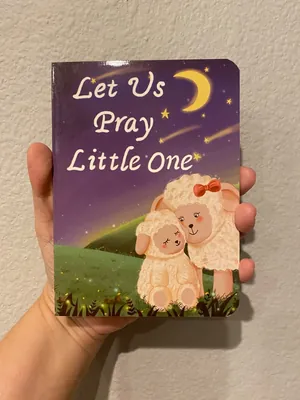
A little book can become part of a repeated conversation long after the event. Read a sample of the text before giving it: simple vocabulary, illustrations the parents like, and a message that fits their beliefs matter more than elaborate packaging. Add the child’s name, the date, and a personal sentence on an appropriate inscription page.
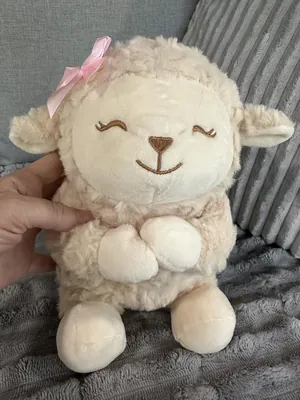
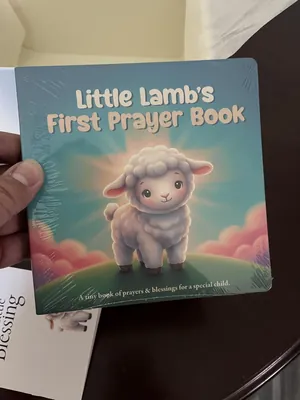
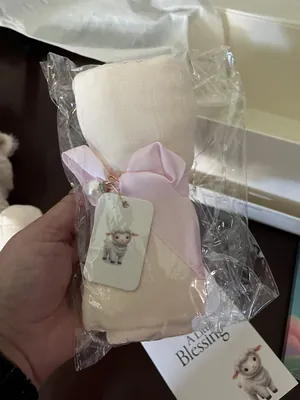
The lamb-and-muslin set below is described as including a 10-inch plush lamb, a small blanket, and an illustrated first-prayer book. Customers often liked the presentation, while one reported a loose book binding and others found the blanket small. Inspect the book and seams before gifting. A soft toy and a book are for time together, not a reason to add objects to an infant’s sleep space.
Musical and quiet gifts serve different routines
A musical toy is a preference to ask about rather than an automatic upgrade. The 9-inch praying-lamb set below includes a blessing book and a melody activated by pressing the lamb. Customer comments differ on volume and ease of activation, and one raised questions about washing around the sound device. Check the exact care and battery instructions, and test the sound before the occasion.
If the parents prefer a quieter routine, the small lamb-and-rhyming-book set below offers a compact alternative to a musical item. The listing describes a 7-inch lamb and a 16-page book, but many customers found both smaller than expected. That can suit limited shelf space, provided you understand the scale. Look through the actual pages and check the binding; some customers reported warped or stuck pages.
Plan how blankets and loveys will actually be used
For an infant, a blanket or plush gift should be kept out of the sleep area. The NIH Safe to Sleep guidance specifically includes small loveys, loose blankets, and stuffed toys among items to leave out. A gift’s religious theme, softness, or “breathable” description does not make it an exception.
Instead, let the parents decide how to use and store soft pieces during awake time, following the product’s age and care instructions. You can present a blanket as something for an adult to keep or use while holding the child awake, without calling it crib bedding or a sleep aid.
The cross-embroidered lamb lovey below is described as a small polyester plush-and-cloth item, about 12 inches across when opened. Most of the customer comments and photos concern cow or otter versions, so those examples do not establish the lamb’s stitching, sound features, or wash performance. Check the lamb version’s own label and construction; treat it as a small soft item, not a full-size blanket.
A complete gift box can contain pieces for different stages
The bunny-themed box below combines a plush bunny, blanket, prayer book, and rosary with a ceramic holder, according to the listing. Those pieces do not all belong in a baby’s hands. An adult can store the rosary and breakable holder while reading the book with the child. Confirm that the family wants the included prayer tradition before choosing it, and check the current version rather than relying on photos of a different color.
Give a keepsake without expecting a baby to wear or handle it
Some presents are intended to be saved for later. Make that role clear in the note: “For your parents to keep as a reminder of today.” A dated letter, a family photograph, or a little record of who attended can carry that meaning without adding another fragile object.
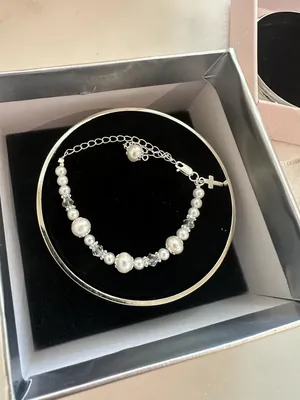
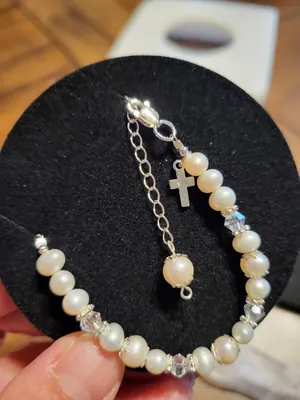
A bracelet can be given as a stored memento rather than an infant accessory. The American Academy of Pediatrics advises against infants wearing jewelry. For this occasion, keeping it in an adult-managed box avoids turning a sentimental gift into something the child is expected to wear.
The bracelet set below is listed with sterling silver and cultured pearls, plus a silver-plated keepsake box. The box is not described as solid silver. Its extender does not guarantee a fit for a newborn; one customer said it was too large for a one-month-old. Check the current material details and store it securely rather than assuming it is suitable for immediate wear.
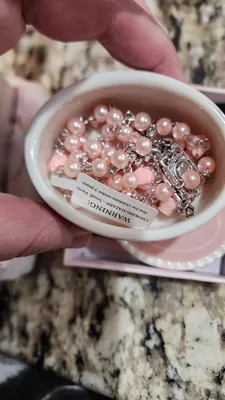
Choose prayer beads only when they fit the family’s tradition
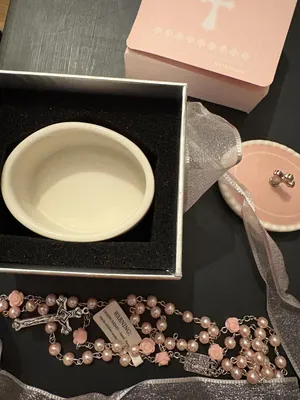
Ask before choosing a rosary if you do not know whether the family uses one. The pink set below is described with faux-pearl and rose-shaped beads and a ceramic storage box. The listed length is unclear, so confirm the current measurement instead of assuming it is sized for an infant. Customers also note that the lid lifts off without fastening. Keep the beads and breakable box out of the child’s reach.
Ask before choosing something for the child’s room
Nursery decor is also a household decision. Parents may already have a style, limited wall space, or a special cross chosen by another relative. Ask whether a display piece is welcome, and let them decide where it belongs. It does not need to be installed or opened during the gathering.
The silver-tone wall cross below is listed at about 7.1 by 3.6 inches with a hanging keyhole. It is described as metal, not sterling silver. The customer photos mostly show the boy version, so use the selected listing to confirm the praying-girl design. Treat it as wall decor installed by an adult, not a handheld baby toy.
A prayer-plaque light can also be a decorative gift for parents to place on a suitable surface. The heart-shaped version below is described as an acrylic panel with a wooden base and USB power. Its listed dimensions appear inconsistent, and a customer noted that a compatible power outlet or adapter was needed. Confirm the actual size, cable, and adapter contents before choosing it. Keep the light and cord out of reach; the listing does not establish that it improves infant sleep or protects eyesight.
A story gift can wait until the child is ready
A child baptized as a baby and a child baptized at school age need different kinds of gifts. For an older child, ask about reading level, interests, and what they would enjoy discussing. A simple illustrated story or a shared activity may feel more personal than something designed for a nursery.
The wooden ark set below is listed with animal pairs, figures, sorting and threading pieces, and a rope. Although the listing markets it from 12 months, customer feedback raises concerns about small pieces, loose screws, and breakage. Do not choose it as an immediate infant toy on the strength of that age claim. Ask the parents to verify the current labeling and inspect the exact parts; if suitability is uncertain, choose a different gift or retain it as an adult-managed display.
You can offer the same storytelling connection without a new toy: read a book the family already likes, write down why the day mattered to you, or promise a visit you can realistically keep. The relationship is what gives the object a place in the child’s story.
Finish with a message and practical kindness
Write the child’s name carefully, add the ceremony date, and sign in a way the family will recognize years from now. If you are a godparent, include a specific promise that fits the role you have agreed on, such as staying in touch or being part of the child’s faith learning. If you are not, a sincere wish for love and belonging is enough.
At the event, follow the hosts’ directions about timing, seating, photographs, and where to put gifts. Offer one practical task—carrying food, taking an approved group picture, or helping clear afterward—so the parents can focus on their child. Share photos privately unless they have invited public posts.
If you cannot attend, send the note for the day and arrange a later visit or call. Check the package before sending fragile pieces when possible, and make clear who it is from. A thoughtful baptism gift should leave the family with a useful memory of your care, not a new set of expectations.