In this article
Start by asking which part of a long workday creates the most hassle: meals, packing, clothing, or tasks after coming home. Build around the person’s routine and workplace requirements, then choose a useful gift that solves that specific problem.
A long workday is easier to prepare for when you know where the friction is. Is lunch hard to keep cold? Does the person leave before anyone else is awake? Are they coming home to another list of jobs? Ask about one recurring problem before buying something advertised for hardworking people.
Someone who works in construction, maintenance, driving, or another hands-on job may already have strong preferences about tools and equipment. A thoughtful gift can support their routine without trying to choose their protective gear or diagnose their aches. Start with the part of the day they would actually like help with.
What makes a long workday easier?
Ask for a small description of the day: where meals happen, whether a refrigerator or approved outlet is available, how much has to fit in a vehicle, and what comes home dirty. A routine that works in a climate-controlled building may not work outdoors. A bag that carries one lunch may not hold enough for an overtime shift.
Make an offer that removes an actual task. You might pack a requested lunch the night before, handle an agreed errand, or arrange an evening meal so the person can sit down when they get home. Check preferences first. Helpful support should not mean replacing a system they already like with a new one they have to learn.
Keep a simple departure spot
Choose a place for keys, a charged phone, a lunch bag, and anything that cannot stay in the vehicle overnight. Keep food separate from work chemicals and dirty equipment. A short check before bed can be more useful than adding another accessory to the morning rush. If you are giving a gift, include the manual, receipt, and any requested compatible supplies.
Build the lunch plan around storage and break time
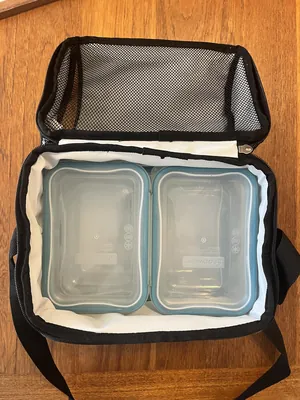
Measure the actual food containers before choosing a lunch bag. Leave room for cold sources and drinks, and check whether a second compartment is truly separate or divided by mesh. A shoulder strap can be useful while carrying other things, but its length and whether it detaches also matter.
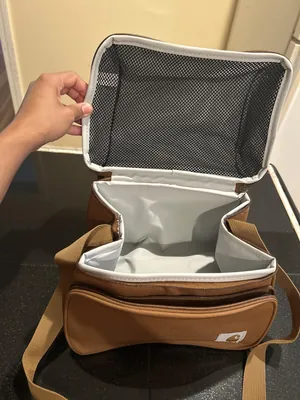
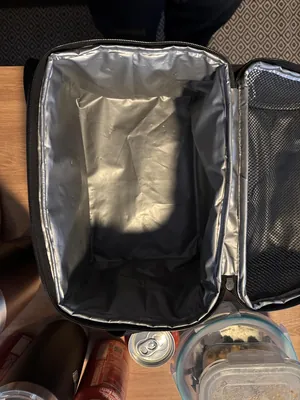
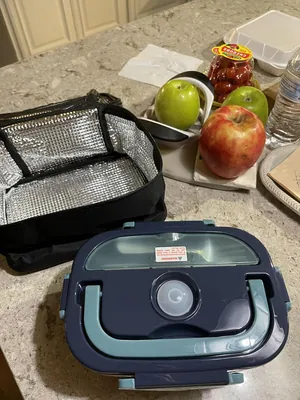
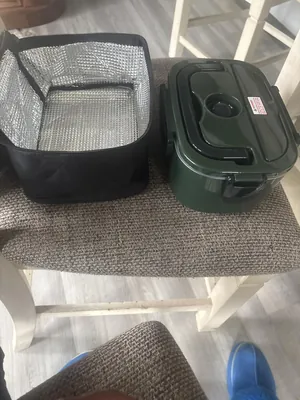
The soft-sided bag below is listed at about 10 by 8.5 by 4 inches with two compartments. Customers often liked the capacity and durability, while others found it too small for a long shift or disliked the fixed strap. Older and newer versions have different lining materials. One customer reported a liquid leak through the bag, so use sealed containers rather than expecting the bag itself to contain a spill. The mesh divider does not create independent hot and cold zones.
For perishable lunches, USDA guidance recommends at least two cold sources, such as frozen gel packs. Refrigerate the lunch when possible. A customer’s account of food feeling cool at the end of a shift is not a temperature test for another setting. Plan around the actual length of the day and access to refrigeration.
A heated lunch box needs an appropriate place and a food-safety plan
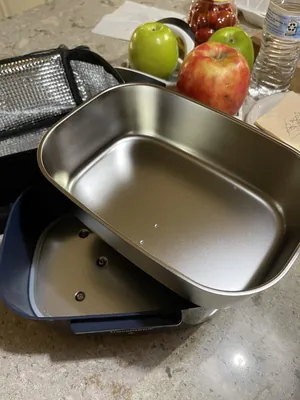
If the person wants hot food and lacks a microwave, first check whether a plug-in food warmer is allowed where they take breaks. The electric lunch box below lists a 1.5-liter stainless container, 100-watt heating, and cords for household and 12/24-volt vehicle power. Customers liked the convenience but also noted very hot surfaces; one reported melting a plastic insert. Check which components can be heated or washed, the exact power requirements, and the manufacturer’s placement instructions.
Keep perishable food properly chilled until heating. The listing’s “20–30 minutes” is not proof that every meal reaches a safe temperature. USDA advises reheating leftovers to at least 165°F, checked with a food thermometer. Follow the device’s instructions and do not use it to improvise cooking raw food. A warm-feeling container is not a safe holding-temperature measurement, and the insulated carrying case should not be assumed suitable for operating the appliance inside.
For a snack gift, ask about flavors, ingredients, and dietary needs instead of treating a meat assortment as universally suitable. The jerky sampler below includes individually packaged meat snacks in a drawstring gift bag, but supplied feedback covers several occasions and assortments. Customers liked the variety; others found portions much smaller than expected, and two reported moldy individual items despite future printed dates. Check seals, condition, current contents, and each storage label before giving it.
Think of it as a sampler rather than a meal replacement. Do not assume a cheese-containing item or an opened package has the same storage needs as unopened shelf-stable jerky. The gift bag’s occasion wording also varies; confirm it fits the person and the day.
Choose clothing from measurements and actual job requirements
Ask which sweatshirt cut and size the person already likes, then compare the current size chart with a garment that fits. A loose cut can be intentional for layering. Going down a size based on someone else’s height and weight may solve one fit issue while making sleeves or length wrong.
The pullover hoodie below has a roomy body, front pocket, ribbed cuffs and waistband, and an adjustable hood. Customers often described warmth and a generous fit, but opinions on fabric weight and stretch differed. Some reported fading, loose stitching, or damaged pieces. Confirm the fabric blend and care label for the selected color and inspect the seams before gifting.
Treat it as ordinary clothing. It does not replace flame-resistant, high-visibility, weather-protective, or other required workwear. Follow the workplace’s requirements around loose clothing and drawcords rather than assuming a garment marketed for work is suitable for every task. A receipt gives the recipient room to choose the correct fit.
Choose personal audio only for places it is permitted
Music can make leisure time or an approved break more enjoyable, but a jobsite has its own communication and equipment rules. Check those before gifting headphones or a speaker for work. Do not rely on a customer’s account of using an audio device around machinery as proof that it is appropriate there.
The small clip-on speaker below is listed at under 2 ounces with call controls, a clip, and an IP56 dust-and-water-resistance rating. Feedback covers old and newer versions, including models with extra lights. Customers liked the compact shape and spoken audio, while others found limited bass, shorter high-volume runtime, or broken clips. Confirm the selected version and do not rely on a light described in another version’s feedback.
Call-noise reduction is different from protecting hearing
The neckband earbuds below list a microphone, interchangeable ear fittings, USB-C charging, and a claimed runtime of more than 30 hours. Customers liked battery life and calls, but also reported deteriorating ear tips, cracked neckband joints, failed earbuds, and charging problems. Check comfort and the return terms instead of assuming a work-oriented appearance means the fit or service life will suit everyone.
Microphone noise reduction and an isolating earbud fit do not establish hearing protection. CDC/NIOSH says noise-canceling headphones should not be considered hearing protection unless labeled with a noise reduction rating. No such rating was supplied for these earbuds. Use the hearing protection and communication system required for the work, and never raise music volume to compete with machinery.
For someone who specifically wants a portable speaker away from work, the handled model below lists an IP67 rating, tie-down points, and up to 25 hours of playback. Customers liked its portability and sound, but some reported distortion, later sound failure, or only four to five hours at high volume. Others found the recessed charging port awkward. Runtime depends on use, and a resistance rating is not a promise that every drop, chemical, or wet charging situation is acceptable.
Choose a stable location according to the manual. Magnetic attachment mentioned in feedback does not mean every metal surface is a safe mounting point. Keep the volume considerate of other people and choose a speaker because the recipient wants one, rather than assuming a louder device improves a workday.
Make room for rest before choosing a massage device
Ask what coming home should feel like: a meal ready, a quiet half hour, or help with an ordinary chore. A gift should not imply that pain is simply part of the job to ignore. If the person wants a massage device, let their preferences and health circumstances guide the choice rather than promising that it will repair the effects of work.
The kneading cushion below is listed at about 15 by 13 inches with heat settings, intensity controls, and an automatic shutoff. Customers differed on how strong it felt and whether the nodes lined up with their body. Reports also include a short cord, a separating back panel, and early motor or adapter failure. Check the manual and condition, and do not copy anecdotes about using it while driving, placing full body weight on it, or repeatedly restarting it for hours.
The handheld percussion device below lists multiple speeds, ten heads, USB charging, and no wall adapter. Feedback spans versions with and without cases, different controls, and different power levels. Customers liked the options, while others reported missing heads, short battery life, broken housings, or unexpected speed changes. Confirm the current contents and stop using a damaged or erratic unit rather than attempting a taped repair.
The American Physical Therapy Association’s consumer guidance explains that massage guns do not treat injuries or the underlying cause of ongoing pain. Ask a qualified clinician about suitability when recovering from injury or surgery or when health concerns affect use. Follow the device instructions; a gift guide should not prescribe pressure, body placement, or a treatment schedule.
Let the person doing the work choose the tools
A compact tool can be useful for small ordinary tasks when the recipient wants one, but trade tools have specific requirements. Ask what is missing rather than buying a gadget as a substitute for a tool they already trust. Check workplace rules and local carrying restrictions before choosing anything with a blade.
The folding multitool below is described as 4.13 inches closed with pliers, cutters, blades, a file, drivers, and interchangeable bits. Its “21-in-1” count refers to listed functions. No customer feedback was supplied for this item, so its locking mechanism and durability are listing descriptions rather than independently verified performance. Do not assume it is insulated or suitable for electrical work, heavy loads, or safety-critical tasks.
Keep the original instructions and let the recipient inspect the mechanism and decide where it belongs. If you are unsure about the exact tool, a contribution toward the item they named can be more useful than a surprise substitute.
The most thoughtful way to make a long day easier is to solve a problem the person actually has. A lunch setup that fits, clothing they chose, or one less task after work can keep helping after the gift is opened.