In this article
A gift card feels personal when it is chosen for the way someone lives, given a reason to be used, and handed over in a way that is fun to open. Pick a place they already love, add a line about why you chose it, and present it inside something to unwrap or flip through instead of a bare envelope.
You picked a gift card because it is genuinely useful, and then you looked at it sitting in a plain envelope and felt a little guilty. That feeling is common, and it is mostly about presentation, not the gift itself. A card chosen for the way someone actually lives, paired with a few honest words, can feel more considered than a sweater they will never wear.
This guide covers why gift cards land better than their reputation suggests, how to choose cards that fit the person, how to turn one or several cards into something worth opening, what to write, and the practical details: budget, attaching cards neatly, mailing them, and keeping the balance safe.
Is a gift card really a thoughtful gift?
More often than givers assume. In a set of experiments by researchers at Stanford and Harvard, recipients appreciated gifts they had asked for more than surprises, and in one study they valued money more than the items they had requested, even though givers expected the opposite. Choice is part of the gift. A teenager who gets to pick their own headphones, or a busy parent who can order dinner on the night they need it most, receives exactly what helps.
Where gift cards fall flat is when they look generic: the same card everyone gets, handed over with no note, no connection to the person, and no moment of opening. Each of those gaps is easy to close.
When is a gift card the wrong choice?
Skip it when the relationship calls for something you made or did together, when the recipient has said they find gift cards impersonal, or when the only card that fits is for a store they rarely visit. In those cases a small handmade gesture or a shared outing will say more.
How do you choose a gift card that fits the person?
Start from a week in their life rather than from the gift card rack. Where do they stop for coffee? What do they do when they are too tired to cook? What do they put off buying because it feels indulgent? The answers point to cards they will use without having to think about it.
- Daily routines: the coffee shop near their office, the grocery store they already use, a ride or delivery service for long days.
- Small luxuries: a bookstore, a movie theater, a dessert place, the craft or hobby shop they visit for fun.
- Practical gaps: gas, essentials, a pharmacy, a takeout place near campus.
- Something to share: a restaurant or activity they can enjoy with a partner or friends.
One buyer described researching the area around a nephew's new college, then choosing cards for nearby restaurants, a grocery store, and a drugstore. That kind of homework is what makes a card feel chosen rather than grabbed.
Is one big card better than several small ones?
A single card for a favorite place is simple and easy to use. Several smaller cards, each tied to a different situation, take more planning but create the feeling of a gift with layers: something for a bad day, something for a treat, something for a night out. Neither is more correct; pick the one that matches your budget and how well you know their habits.
How can you make a gift card more fun to open?
The goal is a moment of discovery. A card tucked into something they unwrap, flip through, or hunt for feels like a present instead of a payment.
- Pair it with a small object: a movie card with a box of popcorn, a coffee card inside a mug, a bookstore card tucked into a paperback.
- Hide it: inside an ornament, a stocking toe, or the last box in a set of nested boxes.
- Give it in pieces: several cards with short labels, opened one at a time.
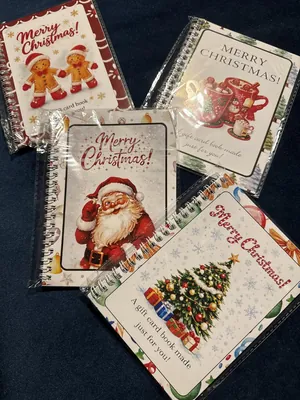
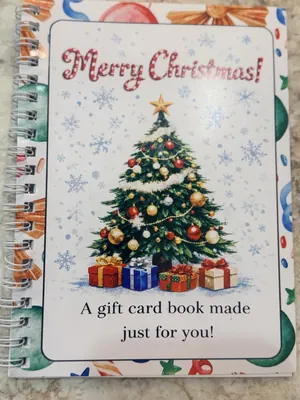
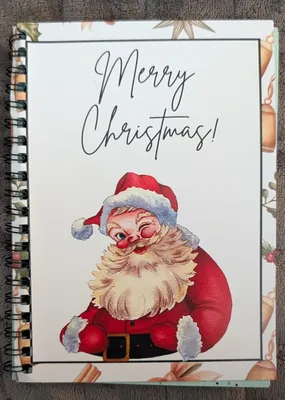
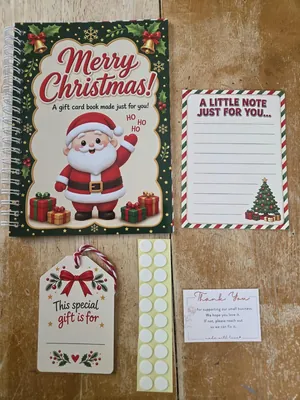
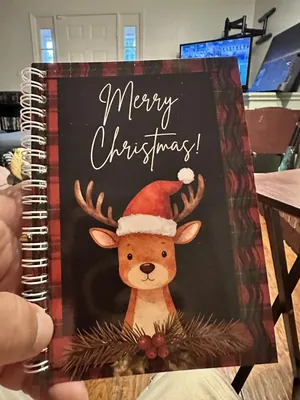
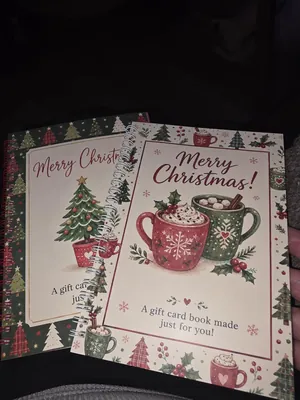
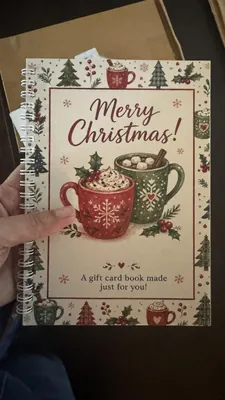
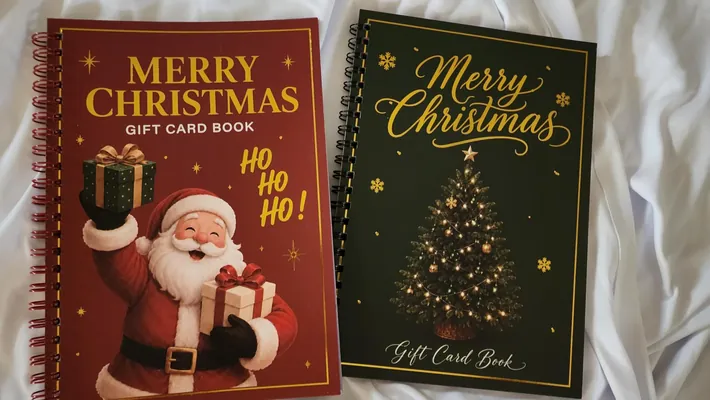
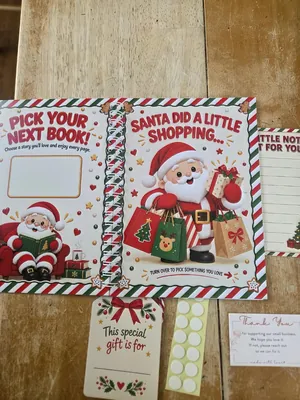
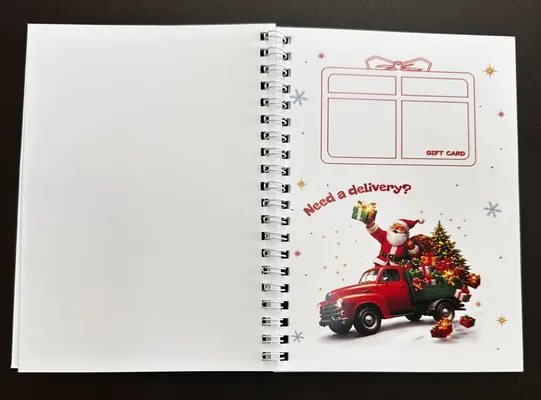
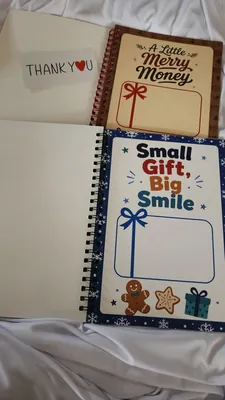
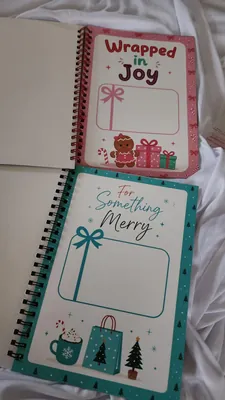
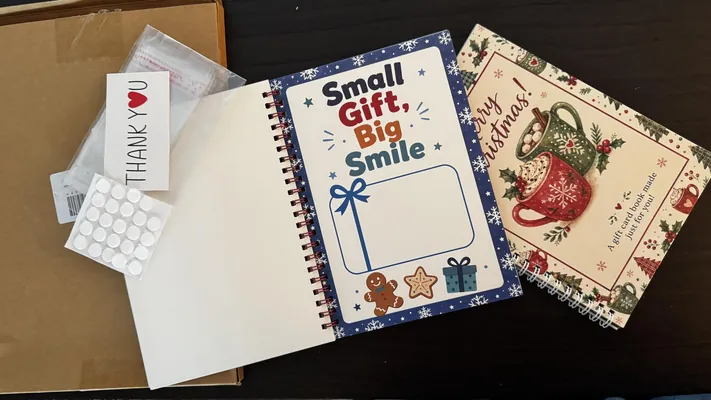
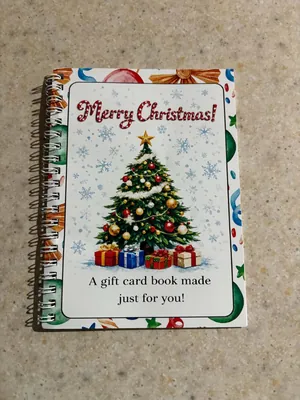
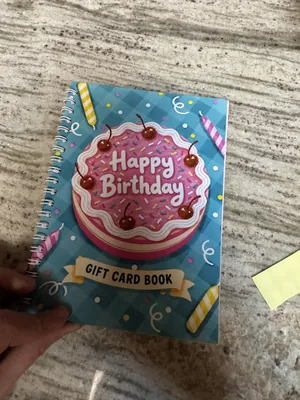
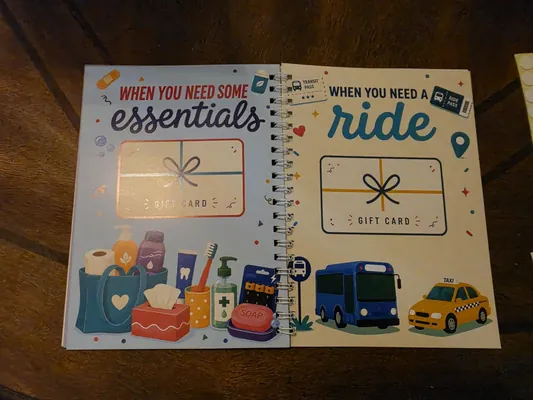
- Use a gift card booklet: a small spiral-bound book with a themed page for each card, so they can turn the pages and find each surprise.
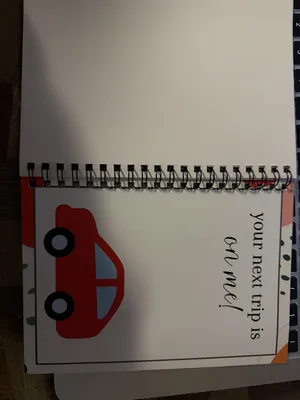
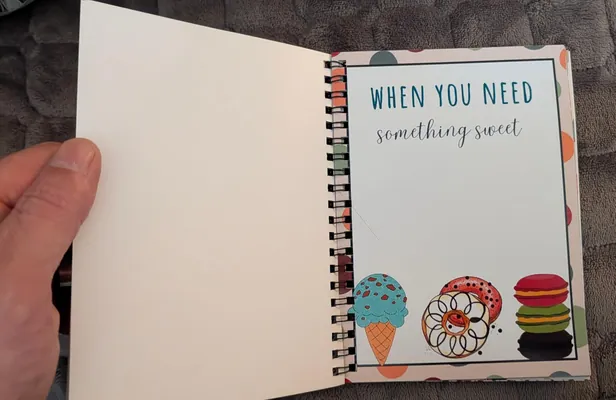
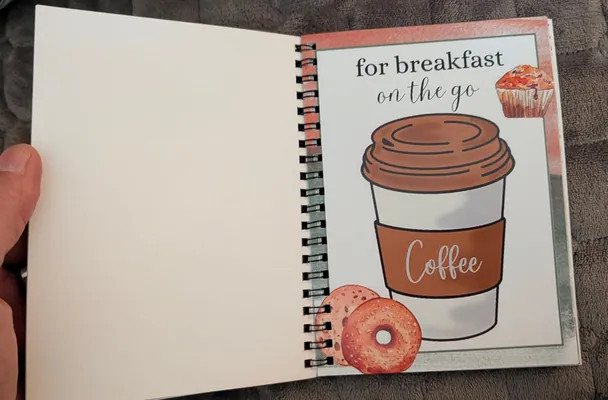
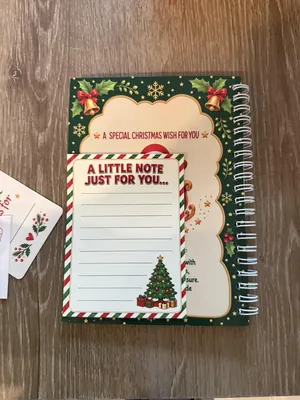
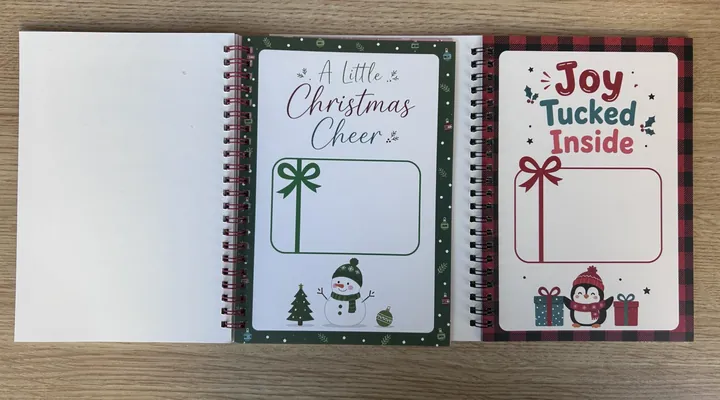
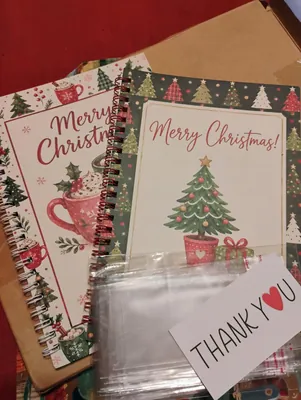
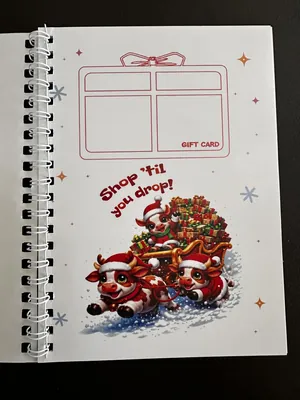
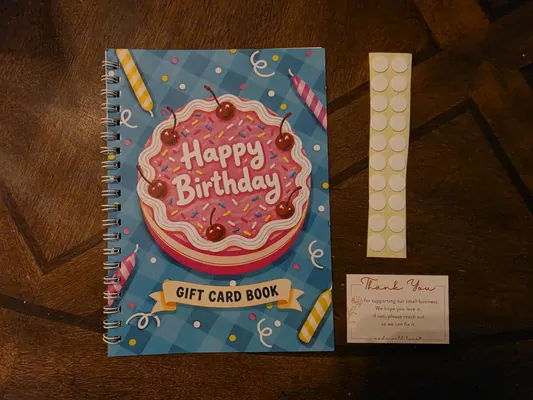
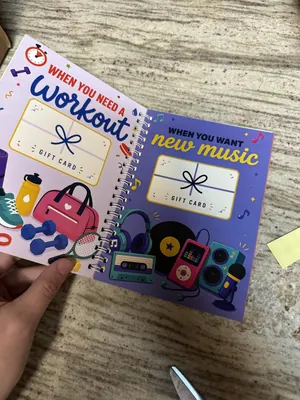
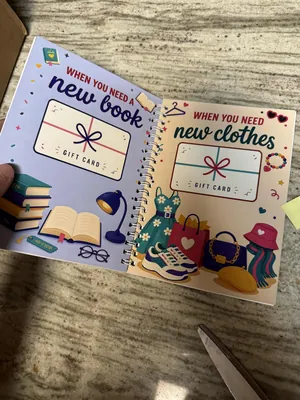
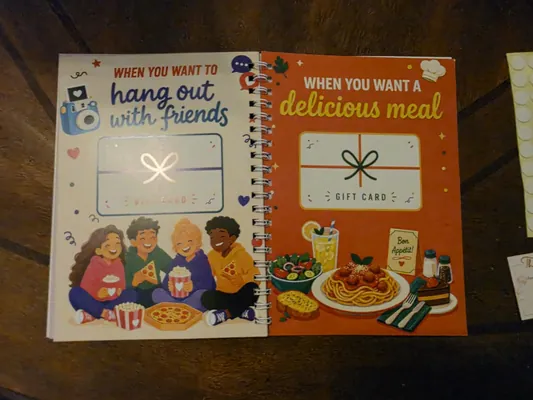
Booklets have become a popular way to present several cards at once. Most are about 5 by 7 inches, with a festive cover and a page for each card, often printed with a prompt such as "when you need something sweet" or "when you don't feel like cooking." Several buyers said the format made a stack of cards feel like a gift their kids or grandkids could flip through rather than a pile of plastic.
How do you pair each card with a reason to use it?
A short label changes how a card feels. "Coffee shop" is a store; "for the morning after a late shift" is a thought about them. Prompt-style pages in gift card booklets do some of this work for you, with lines like "for breakfast on the go" or "movie time." You can also write your own on a tag or sticky note.
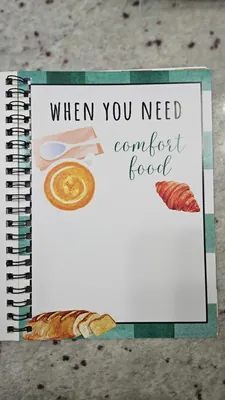
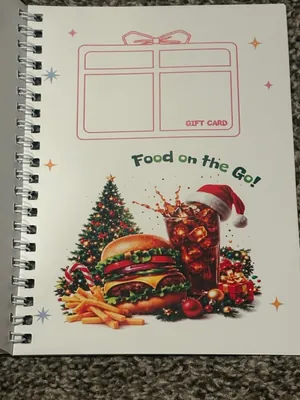
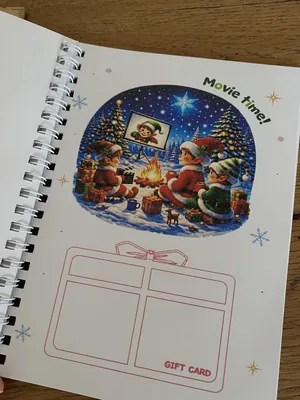
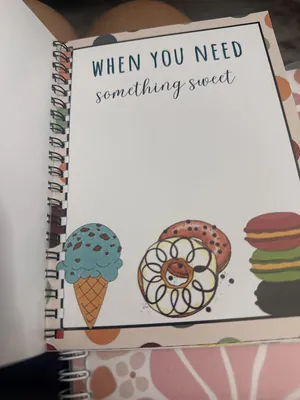
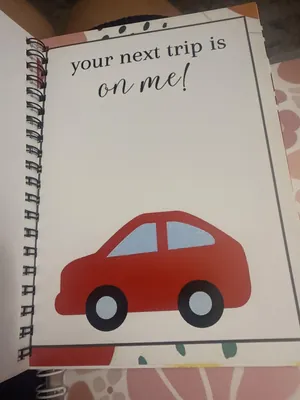
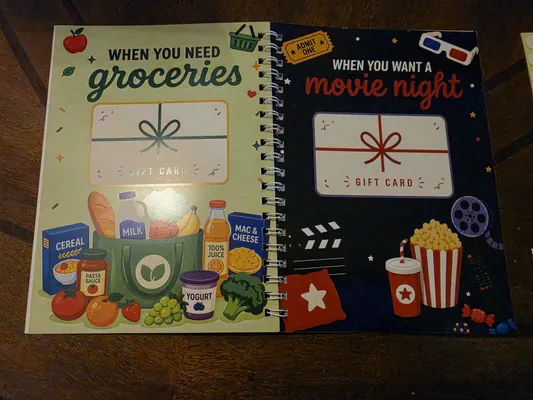
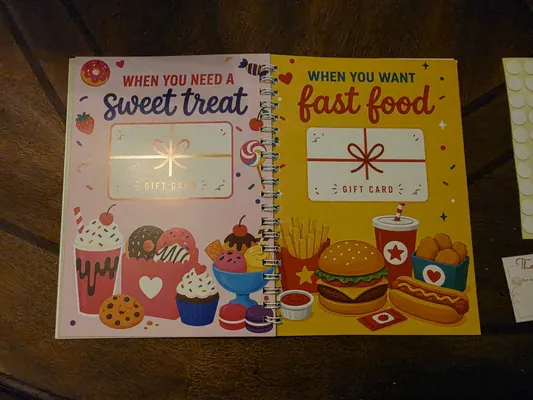
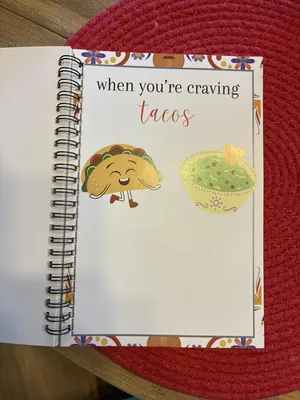
Prompts work best when they are broad. One buyer liked that their booklet's pages had general holiday sayings, so any card could go on any page; another wished for a blank page to write their own idea. If a printed prompt does not fit, cover it with your own note or remove the page.
What if I only have a few cards?
Many booklets have ten to twenty pages, and several buyers pointed out that filling every one gets expensive. You do not need to. Some booklets have tear-out pages; with wire binding, buyers found removal works but is not always clean. One parent split a twelve-page book between two kids, six cards each. Another planned to add a card each month and give a full book at year's end, checking expiration dates along the way.
What should you write with a gift card?
The note is where most of the personal feeling lives. It does not need to be long. Say why you chose this card for them, and connect it to something you know about their life.
- "For the Saturday mornings you finally get to sleep in. Breakfast is on me."
- "You've had a hard few months. This one is for a night when you don't want to cook."
- "I know you've been eyeing that new series. Pick it out yourself this time."
- "For the long drive home over break. Fill up and text me when you get there."
If a few people are contributing, give each person a page or a tag to sign. One buyer bought a booklet for their mother so everyone in the family could add a card and a signature in one place, instead of a pile of separate greeting cards.
How do you attach gift cards so they don't fall out?
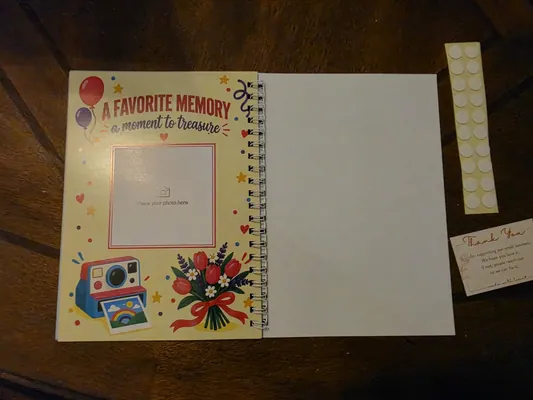
This is the most common frustration buyers mention with gift card booklets: many have an outlined spot for each card but no pocket or slot. A card that slides out the moment someone opens the book takes the shine off the moment, so plan the attachment before you start.
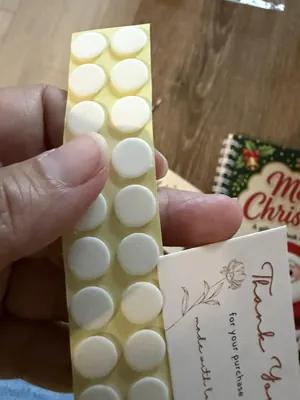
- Removable glue dots: the most common fix. Several booklets include them; buyers noted they hold cards without damaging them, though one wished the dots were larger.
- Clear sleeves: a small plastic sleeve taped to the page keeps the card clean and lets the recipient slide it out easily.
- Photo corners or washi tape: decorative and easy to remove.
- Double-sided tape: works, but test it on the page first; it can tear thin paper.
Glossy, laminated-feeling pages make tape easier to remove and reuse, one buyer noted. If you are adding cash instead of cards, a small envelope stuck to the page keeps bills flat and private.
How much should you put on a gift card, and how do you keep it safe?
Spend what you would spend on any other gift for that person. A few smaller cards can feel more generous than one larger card because each one comes with its own small moment. If a booklet or holder would push you over budget once every page is filled, choose a format with fewer spaces or leave pages out.
Do gift cards expire?
Under federal rules, most store gift cards cannot expire sooner than five years after they are issued or last loaded, and inactivity fees are limited. Some promotional cards and state laws work differently, so read the card's terms and keep the receipt.
- Check that the packaging is intact and the PIN area is not scratched before you buy.
- Keep the receipt and a photo of the card number in case it is lost.
- Confirm the balance after purchase if the store offers a quick check.
- Tell the recipient which cards are inside so nothing gets thrown out with the wrapping.
Can you mail a gift card?
Yes, and a slim booklet makes it easier. One buyer with family spread across the country used booklets to avoid the cost of shipping bulky gifts. Use a padded envelope so the cards are not obvious through the paper, and consider sending a text with the balance details separately.
Does this work for birthdays and graduations too?
Everything here applies year-round. Graduations and the start of college are especially good fits, since a student facing a new city can use cards for groceries, rides, and takeout. Birthday booklets with prompts like "when you need a workout" or "when you want new music" follow the same idea.
What's the simplest version of all this?
Pick one card for a place they already love, write two sentences about why, and tuck it inside something they will open. That is enough to turn a gift card into a gift.