In this article
Choose a funny gift around something the recipient already enjoys, then check the language and setting before giving it. Keep private topics private, make adult humor opt-in, and let the recipient enjoy the moment without being filmed or expected to perform a reaction.
A funny gift works when the recipient feels understood, not put on the spot. Start with something she already finds amusing: an animal she loves, a shared food joke, or the kind of language she uses with you. Then think about where she will open it. A joke that works between two close friends may land very differently in front of relatives or coworkers.
Keep the surprise small enough that she can enjoy it without performing a reaction. You do not need an embarrassing announcement, a camera pointed at her, or a story that exposes something private. The gift can be silly while the way you give it remains considerate.
How do you choose a funny gift she will actually enjoy?
Use a joke she has already joined in on rather than testing a new subject at her expense. Favorite snacks, a familiar pet pose, or an absurd object are easier starting points than comments about weight, fertility, health, money, or relationship troubles. If you would have to explain that she should not be offended, choose a different joke.
Match the gift to the person, not to a broad idea of what women find funny. Someone may enjoy a ridiculous plush toy and dislike swearing; someone else may like a sharp one-liner but have no interest in novelty decor. Ask a trusted person who knows her preferences if you are unsure, without sharing a private story to make the case.
Let a harmless object carry the joke
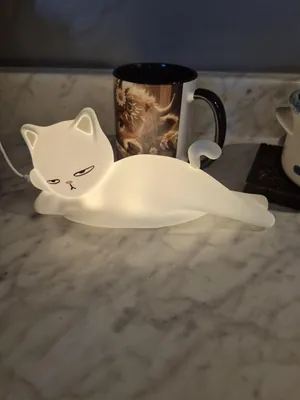
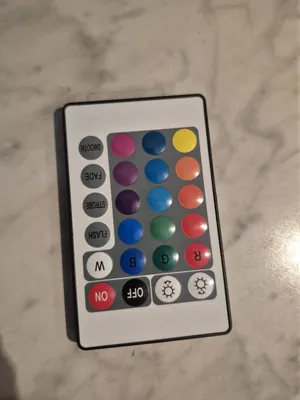
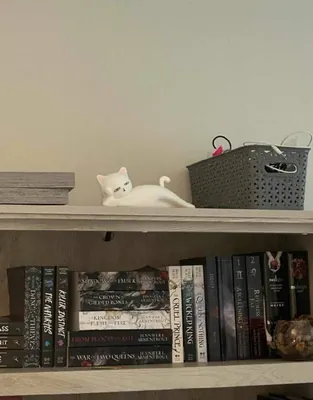
The lounging-cat light below makes its joke through a relaxed pose and expression rather than a comment about the recipient. The listing describes a silicone body, 16 colors, five brightness levels, tap and remote controls, and rechargeable operation. Supplied feedback liked the colors and soft body, while one customer found the remote glitchy and others noted a short charging cord without a wall adapter. Confirm the current charging requirements instead of using whichever adapter happens to fit.
Use it as a tabletop novelty according to its instructions. Claims about anxiety relief, better sleep, or being safe to cuddle in bed are not needed to explain its appeal. The listed dimensions are about 8.3 by 2.8 by 3.5 inches, so it is a small decorative light rather than a full reading lamp.
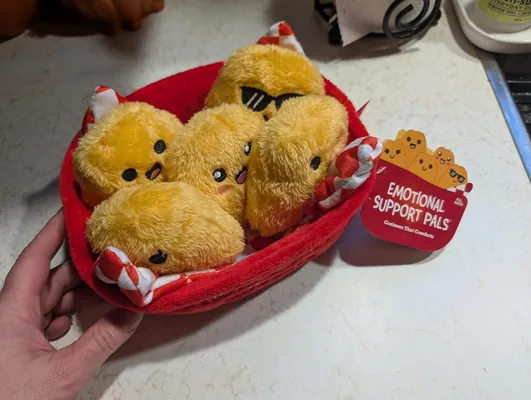
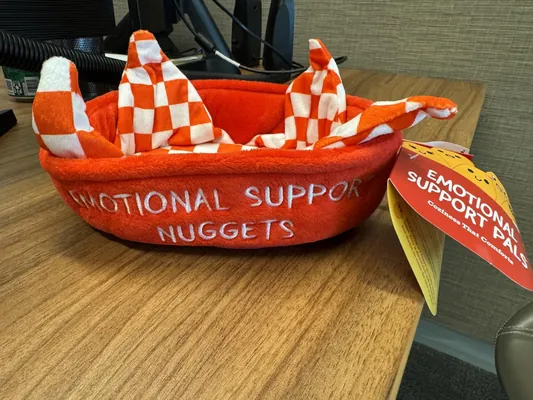
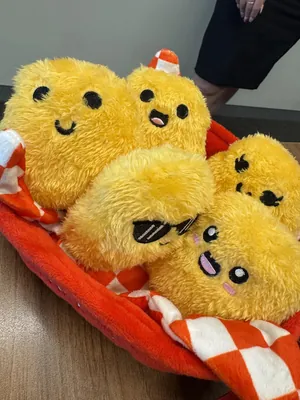
A food joke can be equally personal. The chicken-nugget plush set below comes in a soft basket. Feedback covers many food versions; nugget-specific accounts describe soft individual pieces held in place by packaging tags, with some concerns about weak stitching or duplicate expressions. Check the assortment before giving it. Its appeal is the playful food shape, not a promise to treat stress or anxiety, and reports of pets playing with other versions do not make it a pet toy.
Let the occasion set the volume of the joke
For a milestone birthday, avoid assuming that she wants teasing about age. If she enjoys a light compliment, a playful message can acknowledge the day without naming a number. If she has asked for no age jokes, take that literally even when a product is advertised for her birthday year.
The pink mug assortment below uses the phrase “Not a Day Over Fabulous.” The listing describes a 14-ounce ceramic mug along with small accessories including socks, a mirror, bracelet, pouch, birthday crown, and scented products. Customers liked the coordinated presentation, although one expected a larger mug and others were uncertain about its care. The listing explicitly says the mug is not microwave safe; keep the current care directions with the gift.
Only include scented soap, a bath item, or jewelry if those preferences are known. A large number of pieces does not guarantee that the recipient will use them. You can also choose a simple card with your own short joke and let a practical gift be the main present.
A birthday joke should not sound like a diagnosis
The lavender-and-sage candle below uses a joke about aching bodies. Give that kind of message only to someone who already enjoys it; it can feel pointed to a person dealing with pain or worried about aging. The listing describes a 9-ounce wood-wick candle. Customers differed on the scent, and accounts mention damaged labels, a sharp jar edge, and a wick that would not stay lit. Inspect the jar and do not improvise a wick repair.
Read every word before making it a public gift
Check the front, sides, enclosed cards, and packaging. A gentle-looking design may contain stronger language inside. Read the actual selected version rather than assuming all products grouped on one listing share the same joke. This matters especially for workplace exchanges, family gatherings, and anyone opening presents around children.
The small affirmation-card deck below is listed with 53 cards, each about 2.4 by 3.5 inches. Customers liked the blunt encouragement, but one found the profanity excessive and another noticed a wording error. Look through the deck before gifting it. Choose it for someone who enjoys that style of language, not as a way to tell a struggling friend how they ought to feel.
A handwritten note can explain the connection without repeating every slogan: “This reminded me of our lunch-break conversations.” Do not promise that affirmation cards will improve mental health, replace a supportive conversation, or solve the situation behind a difficult week.
The stemless glass below has an etched, profane one-liner about a wise woman deciding she has had enough. It is listed at 17 ounces. Customers liked the humor, while some found it smaller or thinner than expected and one had trouble reading the etching. Inspect the rim and wording. The glass can hold a nonalcoholic drink; enjoying a joke does not imply that the recipient drinks wine.
Keep adult humor away from an uncertain audience
For an organized exchange, follow the host’s actual guidelines about price, language, and adult themes. An office invitation that says “funny” is not an invitation to sexual jokes. If you do not know who will receive the gift, choose an object whose joke can be understood without personal information or an explanation about boundaries.
The figure-shaped lamp below has a deliberately anatomical switch. It belongs only in a setting where that adult joke is clearly welcome. Feedback includes enthusiastic party reactions, but also a unit that would not turn on, a broken shade, and a report of melting and sparking after about a month. That reported electrical failure is a reason to choose a different gift unless the concern has been resolved for the current item; the joke is not a reason to overlook it.
Do not follow casual suggestions to fit a brighter bulb without checking the lamp’s stated type and rating. If a device shows damage, heat damage, or sparking, stop using it rather than trying to keep the joke working. A funny card provides the same chance for a laugh without making the recipient responsible for a questionable appliance.
Avoid a prank that creates confusion
The novelty candy box below imitates medication packaging and uses an insulting age-related name. The selected version is not the gentler get-well design shown in much of the feedback. Confirm the exact label and make clear to the adult recipient that it contains candy. Customers describe very different quantities across versions, so check the current weight, ingredients, allergens, seal, and expiration information rather than promising a particular bean count.
Skip this format when children could confuse the joke with medicine. The American Academy of Pediatrics advises against calling medicine candy. Keep the original food labeling, never substitute or repackage real pills, and do not leave the novelty box among actual medications. A plain bag of a favorite sweet is an easier choice when the setting is uncertain.
Think about what happens after the first laugh
The recipient still has to store, wear, or dispose of the object. If a joke relies on trying something on, ask privately rather than demanding a costume change in front of a group. Include a receipt and avoid writing a name permanently on an item whose size or style is uncertain.
The shark-shaped wearable blanket below can suit someone who has asked for the look. Customer accounts repeatedly mention soft fabric, but also torn seams, failed snaps, limited leg movement, and inconsistent hand or foot openings between versions. Compare the current garment measurements and openings with the intended use. Do not assume a height range alone confirms fit, or treat it as outdoor sleeping equipment.
Keep visibility and movement unobstructed, and take it off before moving around if the design restricts either. Do not copy customer modifications or rely on safety pins to make a damaged garment usable. A novelty that needs immediate repair is not an effortless gift, however good the initial reaction might be.
Keep scent preferences and product concerns separate from the joke
A humorous label cannot tell you whether someone wants fragrance in their home. Ask first, and avoid promising that a lavender product treats anxiety, depression, or sleep problems. The small “last nerve” candle below has a printed joke and is described as lavender scented. Feedback spans many messages and colors, with reports of faint printing as well as multiple accounts of glass breaking during use, including accounts of table fires.
Those accounts do not independently establish why each failure occurred or which versions are affected. They are still substantial reasons to choose a different gift rather than recommend this candle for burning. The link is included so the supplied item can be identified; do not interpret its lighthearted label or positive scent comments as resolving the reported concern.
For any candle that is used, follow its label and U.S. Fire Administration candle guidance: keep it at least 12 inches from anything that can burn, and extinguish it before leaving the room or going to bed. General precautions do not resolve a suspected problem with a particular product.
Give her room to enjoy the joke in her own way
Wrap the gift normally, add a brief personal note, and let her open it at her pace. Ask before taking a photo or posting the reaction. If the gift is for a difficult week, pair the humor with a concrete offer of help rather than expecting the joke to carry the whole message.
If it lands badly, acknowledge that you missed the mark and offer to exchange it. Do not explain that she lacks a sense of humor or ask the group to decide whether the joke was acceptable. The point of a funny gift is a shared moment she can enjoy; choosing a kinder joke or a more useful present still serves that purpose.