In this article
Find a book or activity that belongs in the child’s everyday life.
A holiday gift for a child has to fit an ordinary day after the wrapping paper is gone. A beautiful book may become a nightly favorite, or sit untouched because the story is too long. An activity can invite a happy afternoon, or create a project a busy parent has no time to supervise. Start with the child’s routines and the household’s capacity, then choose something that belongs there.
Ask what the child reaches for now: animal stories, trucks, turning little handles, drawing, or showing someone a new trick. Ask the parent which books they already own and which holiday traditions they share. You are looking for a comfortable next step in an existing interest, with enough novelty to invite another look.
How do you choose a holiday gift a child will use?
Think of a particular moment: ten minutes on the couch before bed, a quiet activity while dinner cooks, or a weekend project with an adult. That moment tells you more than a long age range on a gift guide. A child who enjoys listening may welcome a picture book beyond their independent reading ability; a child who likes moving parts may prefer a short board book they can explore with you.
Check the actual age label and instructions for activities, including small parts and required supervision. Reading interest and safe use are separate questions. Avoid treating a younger sibling’s curiosity as proof that an older child’s activity is suitable for them. Give the adult an easy place to keep small pieces and materials between sessions.
Keep the holiday itself in proportion. Some families welcome Santa, some emphasize the Nativity, some enjoy a secular winter story, and some do not celebrate Christmas. Ask rather than assigning a tradition. A library outing and time reading together can be just as thoughtful as another wrapped book.
Make room for the youngest reader to participate
With a very young child, an adult can follow the child’s attention instead of insisting on finishing every page. Point to one picture, name what is happening, and pause when the child wants to move a slider. A book can be a shared conversation even when the printed text takes less than a minute to read.
The Santa slider board book below uses moving panels and a mirror at the end. The publisher describes sliders and a mirror, so it is a different activity from lifting paper flaps. Supplied feedback praises the moving parts and repeat interest, while one account describes a dirty, separating used copy. Inspect the received condition and moving pieces, and retire a damaged copy rather than assuming thick pages cannot come apart.
For a family that wants a Christian Christmas story, the Nativity board book below introduces the scene through short passages and animal illustrations. Customers often liked its simple language for young listeners. It is a brief retelling, rather than a complete account of the biblical narrative; one reader specifically noted an omitted figure. Read a sample to see whether it fits the way the family tells the story.
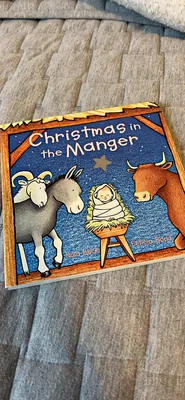
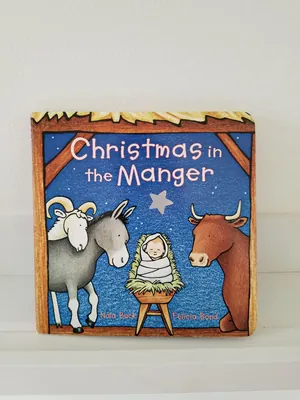
Edition details matter for used books. A December 1994 safety recall covered an older version of this Nativity story with white plastic spiral binding and detachable plastic jewels. The supplied photos show a different binding, but a matching title alone cannot identify an edition or establish its safety. Check an actual used copy against the recall description; do not give a recalled copy to a child.
Choose the subject before the seasonal decoration
A child who already notices owls may connect with a holiday animal story more readily than a generic festive collection. A vehicle enthusiast may want to follow the trucks on every spread. Look at the page layout and read a sample aloud: the rhythm, length, and illustrations all influence whether you will enjoy returning to it together.
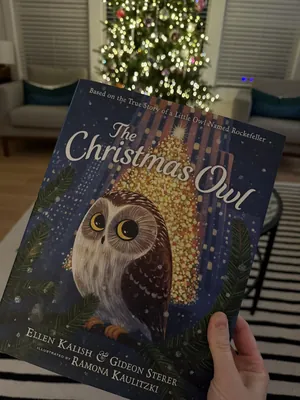
The owl picture book below is described as a story inspired by an owl rescued from a Christmas tree. Customers liked its kindness theme, large illustrations, and connection to a real rescue; several mentioned photographs and background material at the end. One parent said an eight-year-old enjoyed it once but did not ask for it again. An appealing subject can invite a first reading without guaranteeing a new favorite.
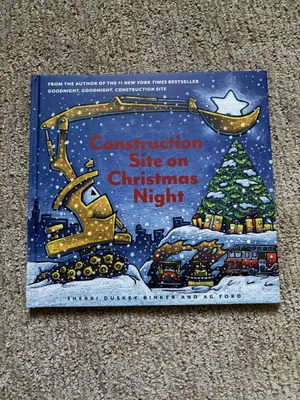
The construction-crew picture book below follows trucks working together on a Christmas-night project. Its publisher lists it for ages three to five. Supplied accounts praise the rhyme, teamwork, and appeal to truck-loving children, while others describe torn jackets, damaged bindings, or a printing problem. Check the actual copy before wrapping it. A book with sturdy-looking machinery on its cover still needs ordinary care.
A Christmas-tree delivery board book adds counting and a light-up tree to a short truck story. Customers liked the rhyme and the final sparkle, but several received lights that did not work or pages whose layers separated. Confirm the lighting feature works according to the instructions before gifting, and check that the battery area remains secure. The lights are a small story feature, not a reason to use a damaged book or attempt a makeshift battery repair.
Offer an activity without turning it into homework
A quiet table activity works best when the child can stop comfortably. Put out only the current page and the materials needed for it, leave enough elbow room, and allow an unfinished page to stay unfinished. If the gift is meant for travel, think about where loose stickers, caps, and pens will go when it is time to pack up.
The two-book Christmas sticker-by-number set below is listed for ages four to eight, with eleven pictures and eleven sticker sheets per book. The supplied accounts cover multiple seasons: some praise Christmas designs, while many photos show autumn or other themes. One customer found the stickers weak and another tore pages while removing them. Confirm the Christmas version, separate pages carefully, and avoid promising that stickers can be moved indefinitely without losing adhesion.
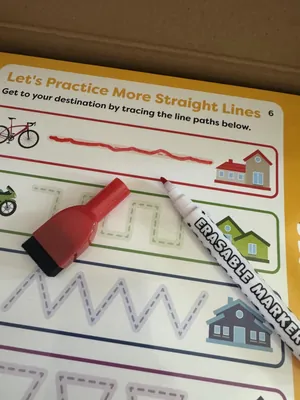
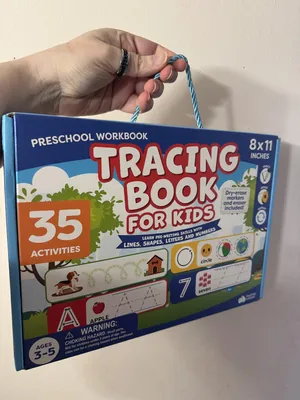
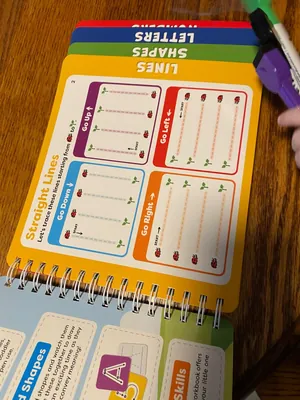
For a preschooler who already likes tracing, the reusable workbook below is listed for ages three to five. It includes line and shape practice, letters grouped by writing strokes, numbers, six dry-erase pens, and a handled storage box. Customers liked the variety and portability. Others reported dry pens, ghosting, difficult erasing, or awkward binding for a left-handed child. Check the pens and a small area first, follow the care directions, and erase promptly rather than improvising with cleaning chemicals.
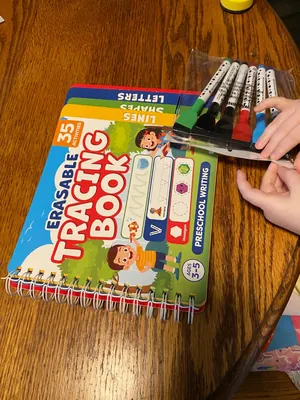
Treat tracing as an optional activity, not a promise of school readiness. A child who would rather draw a free-form picture can still enjoy time at the table. When the activity becomes frustrating, put it away and return another day or offer something simpler.
A familiar world does not always mean a familiar kind of book
For an older child who loves a fictional world, inspect the format before wrapping a seasonal edition. A picture-book excerpt can be a lovely keepsake for a fan, but it will disappoint someone expecting a new full-length novel. Ask whether the child wants a story to read independently, artwork to linger over, or a short read-aloud to share.
The illustrated wizard-school Christmas story below adapts a passage from the first novel rather than adding a new novel-length adventure. The publisher’s announcement explains that format. Customers praised the festive artwork, while some disliked the illustration style or received damaged copies. Look at the sample art and inspect the jacket and binding. Familiar characters do not guarantee that every reader will like a different visual interpretation.
The small illustrated holiday gift book below is another case where expectations matter. Several customers expected a long rhyming story and were disappointed; others liked the compact seasonal scenes. The publisher describes a thirty-two-page celebration using familiar illustrations. Choose it for brief observations and holiday pictures, rather than promising a new extended rhyming adventure.
Leave the gift ready for its next ordinary use
Inspect the order early enough to replace damaged copies or missing materials. Leave useful instructions with the gift, keep parts in their intended packaging, and give the parent a gift receipt. Avoid scheduling a child’s reaction or asking them to perform an activity in front of everyone during a busy gathering.
Offer a specific invitation instead: “Would you like me to read this with you after dinner?” or “We can try a page when you feel like it.” Put a book within reach of the reading spot and an activity where an adult can bring it out easily. The gift earns its place through the moments it makes possible, one unhurried visit at a time.