
In this article
The best golf gift is something he will use every time he plays, not another novelty for a shelf. That usually means one of four things: a way to practice at home, a better way to know the yardage, small supplies he goes through, or a home for gear that is piled by the door. Start by finding out how he plays, then pick the one that fits.
How do you pick a golf gift when you don't play?
Golfers are easy to shop for in one way and hard in another. Almost everything has a golf version, but a person who plays every week already has opinions about the things he uses. The gifts that land are rarely the novelty ones. They are the ones that fit how he actually plays, or that solve a small annoyance he has stopped noticing.
Before you look at a single product, find out three things. You can usually get them from a casual question or a glance at his garage.
- Where he plays. A weekly round on a real course, a bucket at the driving range, and swings in the backyard call for very different gear.
- How he gets around. Riding in a cart opens up magnetic mounts and speakers. Walking and carrying a bag makes weight and pockets matter more.
- What is already in the bag. If he swears by one ball or already wears a distance watch, a gift in that category is a gamble. A gift for a different part of the game is not.
The rest of this guide follows those answers: practice at home, getting yardages on the course, small things that get used every round, and where all of it lives between rounds. You do not need to buy anything to use it. A question like "Do you ever practice at home?" can tell you most of what you need.
Does he practice at home? Putting mats and hitting nets
Plenty of golfers play less than they would like. Work, weather, and daylight get in the way, so the gifts that make a spare twenty minutes useful tend to be the ones that get set up and left out.
Is an indoor putting mat a good gift?
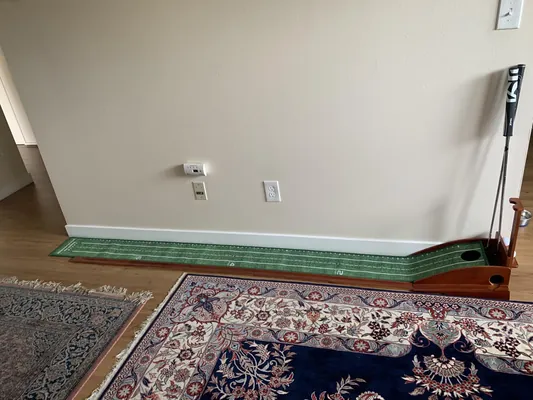
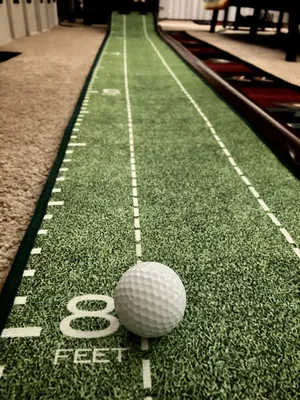
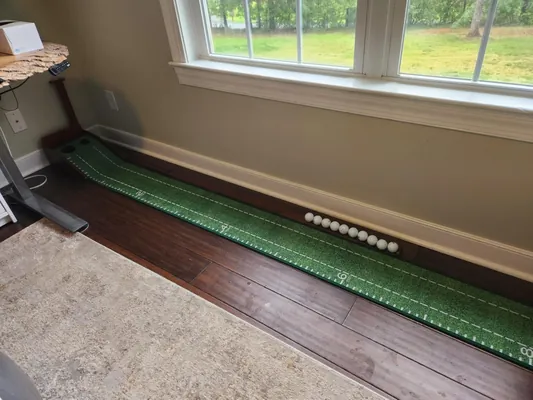
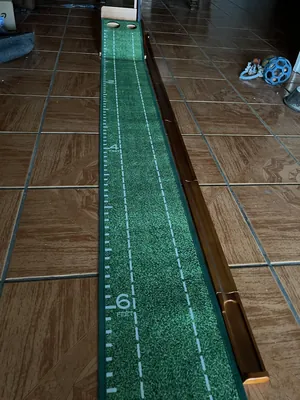
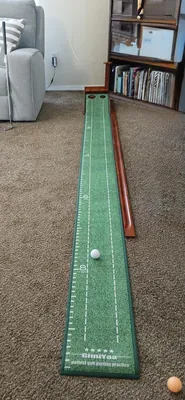
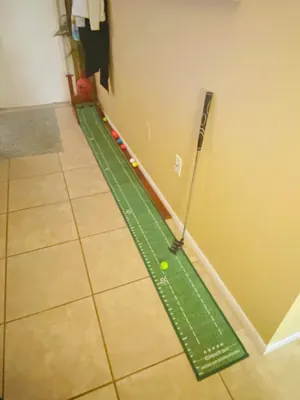
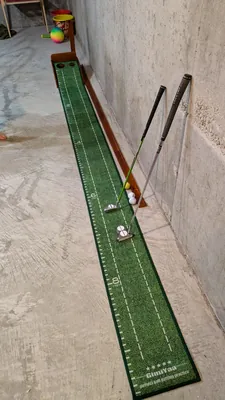
Putting is the part of the game you can rehearse in a hallway, which is why an indoor putting mat is a reasonable gift even for someone who rarely gets to the course. The version in the card below has a velvet-style surface, two cup sizes (the listing gives 3.2 and 2.5 inches), and a wooden base with a magnetic return track, so the ball rolls back after each putt.
Buyers mostly described it as a hit with the golfer in the house: it lies flat, goes together quickly, and looks decent enough to leave in a living room. A few useful cautions came up too. One buyer suggested laying the mat flat for a few minutes after unrolling it, and another said it takes some smoothing. A couple of buyers received a damaged or incomplete piece, and one said the novelty faded after a week. If you are giving it as a gift, open the box when it arrives rather than the night before.
What about a hitting net for the backyard or garage?
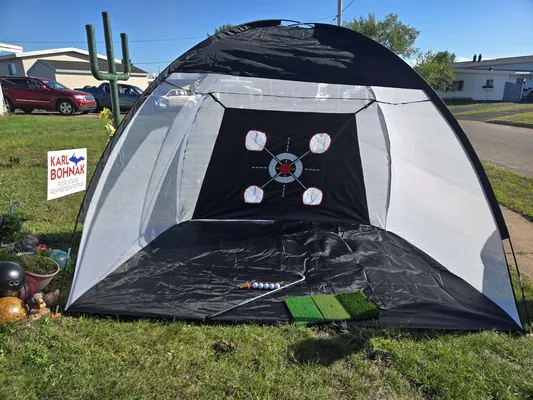
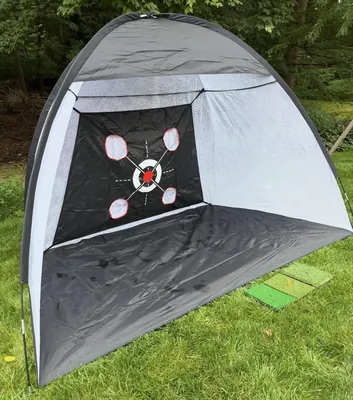
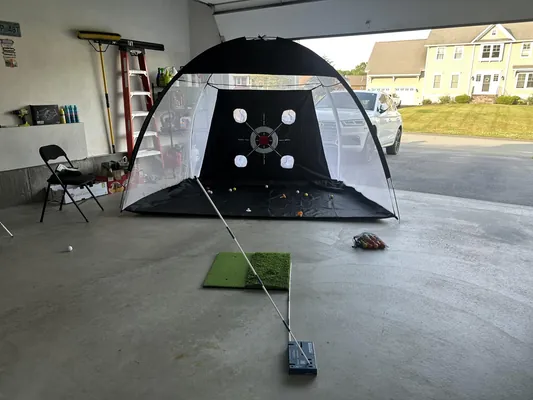
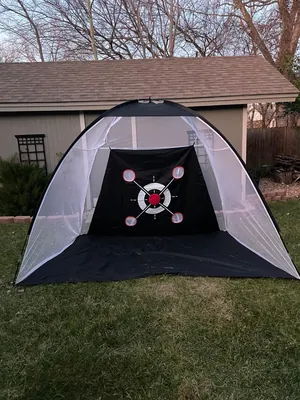
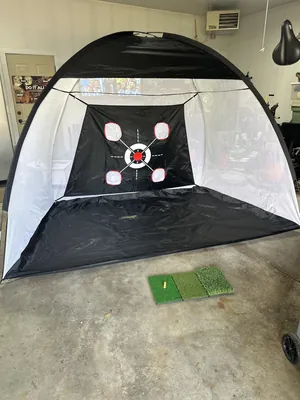
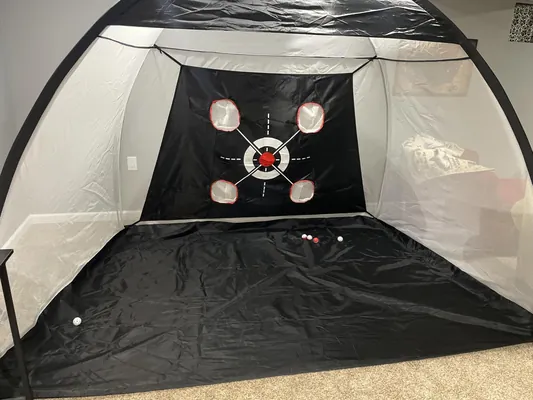
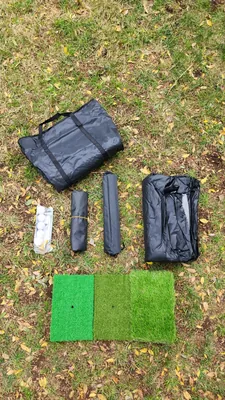
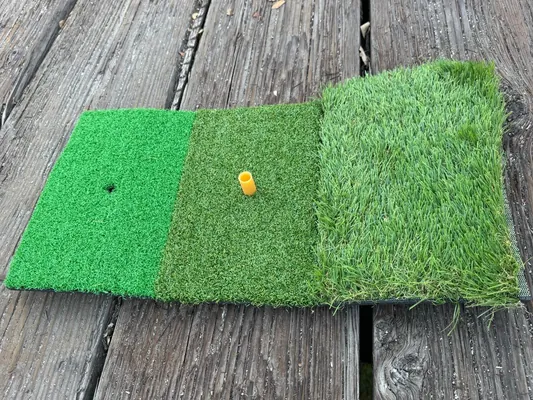
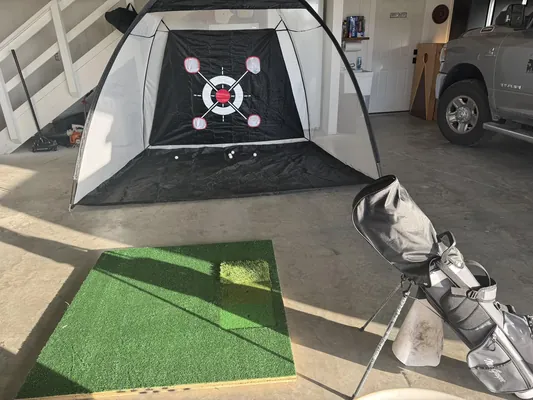
A net is the step up for someone who wants to swing full clubs without driving to the range. The one below is a 10 by 7 foot dome with a center target, four target pockets, and three strips of turf. Buyers set it up in about ten to twenty minutes, and many described the process as similar to pitching a tent.
The same buyers were honest about its limits, which is useful if you are choosing between a casual gift and a serious training tool. Several said the target cloth tears or the back netting splits when they hit real golf balls hard, and a few suggested foam or plastic balls (some come in the set, according to buyers) or hanging an old bed sheet behind the target. Wind was another theme: one buyer said a 15 to 20 mph gust knocked it over and snapped a pole, and another suggested sandbags inside the frame. Some buyers found the included mat small. In short, it suits a casual golfer who wants easy practice, and a hard hitter should look at the details more carefully.
Which gadgets actually help on the course?
Distance gadgets are the category where the right gift can feel like a real upgrade, and the wrong one is a duplicate. A golfer who already owns a rangefinder rarely wants a second one. So ask before you buy, and think of this as one decision: a way to see how far it is to the pin.
Rangefinder or GPS: how do they differ?
A laser rangefinder is a small scope. He aims it at the flag and it reports the distance to that exact point. A GPS device is preloaded with course maps and shows distances to the front, center, and back of the green, plus hazards, without aiming at anything. Neither one is better for everyone. Rangefinders reward a steady hand and a clear view of the pin, and GPS units work when the flag is hidden or the hole bends out of sight.
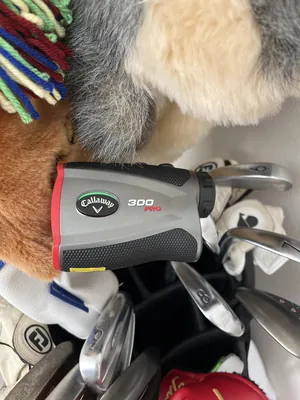
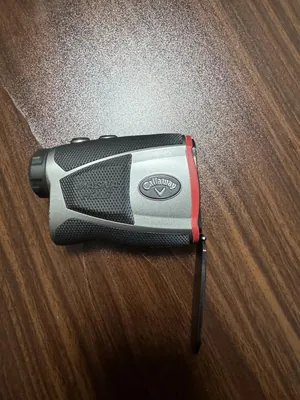
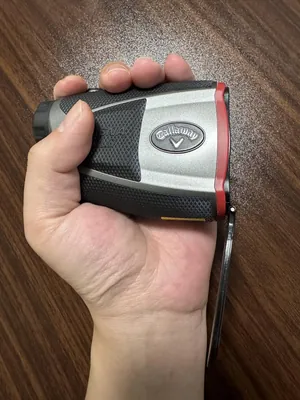
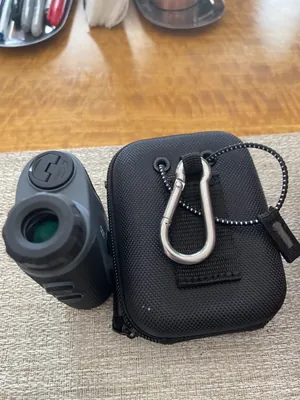
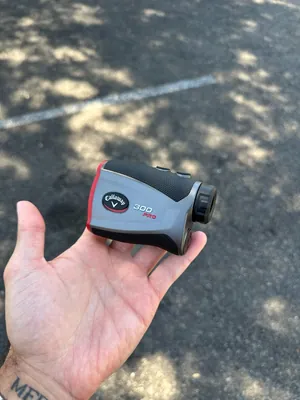
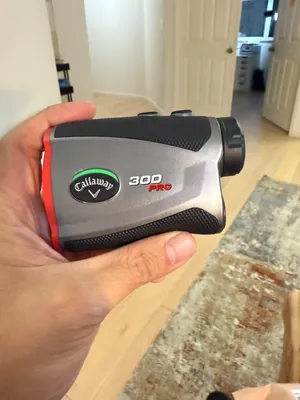
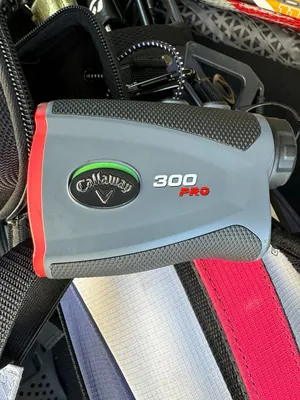
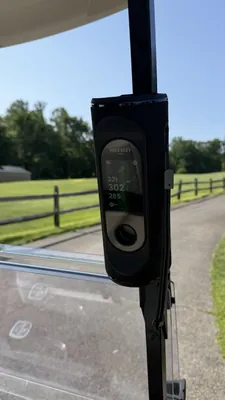
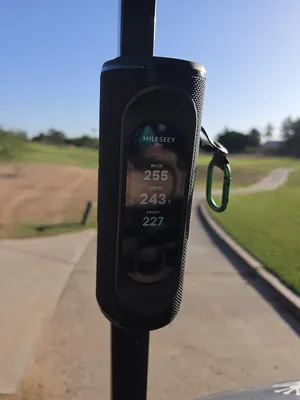
The rangefinder below is described in its listing as having 6x magnification, a range of 5 to 1,000 yards with plus or minus one yard of accuracy, a pin-lock feature that vibrates when it locks on, and a magnet for the cart frame. Buyers praised how compact it is, the clear lens, the vibration when it locks the flag, and the strong magnet, and some compared it favorably with more expensive models. The complaints are worth knowing about: a couple said the lens smudges easily, a few reported failures after a year or two or a corroded battery, and several said the unit they received looked used. If you are giving it as a gift, check the condition and the box contents as soon as it arrives.
Are rangefinders allowed in competition?
For casual rounds, yes in most places. The USGA's Rule 4.3 allows distance-measuring devices by default, but a tournament committee can adopt a local rule that bans them. Even where they are allowed, a device cannot be used during the round to gauge things like slope or wind, so a model with a slope function needs that feature switched off in competition. The rangefinder above lists an external slope on/off switch that its listing describes as tournament-legal. The USGA's DMD FAQ explains the details, and it is worth a glance if he plays in a league or club event.
What if he would also enjoy music on the cart?
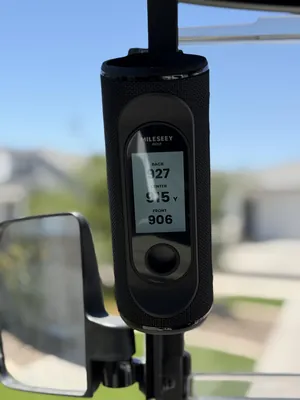
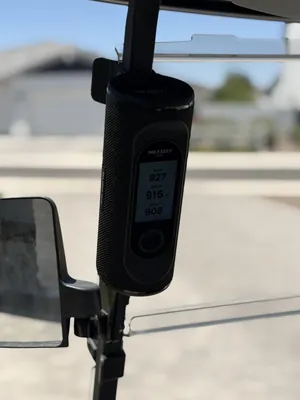
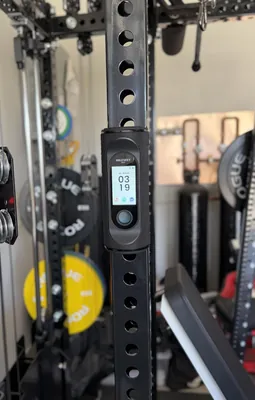
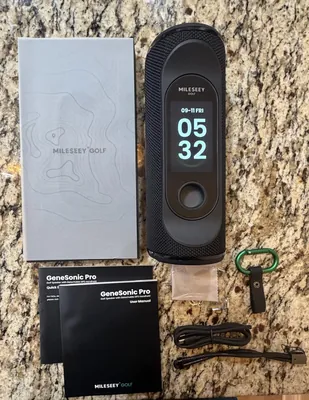
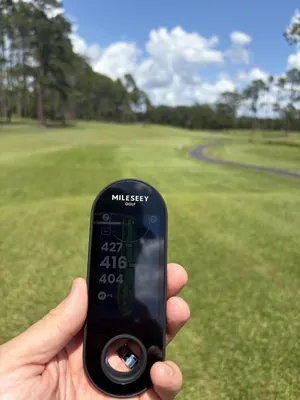
The GPS in the card below is a speaker with a detachable handheld screen. The listing says it comes preloaded with more than 43,000 courses with no subscription, a 40-watt speaker, and four magnets for mounting to a cart or any metal surface. Buyers liked that it found their course automatically, that the magnet held on rough terrain, that the sound was loud, and that the battery lasted through a round. One buyer even stuck it to a squat rack at the gym.
There is also some honest pushback. One buyer who used it for a full season said it was only okay: the maps are helpful on unfamiliar courses but matter less once you know the course, and another buyer said the companion app felt rough around the edges. One buyer dropped the handheld onto a cart path and cracked the glass, so anyone who unclips it to walk should handle it with care. At this price, it is a gift for someone who rides in a cart and enjoys music on the course, not for someone who plays alone and walks.
What can you give a golfer who already has the big gear?
Golfers run through small things all season: balls, tees, towels, marker pens, divot tools. The best gift in this category is something he will use up or lose and be happy to replace.
Are golf balls a safe gift?
They can be, with one condition: they should be the kind he already plays. Players tend to be loyal to a particular model, so look at the ball he currently uses or ask a playing partner. The balls in the card below are described in the listing as having a soft urethane cover for greenside spin, a softer feel, and low spin off the tee. One buyer said their son-in-law asks for them every birthday, and another said the recipient loved them and said they were the ones he had been wanting. The complaints were about packaging and condition rather than the ball itself: several buyers said the box arrived banged up, and a few received used balls. If you are giving them as a gift, look at the box right away, and check that the listing says new.
Is an all-in-one golf accessory set worth giving?
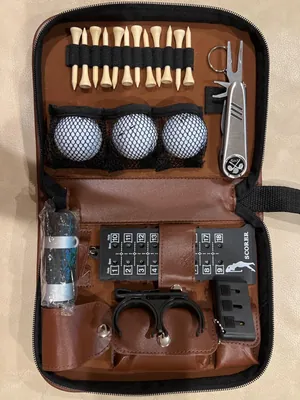
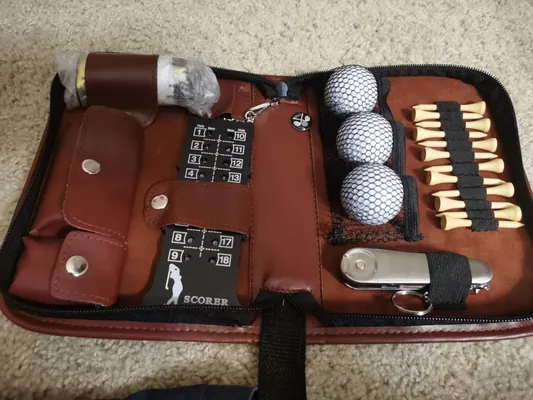
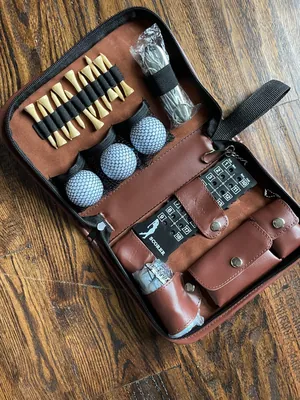
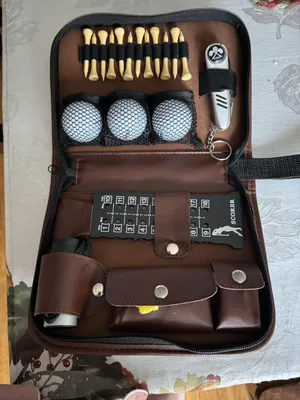
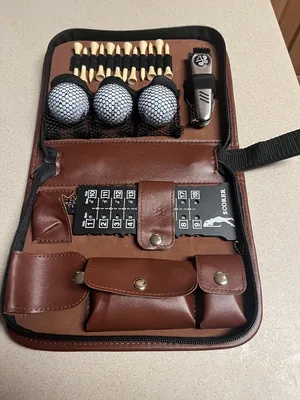
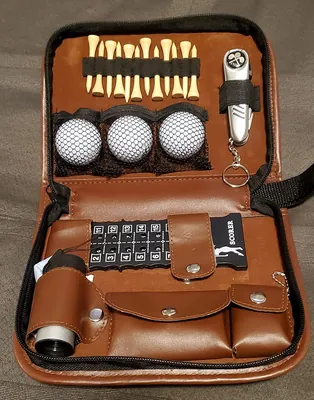
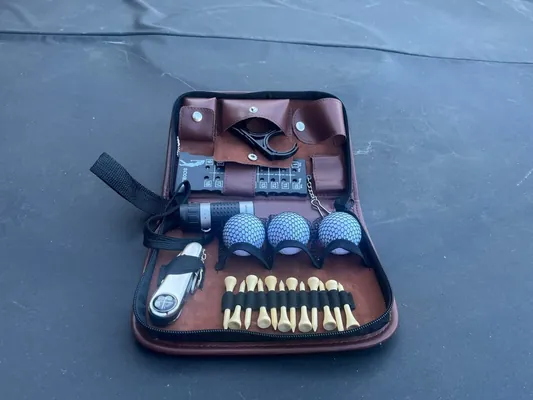
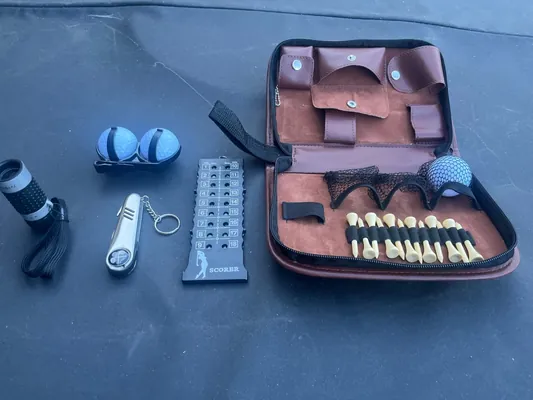
A ready-made kit is useful as a first gift for a beginner or as a stocking stuffer for someone who plays occasionally. The set below packs tees, golf balls, a divot tool, a brush, a scorer, and a small viewer into a zippered case. Several buyers called it a good gift for a golfer, and one bought it for a friend just starting out because it had everything needed to begin.
The more detailed buyer comments are a useful guide to expectations. One buyer said it works well for a beginner but not for a seasoned golfer. Another said the case material felt cheap and that the viewer in it is basic. Others reported that the scorer buttons were stiff or that a piece was missing. So treat it as a friendly starter kit rather than a premium gift, and check that everything in the listing's packing list is there when it arrives.
Where does all the golf gear go between rounds?
This is the problem golfers rarely buy a fix for themselves. Clubs end up leaning in a corner, shoes by the door, and balls in a bin that is always at the back of the closet. A storage gift is useful because it solves a daily annoyance rather than adding more gear.
What helps in the car trunk?
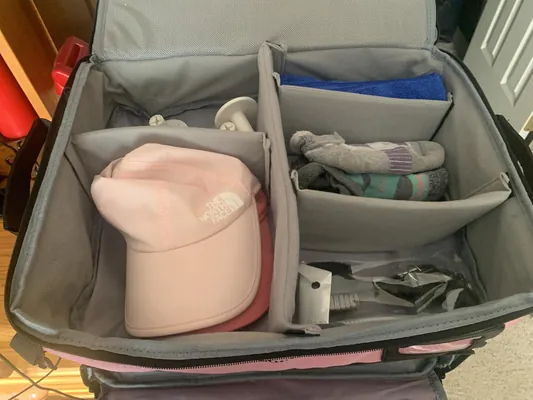
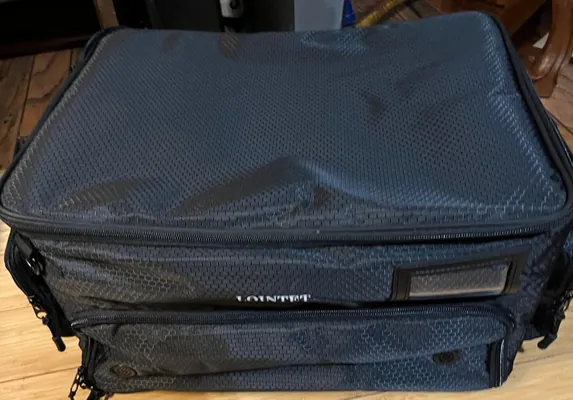
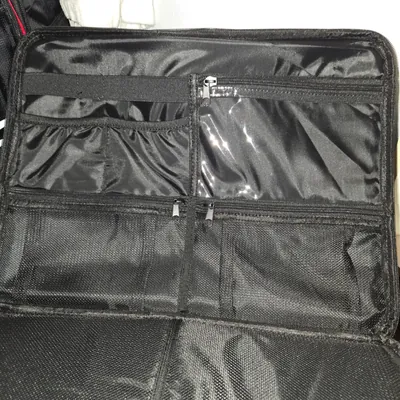
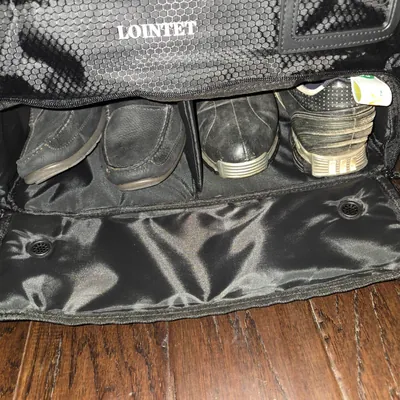
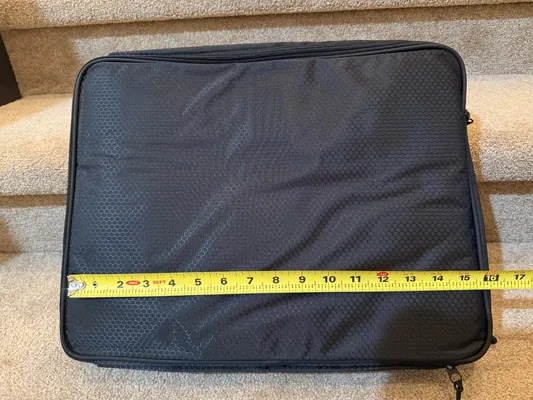
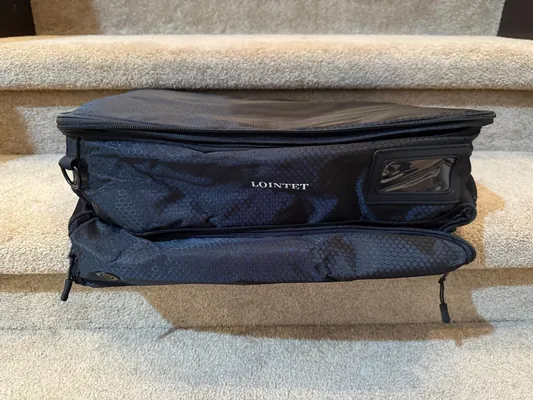
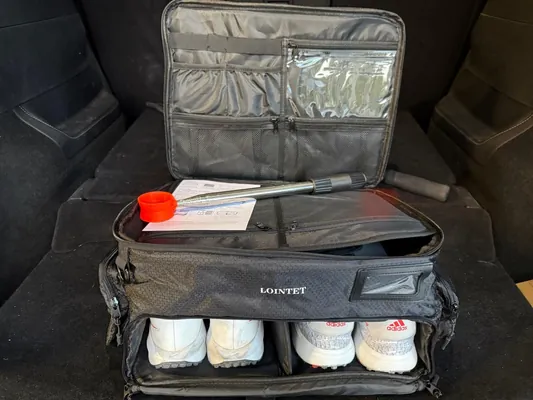
A trunk organizer keeps shoes, a towel, gloves, a cap, and a few spare balls together so he does not have to pack them each time. The one below is described as having four layers and 17 pockets with a ventilated compartment for two pairs of shoes. Buyers said it held two pairs of shoes (one buyer fits a men's size 11), measured about 16 inches across, and kept everything in one place. A few cautions: one buyer found it too large to fit under the back seat of a truck, and another said the dividers felt flimsy. One buyer who does not golf uses it for a spare change of clothes in the car, which shows how flexible it is.
What about the garage?
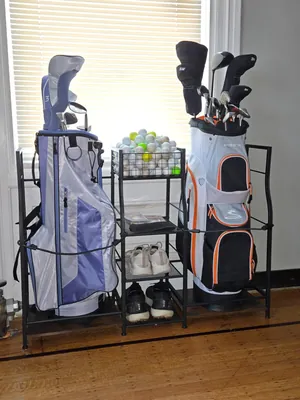
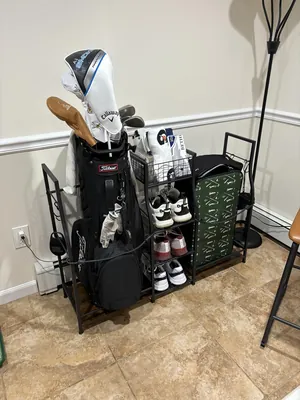
If bags are always leaning against the wall, a rack gives them a home. The one below holds two bags upright with adjustable straps, with a basket for balls, three shelves for shoes and small things, and six hooks. Buyers said assembly took about 20 minutes, and one noted it goes together more easily with two people. A buyer who owns two bags said it holds them plus extra gear, and another said it looks like it will hold up for light use.
How do you make the gift feel right?
A few small choices matter more than the price. Ask a playing partner or relative if you are unsure what he owns, since a duplicate is the most common miss. Pick a gift that arrives intact, and open it first, because several buyers across these categories mentioned damaged boxes or items that looked used. Add something small and personal, such as a handwritten note about the course you want to play together, and keep the receipt in case an exchange is needed.
If you are unsure, start with the home practice or storage ideas rather than the gadgets. They are lower-risk because they do not depend on a model or preference he already has. And if you cannot decide, a card promising a round of golf together is often the gift he will remember.